

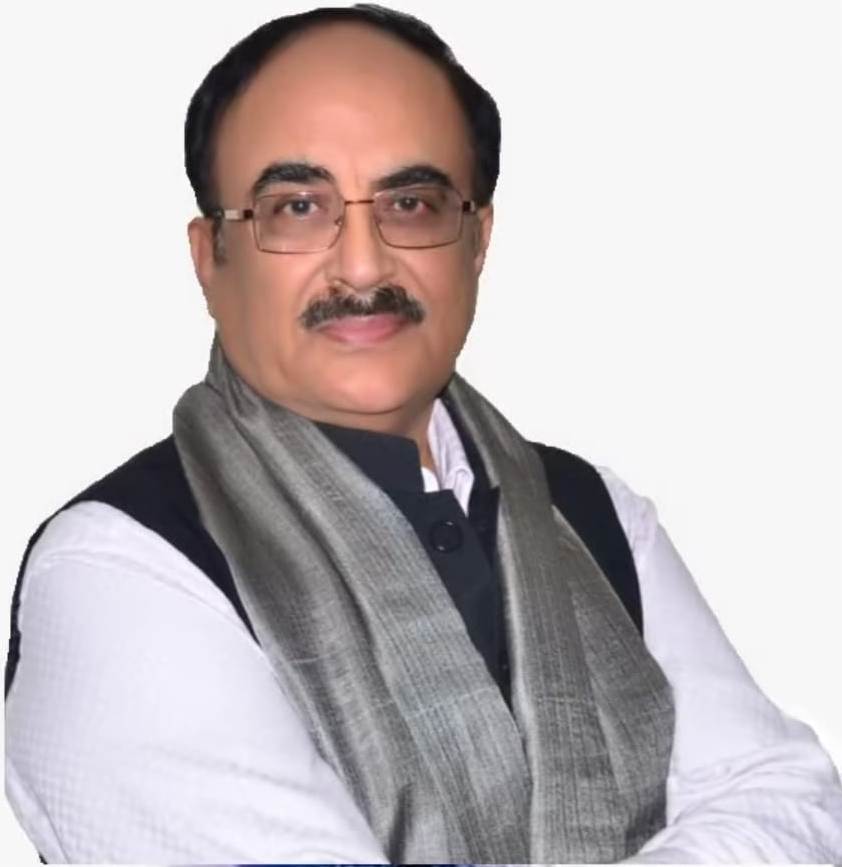
Munish Kumar Gaur
Advocate | Former Civil Servant
India attained independence on 15 August 1947, bringing an end to nearly two centuries of British domination. Yet a fundamental historical question deserves a deeper examination , was independence achieved primarily through the leadership of Mahatma Gandhi and Jawaharlal Nehru, or did the sacrifices of revolutionary nationalists, the military resistance led by Netaji Subhas Chandra Bose and the Indian National Army (Azad Hind Fauj), together with Britain’s weakened position after the Second World War, play a decisive role in compelling the British Empire to relinquish its hold over India? This question is not intended to diminish the contribution of any individual or organisation. Rather, it seeks to encourage a broader, more balanced assessment of the many forces that brought colonial rule to an end.
The Indian National Congress was founded in 1885 by A. O. Hume, a retired British civil servant, with W. C. Bonnerjee presiding over its first session in Bombay. Why would a former British official establish an organisation that would eventually become the principal political platform of the Indian independence movement? Was the Congress initially intended to provide educated Indians with a constitutional outlet for their grievances, as the controversial safety-valve theory suggests, or did it gradually evolve into an instrument of national liberation? Whatever the original intention, the Congress underwent a significant transformation over the decades. Nevertheless, its early constitutional approach raises important questions about the changing nature of its struggle against British rule.
The Congress leadership, particularly Gandhi and Nehru, pursued strategies involving mass mobilisation, non-cooperation, civil disobedience and political negotiations. These efforts undeniably became important features of the independence movement. However, were these methods alone sufficient to compel the British to leave India? What role did the revolutionary nationalists play in challenging the authority and security of the colonial administration? The sacrifices of Bhagat Singh, Rajguru and Sukhdev, who were executed in 1931, cannot be overlooked. Nor can the struggles of Vinayak Damodar Savarkar, Madan Lal Dhingra and countless other revolutionaries who faced imprisonment, transportation, execution and relentless colonial repression. Their methods differed from Gandhi’s philosophy of non-violence, but their commitment to ending British rule was unmistakable. Should their contributions not receive greater prominence in our national understanding of independence?
The ideological divisions within the Congress itself also deserve scrutiny. Lala Lajpat Rai, Bal Gangadhar Tilak and Bipin Chandra Pal, collectively known as Lal-Bal-Pal, represented a more assertive strand of nationalism. The Surat session of 1907 witnessed a serious split between the moderates and the more radical nationalists. Why did these differences become so deep that the Congress could not maintain unity at a crucial stage of the national movement? Did the division weaken the collective challenge to British rule, and to what extent did the colonial administration benefit from disagreements among its opponents? These questions merit examination in the light of the political circumstances of the time.
The experience of Netaji Subhas Chandra Bose presents an especially important chapter in this history. Bose was elected Congress president in 1938 and re-elected in 1939, defeating Pattabhi Sitaramayya, who had Gandhi’s support. Yet Bose’s differences with the Gandhian leadership over strategy, organisational control and the urgency of confronting British rule became irreconcilable, leading to his resignation in 1939. Why did an elected president find it impossible to continue leading the organisation despite securing a majority in the presidential election? Why could the Congress leadership not accommodate his vision of a more immediate and forceful confrontation with the British Empire? These questions are essential to understanding the competing approaches within the freedom movement.
Bose subsequently established the Forward Bloc and eventually pursued his struggle from outside India. He sought international assistance, established the Provisional Government of Free India in 1943 and led the Indian National Army, popularly known as the Azad Hind Fauj, in its campaign against British rule. His decision to seek assistance from Germany and Japan during the Second World War remains controversial because of the nature of those regimes and the circumstances of the conflict. Nevertheless, his determination to secure India’s independence through armed resistance deserves serious historical consideration. Although the INA did not achieve military victory, its campaign and the subsequent trials of its officers generated widespread public sympathy and intensified nationalist sentiment. Why, then, should the revolutionary and military dimensions of the freedom struggle remain secondary in popular accounts that concentrate overwhelmingly on the Congress leadership?
The events of 1945–46 provide further grounds for reflection. The INA trials provoked widespread protests, while the Royal Indian Navy uprising of February 1946 and unrest among sections of the armed forces raised serious questions about the reliability of the forces upon which British imperial authority depended. These developments occurred at a time when the British government was already confronting the enormous economic and strategic consequences of the Second World War. Historians continue to debate the relative importance of these events, but their significance in the political climate preceding independence cannot simply be dismissed. Did the British begin to recognise that maintaining their authority in India could become increasingly difficult if Indian servicemen and the wider population no longer accepted colonial rule?
The international circumstances of the period are equally significant. The Second World War left Britain economically weakened, heavily indebted and confronted by the enormous costs of maintaining a global empire. Its financial resources and military capacity had been strained, while the international political environment was changing and anti-colonial aspirations were gaining strength. The Labour government led by Clement Attlee moved towards the transfer of power, and the Indian Independence Act was enacted in July 1947. Would the British have been able to sustain their rule for much longer without the accumulated pressure of India’s political movements, revolutionary resistance, unrest within the armed forces and the consequences of the war? This is a legitimate historical question, although no single factor can conclusively explain the timing of independence.
The contribution of Gandhi and Nehru must therefore be assessed alongside, rather than in isolation from, these other developments. Gandhi’s mass movements brought large numbers of Indians into organised political resistance, while Nehru played a major role in the Congress leadership and in shaping the political direction of independent India. At the same time, revolutionary nationalists, the INA, the political mobilisation surrounding its trials and the wider consequences of the Second World War contributed to the circumstances in which British rule became increasingly untenable. Is it historically justified to attribute independence primarily to one political party or a limited number of leaders when the evidence points to a much broader and more complex struggle?
The emergence of other nationalist organisations also deserves attention. The Rashtriya Swayamsevak Sangh (RSS), founded by Dr. Keshav Baliram Hedgewar in 1925, developed a distinct approach centred on the organisation of Hindu society, discipline, cultural identity and national service. Its organisational objectives and methods differed from those of the Congress, and its role in the freedom struggle must be assessed on the basis of its documented activities rather than broad assumptions. The later establishment of the Bharatiya Jana Sangh by Dr. Syama Prasad Mookerjee in 1951 reflected the emergence of an alternative political platform after independence. Why did sections of nationalist opinion believe that separate organisations were necessary? What ideological differences prevented all nationalist currents from working within a common political framework? These questions underline the diversity of political thought that existed during and after the colonial period.
Nor did the transfer of political power in 1947 immediately bring every national institution under Indian leadership. British officers continued to head the Indian armed services during the initial years of independence. General Sir Robert Lockhart was the first Commander-in-Chief of the Indian Army after independence, followed by General K. M. Cariappa in 1949. Air Marshal Subroto Mukerjee became the first Indian Chief of Air Staff in 1954, while Vice Admiral R. D. Katari became the first Indian Chief of the Naval Staff in 1958. Why did the Indianisation of senior military leadership take several years after political independence? The transition involved practical challenges, including the shortage of experienced senior Indian officers, the division of military assets between India and Pakistan and the need to maintain institutional continuity. Nevertheless, the chronology illustrates that the transfer of political power and the complete transition to Indian leadership of all major institutions were distinct processes.
The central question, therefore, is not whether Gandhi, Nehru or the Congress contributed to independence. It is whether their contributions alone adequately explain why the British finally relinquished their empire in India in 1947. What weight should be given to the sacrifices of Bhagat Singh and other revolutionaries, the determination of Netaji Subhas Chandra Bose, the campaign of the Azad Hind Fauj, the unrest within the armed forces and Britain’s economic and military exhaustion after the Second World War? How did these forces interact with mass movements, constitutional negotiations and the changing international balance of power to bring colonial rule to an end?
India’s independence was the culmination of decades of sacrifice, political mobilisation, revolutionary resistance and changing international circumstances. No single individual, political party or method of struggle can reasonably claim exclusive ownership of this achievement. Gandhi, Nehru, Bose, Bhagat Singh, Savarkar and numerous other leaders and organisations must be examined in their proper historical contexts, with their contributions and disagreements evaluated on the basis of evidence.
The purpose of raising these questions is not to erase one contribution in order to glorify another, but to challenge an incomplete understanding of our history. The revolutionary nationalists, Netaji Subhas Chandra Bose and the Azad Hind Fauj deserve serious consideration alongside the Congress-led movements, while the weakening of the British Empire after the Second World War must form an integral part of the discussion. A mature nation does not fear historical inquiry. It recognises that its freedom was secured through multiple streams of sacrifice and struggle, and that an honest understanding of this complex history is essential to honouring all those who contributed to India’s independence.

