

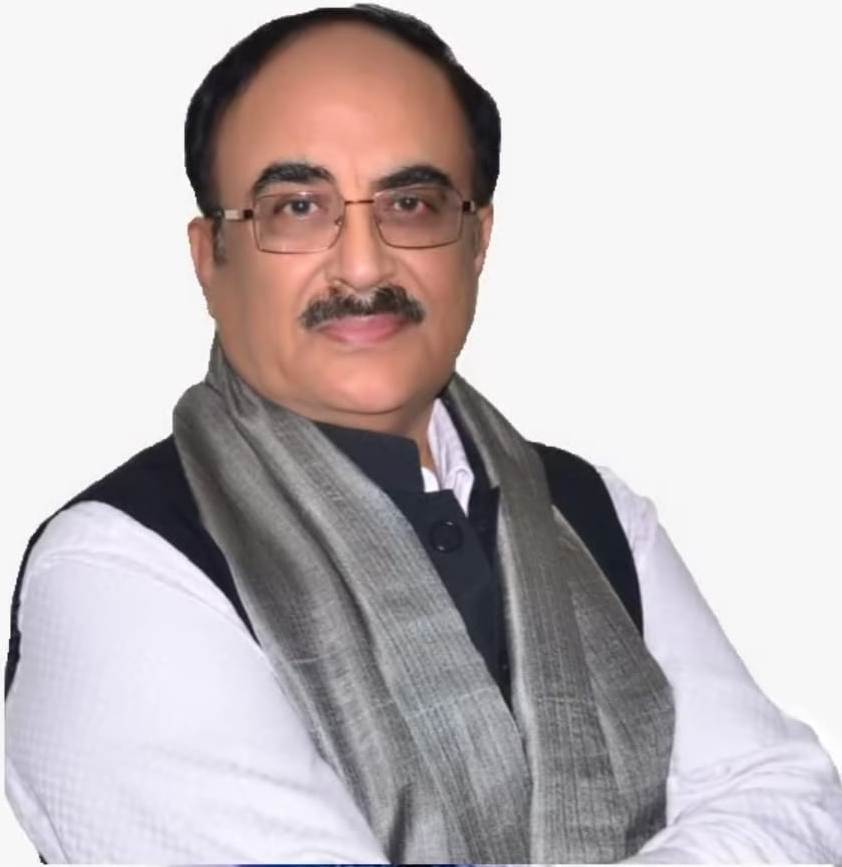
Munish Kumar Gaur
Advocate | Former Civil Servant
India’s journey since Independence has been marked by extraordinary challenges, significant achievements and profound political transformations. The country has witnessed approximately 54 years of Congress-led governments at the Centre, spread across different periods, followed by twelve years of governance under Prime Minister Narendra Modi since 2014. A comparison of these two periods, based on governance, national security, economic development, public welfare and international standing, offers an opportunity to examine how India’s priorities and national aspirations have evolved.
The Partition of 1947 remains one of the greatest tragedies in India’s history. Millions were displaced, countless families were divided, and an entire generation suffered the consequences of a political settlement shaped by British colonial policies, the Muslim League’s separatist agenda and the decisions of the contemporary leadership. The responsibility for this tragedy cannot be attributed to one individual or family alone; nevertheless, the decisions of the political leadership must remain open to historical scrutiny. The subsequent concentration of political authority within the Nehru-Gandhi family also raises an important question about the evolution of the Congress party. Has an organisation that once led India’s freedom movement gradually become excessively dependent on one political dynasty?
The Congress governments undoubtedly contributed to nation-building through the establishment of educational institutions, scientific establishments, public sector enterprises and democratic institutions. However, their long tenure was also marked by serious controversies concerning corruption, political accountability and the centralisation of power. The LIC-Mundhra controversy of 1957–58, involving questionable investments of public funds, led to the resignation of Finance Minister T.T. Krishnamachari following an inquiry by Justice M.C. Chagla. During Indira Gandhi’s premiership, the Emergency of 1975–77 represented an unprecedented assault on democratic freedoms. Opposition leaders were imprisoned, the press was censored, civil liberties were curtailed and the Shah Commission subsequently investigated widespread administrative excesses, including coercive sterilisation campaigns. The experience demonstrated how democratic institutions could be weakened when political authority became excessively concentrated.
The Bofors controversy during Rajiv Gandhi’s premiership further damaged public confidence in the political establishment. Allegations of approximately ₹64 crore in illegal commissions in the 1986 artillery procurement deal became a defining issue in Indian politics. Although the allegations did not result in a conviction of Rajiv Gandhi, the controversy exposed serious concerns about transparency in defence procurement. Subsequent Congress-led governments also faced major corruption controversies, particularly during the United Progressive Alliance (UPA) years from 2004 to 2014.
During this period, Dr Manmohan Singh occupied the office of Prime Minister, while Sonia Gandhi, as Congress President and Chairperson of the National Advisory Council (NAC), exercised considerable political influence over the government’s policy direction. Critics questioned the emergence of a parallel power structure in which important political decisions appeared to be influenced by an authority outside the constitutionally accountable Cabinet. The controversy was not merely about the functioning of an advisory body; it concerned the fundamental principle of democratic accountability and the location of effective political power.
The UPA years witnessed the 2G spectrum controversy, the coal block allocation scandal, the Commonwealth Games procurement controversy, the Adarsh Housing Society case and allegations relating to the AgustaWestland helicopter deal. The CAG’s estimated presumptive loss in the 2G matter was widely reported at approximately ₹1.76 lakh crore, while the estimated potential financial benefit to private coal allottees was approximately ₹1.86 lakh crore. The Supreme Court subsequently cancelled 204 coal block allocations, finding the allocation process arbitrary and illegal. However, the distinction between audit estimates, allegations and judicial findings must be maintained: the 2G trial court acquitted all accused in 2017, and the Commonwealth Games money-laundering investigation was later closed. The significance of these controversies lies in the serious questions they raised about transparency, public resources and political accountability.
The National Herald case, involving Associated Journals Limited and Young Indian, has also raised questions concerning the acquisition and control of assets associated with the newspaper. The Enforcement Directorate has alleged financial impropriety and money laundering involving Sonia Gandhi, Rahul Gandhi and others, in relation to assets valued at approximately ₹2,000 crore. These remain allegations subject to legal proceedings and must not be presented as established guilt. Nevertheless, the case has become another prominent issue in the wider debate about political accountability.
The contrast in India’s national security posture is another important dimension of this comparison. The terrorist attacks of 26 November 2008 in Mumbai, which claimed 166 innocent lives, exposed serious weaknesses in internal security and intelligence coordination. The government then adopted a diplomatic and international pressure strategy rather than undertaking an immediate military strike against Pakistan. While that was the strategic choice of the government at the time, it remains a subject of public debate.
Under Prime Minister Narendra Modi, India’s response to cross-border terrorism acquired a more assertive character. Following the Uri attack in 2016, India conducted surgical strikes across the Line of Control. After the Pulwama terrorist attack in February 2019, the Balakot air strike demonstrated India’s willingness to strike terrorist infrastructure beyond its borders. Following the horrific Pahalgam attack of 22 April 2025, in which 26 innocent people were killed, India launched Operation Sindoor on 7 May 2025, targeting terrorist infrastructure in Pakistan and Pakistan-occupied Jammu and Kashmir. The subsequent military developments further demonstrated the operational capabilities of India’s armed forces. These actions represented an important evolution in India’s approach to national security, signalling that terrorism would carry consequences and that national interests would be defended with determination.
Equally significant has been the transformation of India’s defence capabilities. Strategic border roads, bridges, tunnels and advanced infrastructure have strengthened connectivity in sensitive areas. Indigenous production of missiles, artillery, fighter aircraft, naval vessels, submarines, drones and other modern military systems has received increasing attention. The expansion of defence manufacturing and exports is also reducing dependence on foreign suppliers. India’s objective is no longer merely to acquire military equipment but to develop the technological and industrial capacity to manufacture advanced defence systems domestically.
The scale of infrastructure development since 2014 has also been remarkable. According to the Ministry of Road Transport and Highways, India’s national highway network increased from 91,287 kilometres in 2014 to approximately 1,46,572 kilometres by March 2026, an expansion of nearly 61 per cent. The number of four-lane and wider national highways has increased substantially, while access-controlled expressways have transformed long-distance travel and freight movement. The Pradhan Mantri Gram Sadak Yojana has strengthened rural connectivity, while railway modernisation, electrification, Vande Bharat services and the UDAN regional aviation scheme have improved mobility across the country. These developments are not merely infrastructure statistics; they represent greater economic integration, improved access to markets and more convenient journeys for ordinary citizens.
The expansion of educational and healthcare infrastructure has also been significant. New IITs, IIMs, AIIMS institutions and medical colleges have widened opportunities for higher education and professional training. Ayushman Bharat has expanded access to health protection for eligible families. The Swachh Bharat Mission has facilitated the construction of more than 12 crore rural household toilets, while the Pradhan Mantri Awas Yojana has helped millions of families move into permanent homes. The Ujjwala scheme has provided LPG connections to economically weaker households, particularly benefiting women who previously depended on traditional cooking fuels. Jan Dhan accounts, digital payments and Direct Benefit Transfer have helped improve financial inclusion and reduce the layers between government assistance and beneficiaries.
One of the most significant welfare interventions has been the provision of free foodgrains to approximately 80 crore beneficiaries under the Pradhan Mantri Garib Kalyan Anna Yojana. The scheme has been extended for five years from January 2024, with the government providing foodgrains free of cost under the National Food Security Act. Its scale reflects the administrative capacity required to maintain food security for a population of India’s magnitude.
The COVID-19 pandemic presented another extraordinary test of national resilience. India faced severe difficulties, particularly during the second wave, when shortages of oxygen, hospital beds and medical supplies caused immense distress. Yet the country’s scientific community, pharmaceutical industry and healthcare professionals successfully developed indigenous vaccines and implemented one of the world’s largest vaccination programmes. Through Vaccine Maitri, India supplied 30.12 crore vaccine doses to 99 countries and two United Nations entities, including supplies through grants, commercial arrangements and the COVAX mechanism. This demonstrated that India could combine domestic scientific capacity with international responsibility and humanitarian cooperation.
Economic transformation has been another defining feature of the past twelve years. Digital India, UPI, Startup India, Make in India, production-linked incentive schemes, renewable energy, space technology and infrastructure investment have strengthened India’s economic and technological foundations. The expansion of digital payments and financial inclusion has been particularly transformative, bringing millions of citizens and small businesses into the formal financial ecosystem. India’s expanding manufacturing capabilities, entrepreneurial activity and growing domestic market have further strengthened its position in the global economy.
According to the International Monetary Fund’s 2026 World Economic Outlook, India’s projected nominal GDP is approximately US$4.15 trillion, with projected real economic growth of 6.5 per cent. India remains among the fastest-growing major economies and has become an increasingly important contributor to global economic growth. However, economic strength must ultimately translate into better employment opportunities, higher household incomes, reduced inequality and improved living standards. These remain essential priorities for the years ahead.
India’s diplomatic standing has also undergone a significant transformation. The successful G20 presidency in 2023, particularly the inclusion of the African Union as a permanent member, demonstrated India’s ability to bring diverse nations together around shared priorities. Strategic relationships with the United States, Russia, France, Japan, Israel, European countries and Gulf nations have expanded. India’s participation in QUAD, BRICS, the Shanghai Cooperation Organisation and other international forums reflects an increasingly confident foreign policy based on strategic autonomy and national interest. India is no longer content merely to participate in global discussions; it seeks to influence the direction of international cooperation, particularly on issues affecting developing nations and the Global South.
Energy and food security have also acquired enormous importance amid the Russia-Ukraine war and continuing conflicts in West Asia. Global oil markets, shipping routes and supply chains have faced repeated disruptions. India has responded by diversifying crude oil procurement, utilising its refining capacity, maintaining foodgrain reserves and strengthening its public distribution system. Although temporary shortages and regional supply disruptions cannot be ruled out, the country’s ability to maintain essential supplies and operate a distribution network on such an enormous scale has been an important element of economic resilience.
A fair assessment must also acknowledge that India’s achievements since 1947 were built upon the contributions of successive governments, public institutions, scientists, soldiers, farmers, entrepreneurs and ordinary citizens. No government can claim exclusive ownership of the nation’s progress. Similarly, the Modi government must remain accountable for shortcomings relating to unemployment, inflation, agricultural incomes, inequality, social harmony and institutional independence. Strong governance requires both decisive leadership and continuous public scrutiny.
Nevertheless, the comparison between the two periods reveals a significant change in India’s development priorities, administrative delivery, infrastructure ambitions, defence preparedness and international engagement. The country today possesses greater technological capabilities, a stronger digital ecosystem, expanding infrastructure and a more assertive voice in global affairs.
India is not the private property of any political family, nor can the Congress party be treated as the ancestral inheritance of one family. In a democracy, political authority belongs to the people, and every political organisation must earn its legitimacy through performance, accountability and public trust.
The real measure of leadership is not the duration for which a party occupies office, but the transformation it brings to the lives of its citizens and the strength it gives to the nation. India’s journey from the uncertainties of Independence to its emergence as a confident and consequential global power deserves recognition, critical examination and continued national commitment.
Nation First. The interests, dignity and future of India must always prevail over individuals, families and political dynasties.

