

The true strength and majesty of Indian democracy reveal themselves when the unbridled administrative authority of the State collides directly with the fundamental rights of a citizen. Our Constitution stands on an inviolable bedrock: every citizen is equal before the law, and the boundaries of executive power end precisely where a citizen’s fundamental rights begin.
In a landmark verdict delivered by a Division Bench of the Allahabad High Court—comprising Hon’ble Mr. Justice Atul Sreedharan and Hon’ble Mr. Justice Achal Sachdeva—in a sensitive National Security Act (NSA) case, Indian jurisprudence witnessed a defining moment. This judgment is an indelible milestone for administrative accountability, procedural fairness, and the rule of law.
The case involved Akriti Choudhary, a 25-year-old Delhi University research scholar, who was detained for months under the draconian provisions of the National Security Act following a workers’ protest in Noida. When the Habeas Corpus petition reached the High Court, the Bench led by Justice Atul Sreedharan posed a fundamental constitutional query to the State machinery: “Where is the concrete evidence supporting the allegation?”
The High Court observed that the petitioner was already in police custody before violence broke out, yet she was retroactively held responsible. When the State failed to produce video footage or direct evidentiary material, the Court quashed the NSA order, calling the prosecution’s narrative a “concocted story.”
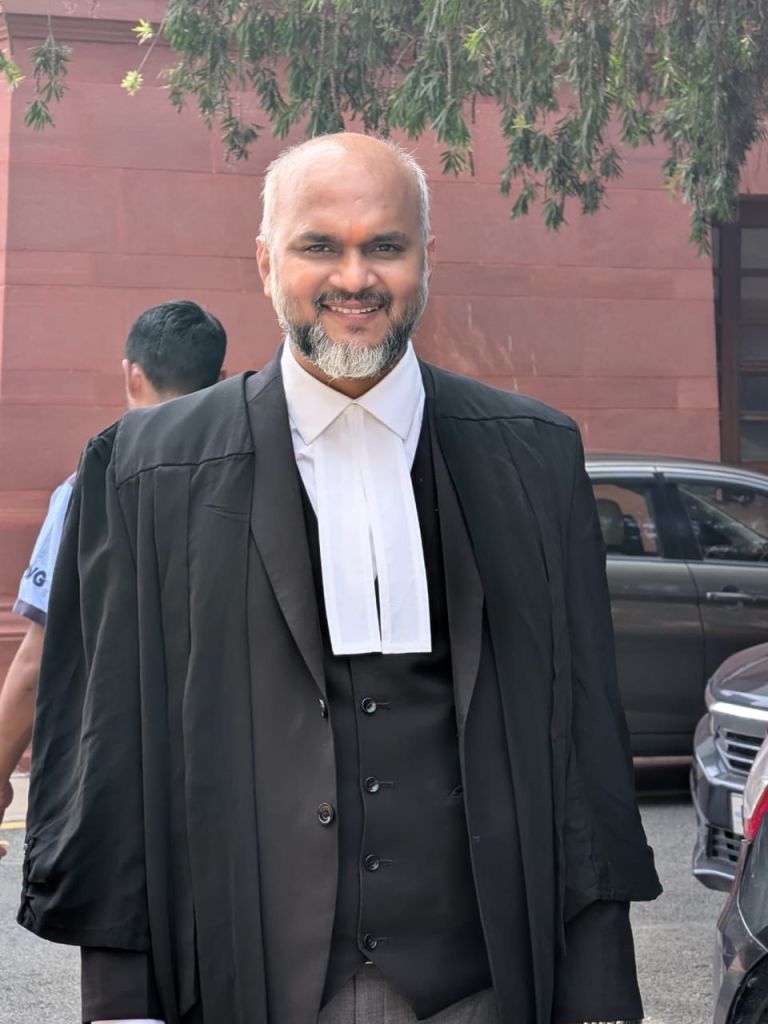
As a practicing advocate at the Delhi High Court witnessing legal proceedings daily, I view Justice Atul Sreedharan’s ruling as a seminal precedent with far-reaching constitutional implications.
- The Burden of Proof: Procedure is the Citizen’s Shield
It is a cardinal principle of jurisprudence that justice is determined not by the gravity of an allegation, but by the weight of the evidence presented. Preventive detention laws like the NSA exist to safeguard national security, not to mask executive overreach or investigation lapses. Article 21 guarantees life and personal liberty to every individual. The High Court established that when established procedure is flouted and substantive evidence is missing, any state action remains inherently unconstitutional. - Personal Accountability: Striking at Executive Arbitrariness
The most revolutionary aspect of this judgment was not merely quashing the illegal detention or awarding ₹5 lakh in compensation; rather, it was the Court’s explicit directive that this compensation be recovered directly from the salary of the District Magistrate who signed the arbitrary order without verifying evidence.
Compensation is routinely drawn from the public exchequer—taxpayers’ money. Mandating personal recovery ensures that public functionaries cannot misuse statutory power with impunity. Executive power can never override constitutional propriety and personal liability. - Reaffirming Public Faith in Democracy
When the entire State apparatus—police, administration, and prosecution—stands aligned against an ordinary citizen, the individual feels powerless. In such moments, this courageous judgment reinforces public conviction in three vital ways:
The Judiciary as an Impregnable Fortress: Citizens gain faith that regardless of the odds, the doors of the court remain open to safeguard constitutional liberties.
Citizen Sovereignty: Democracy goes beyond the ballot box; true democracy exists where the liberty of a 25-year-old student is as secure as that of any high public official.
Restoration of Institutional Trust: When citizens witness a judge demanding proof undeterred by executive pressure, confidence in democratic institutions expands exponentially. - A Clarion Call for Law Students and Young Advocates
Legal education is not confined to memorizing statutes and sections. The soul of the law resides in constitutional courage and fidelity to truth. For young advocates, Justice Atul Sreedharan’s ruling serves as a guiding lesson: standing fearlessly before the Bench, questioning procedural improprieties, and protecting civil liberties remains the highest duty of the legal profession.
Conclusion: Judicial Courage Outshines the Bench
The true strength of a judge does not lie in the authority of the Bench, but in the courage to uphold constitutional principles without fear or favor. An office does not make a person great; rather, an individual elevates the dignity of the office through fair, courageous, and principled decisions.
Justice Atul Sreedharan’s judgment is not merely a judicial order bound in law reports; it is a shining chapter for liberty, constitutional governance, and Indian democracy—a timeless reminder that the seat of power is never greater than the majesty of justice.

