

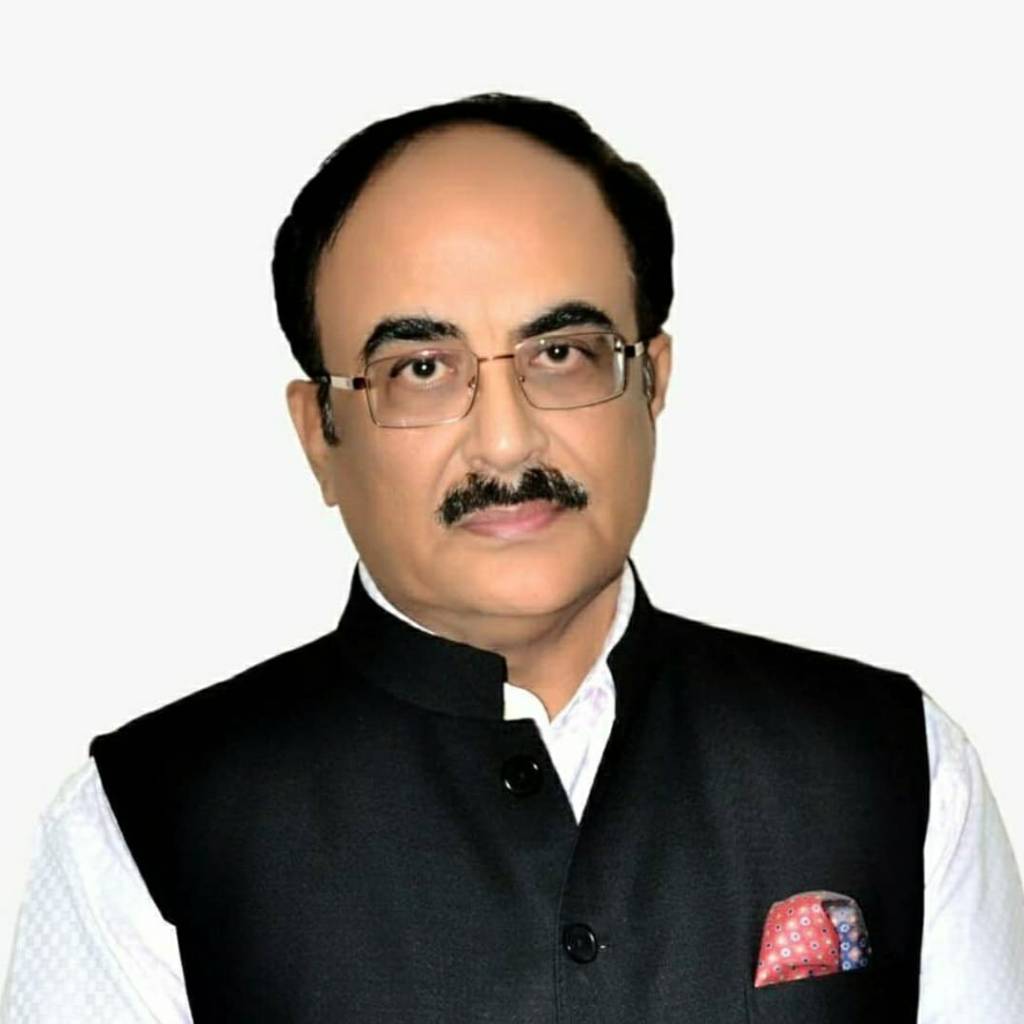
Munish Kumar Gaur
Advocate (Supreme Court/High Court), Former Bureaucrat
The Women’s Reservation debate in India has once again been projected as a watershed moment. Yet, stripped of its rhetoric, the present framework reveals a familiar pattern that is high constitutional promise coupled with calibrated political delay. The enactment of the Nari Shakti Vandan Adhiniyam is being celebrated as historic, but its design raises a fundamental question , whether this represents real empowerment or merely its announcement. While the proposal to reserve 33 percent seats for women in Parliament and State Assemblies appears transformative, the linkage of its implementation to an uncertain Census and a future delimitation exercise effectively postpones its realization. In legislative terms, this is not delivery but deferral by design, where a right contingent upon indeterminate future events remains a promise in suspension rather than an enforceable reality.
This inevitably brings the issue of political accountability into focus. The ruling establishment, led by the Bharatiya Janata Party, has projected itself as the principal architect of women’s empowerment. However, intent without immediacy invites scrutiny. If there was sufficient political will to enact a constitutional amendment, there could equally have been a mechanism to ensure its time-bound implementation. By tethering the reform to delimitation, the government has effectively shifted empowerment into an undefined future politically advantageous in the present but uncertain in execution. At the same time, opposition parties such as the Indian National Congress and the Trinamool Congress cannot escape responsibility. Their objections, though constitutionally arguable, have lacked clarity and a compelling alternative framework. Raising concerns about federal balance and sub-quotas without presenting a clear roadmap allows the ruling narrative to portray them as obstructive, and in electoral politics, perception often outweighs nuance.
What makes this development particularly striking is that the constitutional foundation for women’s reservation is neither weak nor ambiguous. The principles of equality under Article 14 and the enabling provision under Article 15(3) provide a firm basis for affirmative action. Judicial pronouncements, including Indra Sawhney vs Union of India (1992) and K. Krishna Murthy vs Union of India (2010), have consistently upheld the legitimacy of such measures. Moreover, the success of reservation in Panchayati Raj institutions demonstrates that implementation need not be indefinitely deferred. The absence of urgency at higher legislative levels, therefore, raises an unavoidable question as to why Parliament should be treated differently when the constitutional and administrative tools already exist.
At a deeper level, the present debate reopens a broader and more uncomfortable question regarding the trajectory of reservation in India. Originally conceived as a corrective mechanism to address historical injustices, reservation was intended to be transitional in character. Over time, however, its expansion into multiple domains including legislative representation has raised concerns about the institutionalization of identity-based entitlements. The continued reliance on caste-based certification reinforces this paradox, as a system designed to eliminate social divisions simultaneously depends upon their formal recognition. The post-Mandal phase, particularly under the leadership of V. P. Singh, undeniably expanded access to opportunities but also entrenched identity politics within governance structures. This evolution prompts a fundamental question: whether backwardness can be treated as a permanent condition or whether public policy must reflect social mobility and transition.
India’s own social experience provides a compelling counter-narrative to the idea of fixed disadvantage. Across sectors, individuals from modest or challenging backgrounds have risen to positions of prominence through perseverance, capability, and opportunity. The journey of Dhirubhai Ambani from limited means to building a global business enterprise illustrates the transformative potential of entrepreneurship. Kalpana Saroj exemplifies resilience in overcoming social adversity to achieve industrial success. In the field of science and public life, A. P. J. Abdul Kalam rose from humble origins to become a distinguished scientist and President of India. Karsanbhai Patel built a nationally recognized enterprise through innovation, while Dr. B. R. Ambedkar remains the most powerful example of how education, determination, and constitutional vision can reshape both individual destiny and national history. These examples underscore that while structural support may be necessary, no individual or community is permanently confined to disadvantage, and progress is often driven by opportunity combined with effort rather than entitlement alone.
In the political arena, the consequences of the present legislative impasse will ultimately be determined by public perception rather than procedural detail. If the ruling party succeeds in convincing voters that it initiated a historic reform that was hindered by lack of consensus, it stands to gain electorally, particularly among women voters. However, if the electorate begins to perceive the delay as deliberate, questions regarding sincerity and intent may arise. For the opposition, the challenge is equally significant. Without an effective counter-narrative, it risks being viewed as having obstructed a measure aimed at empowerment, regardless of the substantive merits of its objections. In a democracy, accountability is rarely decided by legislative nuance; it is shaped by the clarity and credibility of political messaging.
The way forward requires clarity and statesmanship rather than rhetorical positioning. If empowerment is genuine, it must be delinked from uncertain procedural contingencies. If reservation is to remain a tool of justice, it must incorporate periodic review and clearly defined timelines. If equality is the ultimate constitutional objective, policy must gradually transition toward capacity-building and equal opportunity rather than permanent categorization. Without such recalibration, there is a real risk that constitutional reform may be reduced to symbolic politics.
Ultimately, the Women’s Reservation Bill represents more than a question of representation; it is a test of India’s commitment to translating constitutional ideals into tangible outcomes. It exposes the gap between promise and implementation and challenges the political system to move beyond announcement-driven governance. The central issue is not whether empowerment should occur, but whether it is intended to occur now or be deferred indefinitely. In resolving this question, India must also confront the larger issue of whether equality is best achieved through continued classification or through a gradual movement toward a more unified and opportunity-driven society.

