

Special Correspondent Arun Sharma
In the vast continuum of India’s civilisational heritage, Lord Parshuram stands as a powerful symbol of justice, discipline, and dharma. Revered as the sixth incarnation of Lord Vishnu, his life is not merely a mythological narrative but a philosophical framework for societal balance and moral courage.
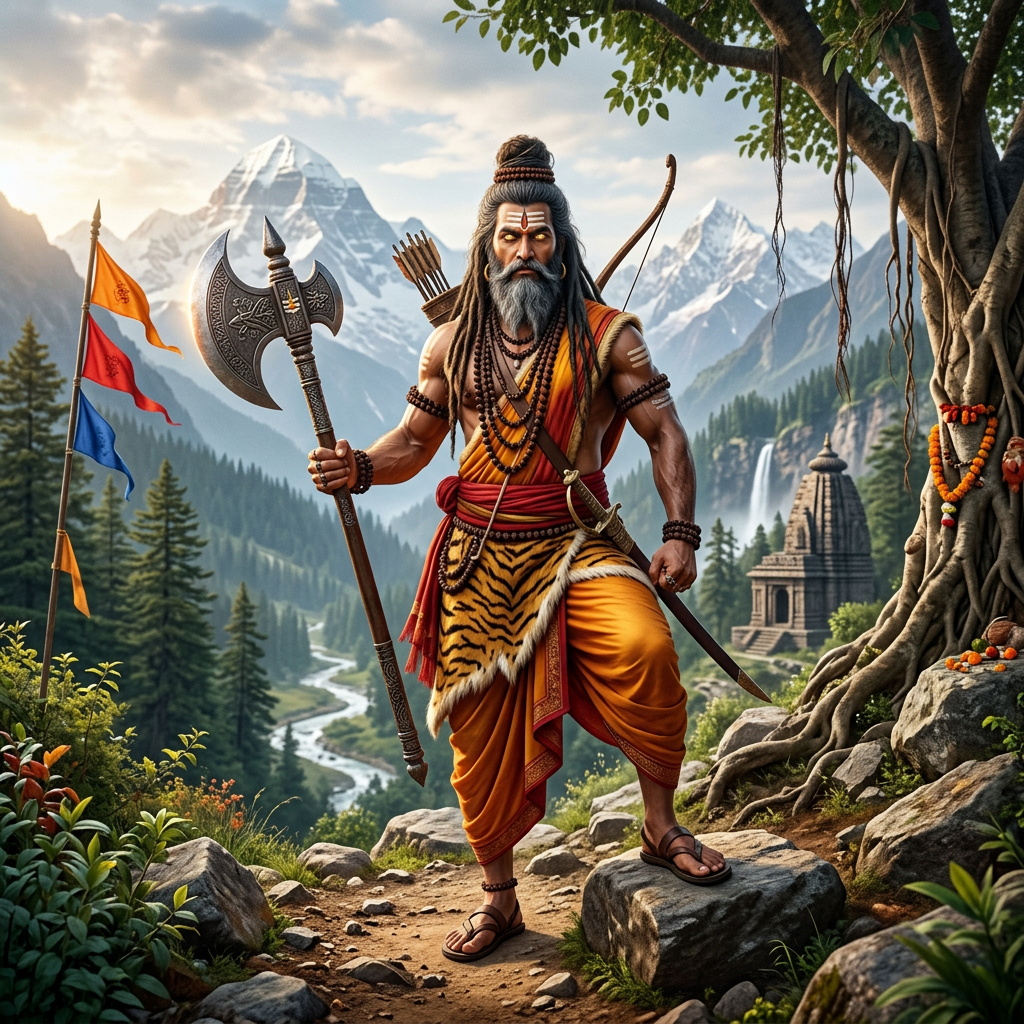
At a time when concerns are being raised about the waning influence of Sanatan values and a visible detachment from cultural roots, Parshuram Jayanti assumes renewed relevance—serving as both a reminder and a rallying point.
A Civilisational Pause: Is Sanatan Consciousness Fading?
India today stands at the crossroads of rapid modernisation and cultural introspection. While economic and technological progress is undeniable, there is a growing perception that traditional values and civilisational awareness are eroding.
A section of society, particularly the youth, appears increasingly distanced from:
Indigenous knowledge systems
Cultural practices and traditions
Philosophical depth of Sanatan Dharma
This drift is not merely
religious—it signals a broader cultural disconnect, raising questions about identity, continuity, and collective memory.
Parshuram: A Timeless Archetype of Resistance and Balance
The life of Lord Parshuram offers a compelling counterpoint to this drift. Born to sage Jamadagni, he embodied a rare synthesis of intellectual depth and martial resolve.
His legacy underscores enduring principles:
Standing firm against injustice
Balancing knowledge with strength
Upholding righteousness, even through action when necessary
Preserving dignity and self-respect
In essence, Parshuram represents the idea that dharma is not passive—it demands awareness, conviction, and action.
Understanding the Growing Apathy
The perceived indifference towards Sanatan traditions can be attributed to multiple factors:
- Knowledge Deficit
A lack of structured understanding of scriptures and traditions has created distance between generations and their heritage. - Unchecked Modern Aspirations
Material advancement often overshadows spiritual inquiry, leading to a one-dimensional growth model. - Weak Cultural Transmission
Family and community institutions, once the custodians of tradition, are no longer as effective in passing on values. - Leadership Vacuum
There is a visible need for credible voices who can articulate Sanatan philosophy in contemporary language.
The result is a subtle yet significant identity dilution, where cultural confidence begins to waver. - Relevance for the Brahmin Community and Beyond
Lord Parshuram, though born a Brahmin, redefined societal roles by embracing the responsibilities of a protector. His life sends a clear message:
Knowledge must translate into leadership
Silence in the face of injustice is complicity
For the Brahmin community, in particular, this is a call to reclaim their traditional role as guides, educators, and moral anchors.
Culture as a Living Framework, Not Ritual Alone
Sanatan Dharma is often misunderstood as a set of rituals. In reality, it is a comprehensive way of life, integrating philosophy, science, ethics, and spirituality.
Re-engaging with this framework can:
Strengthen ethical foundations
Foster social cohesion
Reinforce a sense of belonging and pride
Parshuram Jayanti, therefore, is not just a religious observance—it is an opportunity to reconnect with foundational principles.
Conclusion: From Celebration to Commitment
As India navigates the complexities of the modern world, the message of Lord Parshuram resonates with striking clarity:
Dharma must be understood, lived, and defended.
Parshuram Jayanti should evolve beyond ceremonial observance into a day of reflection and resolve—a moment to reaffirm commitment towards cultural continuity, moral courage, and societal balance.
In rediscovering Parshuram, society may well rediscover the strength of its own roots.

