

The Foreign Contribution (Regulation) Amendment Bill 2026-A struggle to balance sovereignty, civil society, and democracy.
The Foreign Contribution (Regulation) Amendment Bill 2026-A symbol of a deep ideological conflict between India’s democratic character, political competition, and global recognition.-Advocate Kishan Sanmukhdas Bhawnani, Gondia, Maharashtra
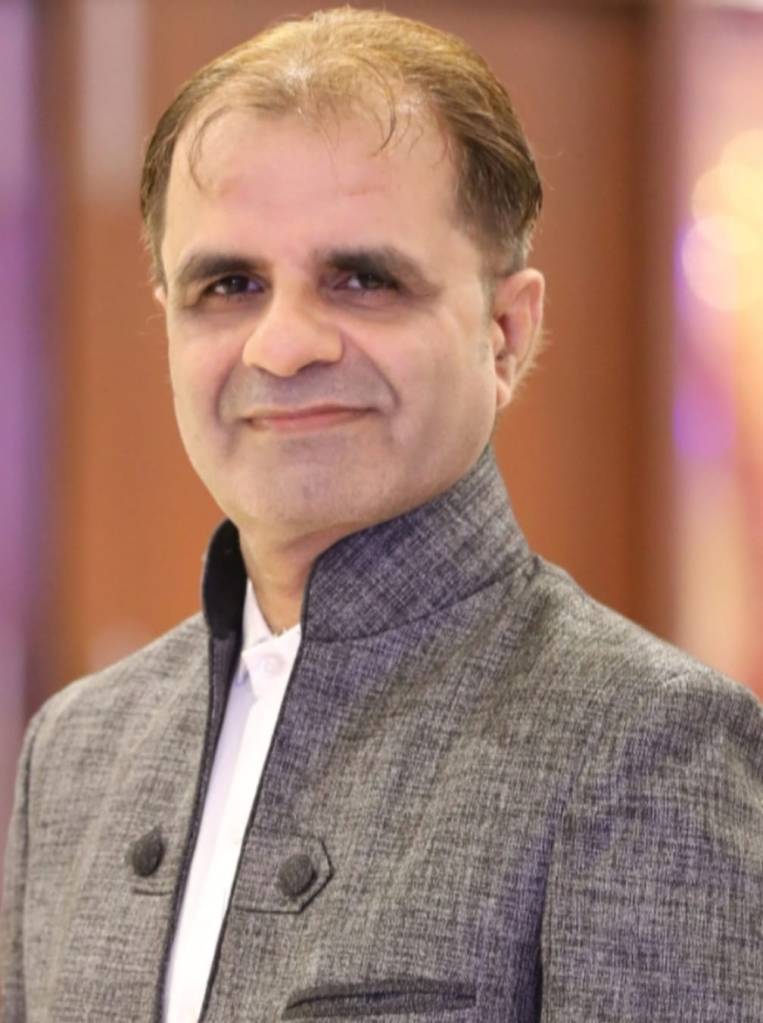
Gondia-The Foreign Contribution Regulation Act (FCRA), the law that regulates the flow and use of foreign funds in India globally, has long been a focus of political, social, and international debate. The Foreign Contribution (Regulation) Amendment Bill 2026, proposed in 2026, has further intensified this debate. While the government is calling it a masterstroke to protect national security, transparency, and sovereignty, the opposition and civil society are considering it an attack on democratic rights and freedom of expression.I,Advocate Kishan Sanmukhdas Bhawnani, Gondia, Maharashtra, believe that this is not just a legal amendment, but a broader issue affecting India’s democratic structure, political competition, and global relations. In a vast and diverse democracy like India, non-governmental organizations (NGOs), trusts, and civil society institutions have played a vital role in areas such as social development, education, health, human rights, and environmental protection.These organizations often receive financial assistance from foreign sources, enabling them to effectively conduct their programs and campaigns. In this context, the Foreign Contribution (Regulation) Amendment Bill 2026 (FCRA 2026) introduced by the Government of India has emerged as a highly significant and controversial legislative initiative.The bill’s stated objective is to increase transparency and protect national interests by controlling foreign funding, but there is widespread disagreement within the opposition and civil society regarding its provisions and potential impact.The fundamental objective of the FCRA law is to regulate the flow of foreign funds so that they are not used against India’s sovereignty, integrity, and security. This law was first enacted in 1976 and was subsequently comprehensively amended in 2010. Significant changes were also made in 2020, including administrative expenditure limits, a ban on sub-granting, and provisions for Aadhaar-based identification The proposed 2026 amendment is seen as the next step in this series, in which the government is taking steps towards further tightening the regulations. The government argues that in recent years, it has observed that some NGOs are using foreign funding for activities that not only threaten the country’s internal security but also affect social harmony.For example, the government claims that foreign funds have been used for illegal religious conversions, separatist activities, and policy interference.Therefore, the primary objective of the FCRA 2026 is to prevent these threats and ensure that foreign aid is used only for legitimate and transparent purposes. According to the government, this bill is a step toward eliminating concepts like the deep state, where NGOs can influence policies through foreign influence. In the context of national security, it is argued that foreign funding can sometimes be used to incite social unrest, protest movements, or political instability. Therefore, stricter controls are necessary.
Friends Fellows, if we understand the key provisions of this bill, it includes implementing stricter registration and monitoring mechanisms for organizations receiving foreign funding. The government has also proposed that if an NGO’s license is revoked or it surrenders its license, its assets acquired with foreign funds will be confiscated by a government-designated authority. Its purpose is to ensure that such assets are not used for private gain or questionable activities, but rather are used in the public interest. Furthermore, the bill also provides that organizations receiving foreign funding will not be able to interfere, directly or indirectly, in policy matters.The government believes that in a democracy, policymaking should rest solely with elected representatives, and that institutions influenced by external funding should not be allowed to interfere in this process.However, the opposition and several social organizations have raised serious objections to these provisions. They allege that the bill grants excessive powers to the government, allowing it to suppress dissenting voices. The opposition contends that the definition of policy interference is too broad and vague, allowing the government to arbitrarily target any organization. Minority communities and human rights organizations, in particular, are feared to be the most affected under this law.
Friends, if we consider the opposition’s and society’s arguments regarding the amendments to this bill, the entire opposition has strongly opposed this bill. They argue that this law gives the government excessive powers, allowing it to suppress dissenting voices. NGOs, human rights organizations, and social activists could be targeted.The opposition also alleges that the government could misuse vague definitions like national interest to shut down criticalorganizations. Furthermore, the Aadhaar requirement and surveillance system are being described as violating the right to privacy. This bill caused a huge uproar in the Lok Sabha and Rajya Sabha. Opposition MPs shouted slogans and staged a walkout, calling it an attack on democratic institutions. This bill could adversely impact the freedom of expression and the right to form associations guaranteed by the Constitution. Banning an organization solely on the basis of its criticism of government policies would be contrary to democratic values. In this context, many experts have raised the question of whether the government is restricting the freedom of civil society in the name of transparency.The bill has received particularly strong reactions in states like Kerala and Tamil Nadu. In Kerala, where NGOs play a vital role in education, health, and social services, the bill has sparked widespread political and social debate. The state government and opposition parties argue that the law could impact the state’s development efforts and hinder international cooperation. The impasse over the bill in Parliament was not merely a result of political disagreements but also reflected deeper ideological differences. The opposition demanded that the bill be referred to a parliamentary committee so that its provisions could be thoroughly discussed and reviewed. They believed that hasty passage of such an important and wide-reaching law would be inappropriate. Although the government favored expeditious passage of the bill, citing it as essential for national security and transparency, it was postponed due to opposition protests, uproar in Parliament, and a lack of consensus. This postponement indicates that the government and the opposition have still not reached a consensus on this issue.
Friends, if we consider the impact of this amendment bill on civil society: control or reform? Civil society organizations have played a vital role in India, whether in the fields of education, health, the environment, or human rights. Following this bill, it may become more difficult for small and medium-sized NGOs to obtain foreign funding.This could limit their activities. However, the government argues that this will only affect fake or dubious organizations, while organizations engaged in genuine work will face no problems. This debate boils down to a fundamental question: does control bring transparency or limit freedom?
Friends, if we consider this bill in an international context, there have been reactions to this bill at the international level as well. Many global human rights organizations and foreign governments have expressed concern that civil society freedom is being curtailed in India. They say such laws could weaken democratic institutions and impact international cooperation. However, the Indian government has rejected these criticisms, stating that this is an internal matter and that every sovereign nation has the right to protect its security and interests. The most important question in this entire scenario is whether strictness is necessary in the name of transparency and security, or whether it could pose a threat to democratic freedoms. A balanced approach is needed, which not only prevents the misuse of foreign funding but also protects the role and independence of civil society.
Thus, if we study and analyze the above statement, we will find that the FCRA 2026 is not just a legislative proposal, but represents a complex challenge of striking a balance between India’s democratic structure, civil liberties, and national security. Its postponement in Parliament indicates that this topic requires broad consensus and in-depth discussion. In the future, it will be important to see how the government and the opposition resolve this issue and whether this law actually achieves its stated objectives.
 Modern Shrines Publications