

Top Oncologists—Dr. Manish Singhal, Dr. Shefali Sardana and Dr. Aditya—Warn Against Dangerous Delays in Diagnosis
Special Correspondent Arun Sharma
New Delhi
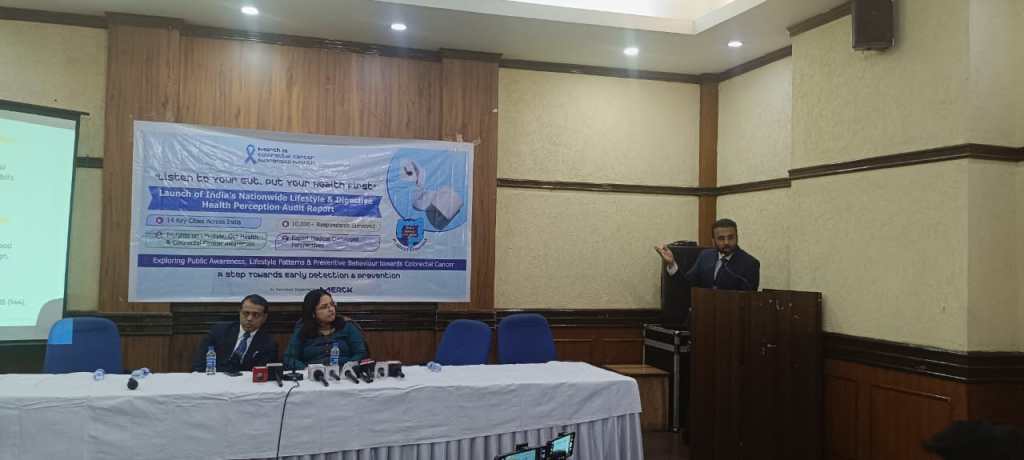
A nationwide survey released during Colorectal Cancer Awareness Month has revealed a disturbing gap in awareness among urban Indians, particularly in Delhi, where more than 80% of residents are unaware that blood in stool can be an early warning sign of colorectal cancer.
Conducted across 14 major cities and involving over 10,000 participants aged 21 to 55, the survey highlights alarming trends in both awareness and healthcare-seeking behavior, raising serious public health concerns.
Experts Raise Red Flags
Dr. Manish Singhal, Vice Chairman, Medical Oncology, emphasized that colorectal cancer often begins as small, non-cancerous polyps in the colon or rectum that can gradually turn malignant.
“Unhealthy diets, sedentary lifestyles, and delayed screening are key contributors. However, early detection makes this disease highly treatable,” he noted.
Dr. Shefali Sardana highlighted the worrying trend of delayed medical consultation.
“Nearly 90% of individuals postpone seeking medical advice despite experiencing symptoms. Ignoring warning signs such as blood in stool or persistent digestive issues can have serious consequences,” she cautioned.
Dr. Aditya pointed to lifestyle factors as a major risk driver.
“Frequent consumption of processed and outside food, low physical activity, and tobacco use significantly increase cancer risk. Preventive measures like a fiber-rich diet, regular exercise, and timely screening are crucial,” he said.
Alarming Survey Findings
89.5% delay consulting a doctor despite symptoms
Over 65% report digestive issues such as constipation or loose motions
Around 60% rely on self-medication or home remedies
Only 35.5% engage in regular physical activity
More than half frequently consume packaged or outside food
A Growing Health Concern
Health experts warn that colorectal cancer is rapidly emerging as a major health concern in India, driven by poor lifestyle choices and low awareness. Despite visible symptoms, delayed diagnosis continues to pose a serious challenge.
The Way Forward
The findings underline an urgent need for increased public awareness, timely screening, and proactive lifestyle changes. Experts stress that recognizing early symptoms and seeking prompt medical care can significantly reduce the burden of colorectal cancer and improve survival outcomes.
 Modern Shrines Publications