

| Key Takeaways |
| The inaugural Khelo India Tribal Games is being held from 25th March to 3rd April 2026, as India’s first national multi-sport event for tribal athletes.Hosted in Chhattisgarh across Raipur, Jagdalpur and Surguja, the Games have brought together tribal athletes from across India onto a national platform.The Games feature seven medal sports along with demonstration events of indigenous sporting traditionsOver 60,000 athletes from 30 states and UTs will play for 338 medals in the Games |
Expanding India’s Sporting Ecosystem: The Khelo India Approach
Sports play a vital role in shaping individuals and communities. They build discipline, confidence and teamwork, while also fostering a sense of unity and shared purpose. For a country like India, sport is not only about competition. It is also a means to engage the youth, promote healthy lifestyles and create pathways for growth and opportunity.
With this vision, the Government of India launched the Khelo India programme to strengthen the sporting culture across the country. The programme focuses on expanding participation at the grassroots level, identifying promising talent and providing sustained support to young athletes. Through a combination of competitions, training and financial assistance, Khelo India is helping create a more structured and accessible sports ecosystem.
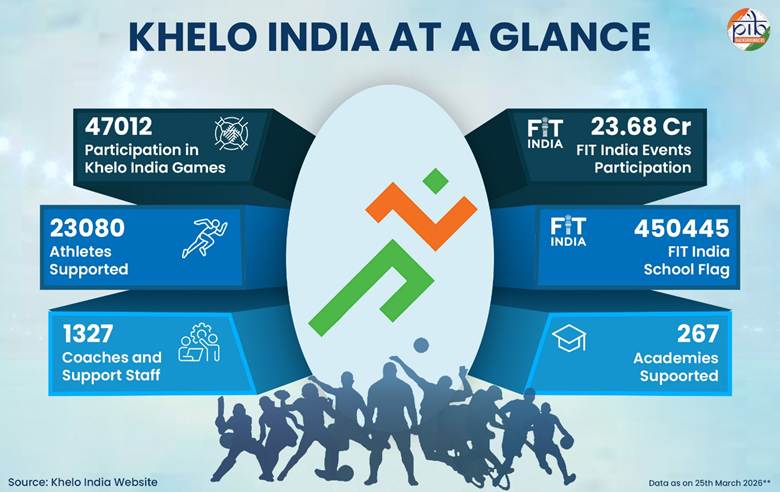
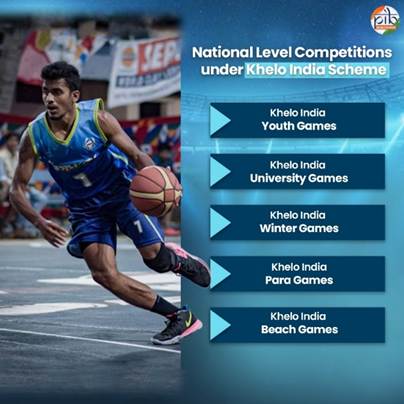
A key feature of this approach is its emphasis on inclusion. The programme seeks to reach regions and communities where sporting opportunities have traditionally been limited, ensuring that talent from across the country can be recognised and nurtured. In this context, initiatives aimed at promoting sports among tribal communities represent an important step towards inclusivity. National level sporting events like Youth Games, University Games, Beach Games, and Winter Games, among others are held under the Khelo India umbrella. The addition of Khelo India Tribal Games as another vertical under this umbrella provides a national platform to tribal athletes, while also recognising and promoting India’s rich tradition of indigenous sports.
Khelo India Tribal Games
India’s tribal communities have long been home to exceptional sporting talent-strong, skilled and deeply rooted in physical traditions. Much of this talent has remained outside structured sporting platforms until now. The Khelo India Tribal Games seek to bring this talent pool into the national spotlight.
The inaugural edition of the Khelo India Tribal Games (KITG) is being held from 25th March to 3rd April 2026 in Chhattisgarh, across three host cities—Raipur, Jagdalpur and Sarguja. It is the first national multi-sport event under the Khelo India programme dedicated exclusively to tribal athletes, bringing participants from across 30 States and Union Territories onto a common competitive stage.
The Games feature seven medal sports- athletics, football, hockey, weightlifting, archery, swimming and wrestling- along with demonstration events such as mallakhamb and kabaddi, reflecting both competitive sport and India’s indigenous sporting traditions.
Kabaddi: A Traditional Sport with Global Roots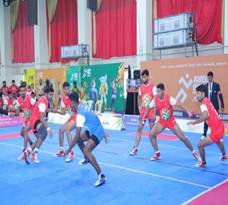 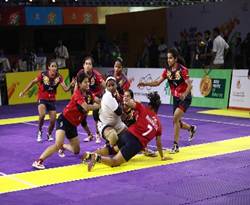 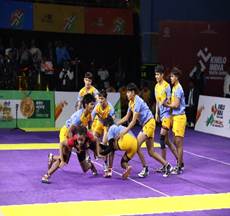 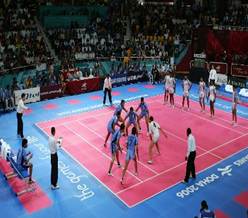 Kabaddi is one of India’s oldest indigenous sports, with a history rooted in the Indian subcontinent where it was traditionally played as a test of strength, strategy and endurance. Over time, the game evolved from a local pastime into a structured sport, with formal rules being standardised in the early 20th century and organised competitions beginning soon after.The sport gained international visibility when it was showcased at the 1936 Berlin Olympics as a demonstration event, marking one of its earliest appearances on a global platform. This helped introduce kabaddi to audiences beyond India.Today, kabaddi continues to hold a unique place, combining traditional origins with organised competition, and remains an important representation of India’s indigenous sporting heritage. Kabaddi is one of India’s oldest indigenous sports, with a history rooted in the Indian subcontinent where it was traditionally played as a test of strength, strategy and endurance. Over time, the game evolved from a local pastime into a structured sport, with formal rules being standardised in the early 20th century and organised competitions beginning soon after.The sport gained international visibility when it was showcased at the 1936 Berlin Olympics as a demonstration event, marking one of its earliest appearances on a global platform. This helped introduce kabaddi to audiences beyond India.Today, kabaddi continues to hold a unique place, combining traditional origins with organised competition, and remains an important representation of India’s indigenous sporting heritage. |
Mallakhamb: Strength, Balance and Tradition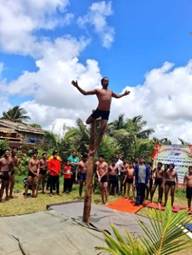 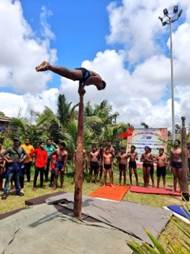 Mallakhamb is a traditional Indian sport that combines elements of gymnastics, yoga and strength training, performed on a vertical wooden pole, rope or hanging apparatus. The name itself comes from ‘malla’ (wrestler) and ‘khamb’ (pole), reflecting its origins as a training practice for wrestlers. Mallakhamb is a traditional Indian sport that combines elements of gymnastics, yoga and strength training, performed on a vertical wooden pole, rope or hanging apparatus. The name itself comes from ‘malla’ (wrestler) and ‘khamb’ (pole), reflecting its origins as a training practice for wrestlers.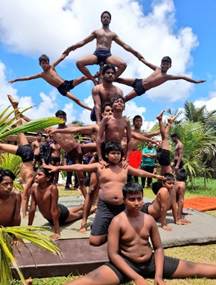 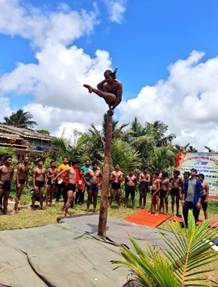 With roots going back several centuries, the sport was historically used to build agility, strength and coordination. Over time, it evolved into a structured discipline with different forms such as pole, rope and hanging mallakhamb, each requiring a high degree of balance and control.Mallakhamb also gained international exposure when it was showcased at the 1936 Berlin Olympics as a demonstration sport, introducing this indigenous discipline to a global audience.Today, mallakhamb continues to represent India’s rich physical culture, blending tradition with athletic skill, and finds a place in platforms like the Khelo India Tribal Games that promote indigenous sports alongside mainstream disciplines. With roots going back several centuries, the sport was historically used to build agility, strength and coordination. Over time, it evolved into a structured discipline with different forms such as pole, rope and hanging mallakhamb, each requiring a high degree of balance and control.Mallakhamb also gained international exposure when it was showcased at the 1936 Berlin Olympics as a demonstration sport, introducing this indigenous discipline to a global audience.Today, mallakhamb continues to represent India’s rich physical culture, blending tradition with athletic skill, and finds a place in platforms like the Khelo India Tribal Games that promote indigenous sports alongside mainstream disciplines. |
The initiative goes beyond the field. By taking organised sport to regions where access has often been limited, the Games open up new possibilities for young people, whether in the form of exposure, confidence or future opportunities. In this sense, sport becomes more than competition; it becomes a way to connect, to grow, and to move forward.
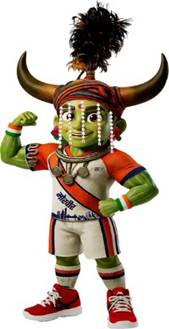
The official mascot, Morveer, reflects the spirit of the Games. Derived from the Chhattisgarhi words ‘Mor’ (our own) and ‘Veer’ (bravery), it symbolises pride, spirit and the identity of India’s tribal communities.
| Chhattisgarh: Dawn of a New EraIt is significant that Chattisgarh, that has been affected by left wing extremism for decades, is hosting the Khelo India Tribal Games 2026. It speaks of the resilient spirit of the people of the region. The KITG will bring structured sporting opportunities directly to tribal-majority regions such as Bastar, Sarguja and the Dandakaranya belt, where talent has historically remained under-recognised. The state government had organized Bastar Olympics last year, which was followed by Sarguja Olympics in 2026, showcasing how community-level engagement can unlock local talent. The Khelo India Tribal Games aim to expand participation and identify talent at the community level. Many of these regions have also faced socio-economic challenges over time. Keeping that in mind, the Games seek to integrate tribal athletes into the national sporting ecosystem and strengthen India’s future talent pipeline. |
The KheloIndia Tribal Games 2026 is being jointly managed by the Ministry of Youth Affairs & Sports, Sports Authority of India (SAI), Indian Olympic Association, National Sports Federations and the Chhattisgarh state organising committee, with technical standards benchmarked against international competitions.
As the Khelo India Tribal Games unfold, they bring into focus not just talent, but the many stories behind it—of effort, aspiration and the chance to be seen.
Participation, Medals and Selection Framework
The Khelo India Tribal Games 2026 is witnessing participation at a significant national scale. The Games have brought together over 60,000 participants from 30 States and Union Territories. This wide participation reflects the growing reach of organised sports among tribal communities across the country.
A total of 338 medals are being contested across seven sports disciplines, comprising 106 gold, 106 silver and 126 bronze medals. Athletics accounts for the highest number of medals, followed by swimming, wrestling and weightlifting, reflecting the scale and diversity of competition across disciplines.
| S No | Sports | Medal | Total | ||
| Gold | Silver | Bronze | |||
| Archery | 10 | 10 | 10 | 30 | |
| Athletics | 34 | 34 | 34 | 102 | |
| Football | 2 | 2 | 4 | 8 | |
| Hockey | 2 | 2 | 2 | 6 | |
| Swimming | 24 | 24 | 24 | 72 | |
| Weightlifting | 16 | 16 | 16 | 48 | |
| Wrestling | 18 | 18 | 36 | 72 | |
| Total | 106 | 106 | 126 | 338 | |
The selection of athletes for the Games has been carried out through a structured two-phase process:
Phase 1: States and Union Territories conducted selection trials through their respective sports departments to identify eligible tribal athletes and nominate them for the next stage.
Phase 2: Shortlisted athletes participated in national selection trials organised by the concerned National Sports Federations, in coordination with the Khelo India team. Final selections were made based on performance in these trials, ensuring a transparent and merit-based pathway to participation.
In addition, the Games serve as a platform for talent identification, with a dedicated Talent Identification and Development committee (TIDC) deployed to scout promising athletes for further training and development under the Khelo India framework.
Competition Schedule and Event Flow
The Khelo India Tribal Games 2026 is being conducted over a ten-day period, with events scheduled across multiple venues to ensure smooth and efficient conduct of competitions. The schedule has been designed to accommodate parallel events across disciplines, allowing athletes adequate time for participation and progression.
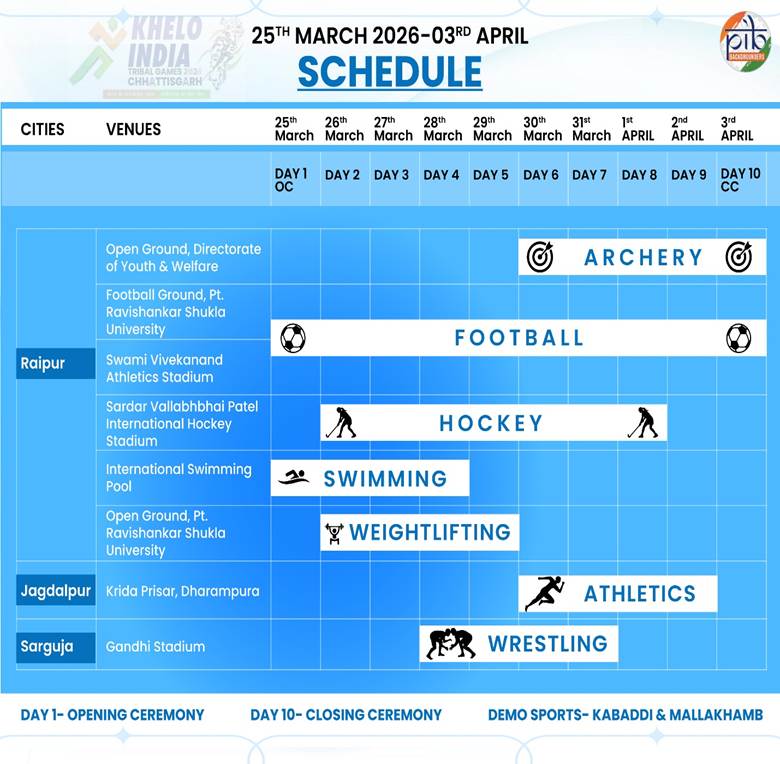
As the Games unfold from 25th March to 3rd April, the schedule is designed to sustain momentum, with each day bringing new contests, emerging stories and new champions. More than a sequence of events, it aims to become a shared experience that unites athletes, communities, and audiences alike.
The Khelo India Tribal Games 2026 is being telecast live on Doordarshan, allowing people across the country to witness these moments and celebrate the spirit and talent of tribal youth.
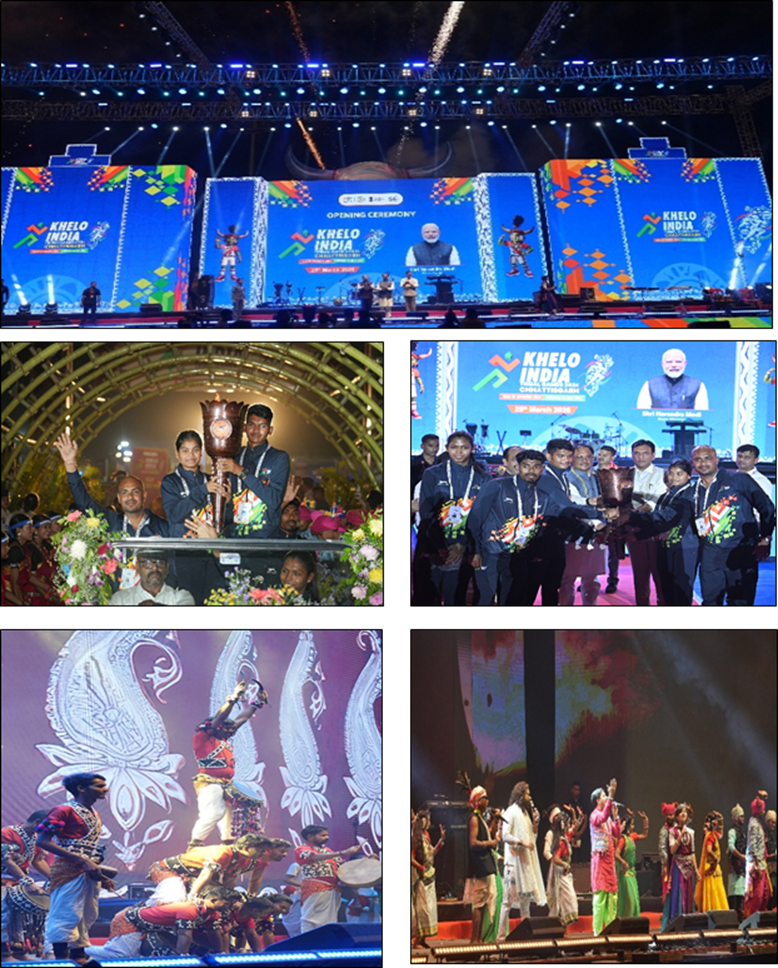
Glimpses from the Games
A Proven Pathway: Infrastructure and Talent Development under Khelo India
Expanding Access: Sports Infrastructure under Khelo India
Across the country, covering all States and Union Territories, the Khelo India programme has significantly expanded sports infrastructure, with a total of 344 projects sanctioned so far. These projects represent an overall financial commitment of ₹3,158.15 crore sanctioned, with ₹2,730.95 crore already released, reflecting steady progress in implementation.
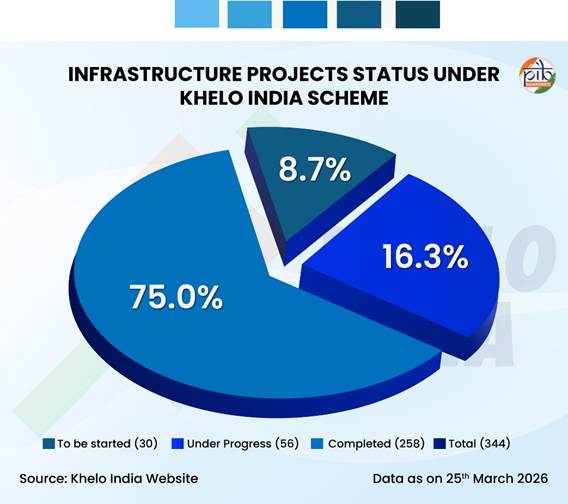
In terms of infrastructure created, the programme covers a wide range of facilities:
- 126 Multipurpose Halls
- 64 Athletic Tracks
- 25 Football Fields
- 29 Hockey Fields
- 16 Swimming Pools
- 84 Other Sports Facilities
This growing network of infrastructure has helped extend access to quality sporting facilities beyond traditional centres, bringing organised sport closer to communities. In regions such as Chhattisgarh and other tribal areas, these investments form the base on which initiatives like the Khelo India Tribal Games can build—linking infrastructure with participation and long-term talent development.
From Talent to Achievement: Athletes under Khelo India
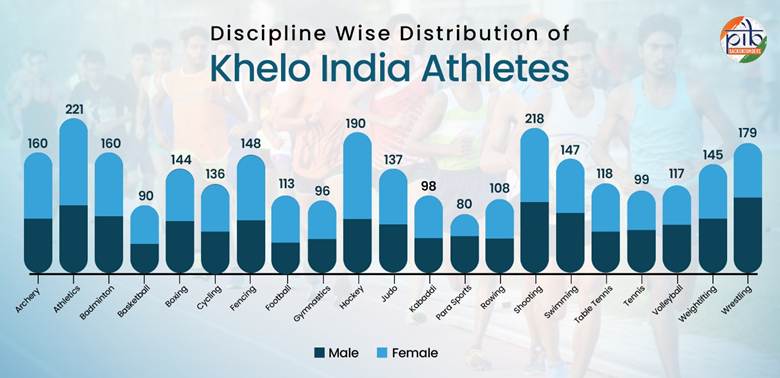
The Khelo India programme is identifying talent at the grassroots and supporting athletes across disciplines to compete and succeed at higher levels. The achievements emerging from Khelo India Centres (KICs) reflect both diversity and depth of talent across the country.
In athletics, Gungun (Uttar Pradesh) won gold in the 100m (U-20), while Sangita (Uttar Pradesh) secured gold in state weightlifting championships. In team sports, Khushi Kumari (Bihar) won a gold medal in the National Rugby Sub-Junior Championship, highlighting the emergence of talent from non-traditional sporting regions.
From Jammu & Kashmir, gymnasts led by Triza Balal delivered strong performances at the National Sub-Junior Rhythmic Gymnastics Championships, securing multiple medals across individual and team events. In kabaddi, players such as Shahid Zahoor and Nazia Lateef (J&K) were selected for the Sub-Junior National Championship, reflecting growing representation from remote areas.
In Kerala, athletes like Ahanaf PK (boxing) and Harinandan PA (swimming) secured state-level gold medals and national participation, while Punjab athletes such as Bramjot Kaur delivered podium finishes across athletics events.
Across disciplines—from athletics and boxing to kabaddi, gymnastics and rugby—these achievements reflect a clear shift. Athletes from smaller towns and underserved regions are now moving from local platforms to national competition.
In this context, the Khelo India Tribal Games build on this pathway, creating a focused platform to identify and support talent from tribal communities and connect them to the wider sporting ecosystem.
Carrying the Momentum Forward
As the first national multi-sport event dedicated to tribal communities, the Games are doing something deeper than crowning champions. They create space for participation, confidence and connection, allowing young athletes to step into environments where their abilities are recognised and valued.
What follows from here is just as important. The Games are designed to identify and support talent as it emerges. With coaches, technical experts and talent scouts present, promising athletes can move into structured training pathways, including opportunities at Sports Authority of India centres. For many, this could be the beginning of a longer journey.
As these pathways strengthen, the impact of the Khelo India Tribal Games will be seen not only in medals, but in the opportunities they create. On grounds that once saw limited access to organised sport, new stories are beginning to take shape – where participation leads to confidence, and confidence opens greater avenues to success.
References
Press Information Bureau
- https://www.pib.gov.in/PressReleasePage.aspx?PRID=2235848®=3&lang=1
- https://www.pib.gov.in/PressReleasePage.aspx?PRID=2166353
- https://www.pib.gov.in/PressReleasePage.aspx?PRID=2192038®=3&lang=2
- https://www.pib.gov.in/PressReleseDetailm.aspx?PRID=2088683®=3&lang=2
- https://www.pib.gov.in/PressReleasePage.aspx?PRID=2192038®=3&lang=2
- https://www.pib.gov.in/PressReleseDetailm.aspx?PRID=2088683®=3&lang=2
- https://www.pib.gov.in/PressReleasePage.aspx?PRID=2192038®=3&lang=2
- https://www.pib.gov.in/PressReleasePage.aspx?PRID=2084648
- https://www.pib.gov.in/PressReleasePage.aspx?PRID=1560483®=3&lang=2
- https://www.pib.gov.in/PressReleseDetailm.aspx?PRID=1822145®=3&lang=2
- https://www.pib.gov.in/PressReleasePage.aspx?PRID=1560480®=3&lang=2
Ministry of Youth Affairs and Sports
- https://kheloindia.gov.in/
- https://tribal.kheloindia.gov.in/
- https://dashboard.kheloindia.gov.in/khelo-india-athletes
- https://mdsd.kheloindia.gov.in/
- https://mdsd.kheloindia.gov.in/gratee-type-wise-progress
- https://mdsd.kheloindia.gov.in/web/sites/default/files/details-achievements-athletes.pdf
Others
- https://dprcg.gov.in/post/1753983805/Raipur-Bastar-Olympics-gets-the-status-of-Khelo-India-Tribal-Games-medical-nursing-colleges-to-be-opened-in-Raipur-Bilaspur
- https://ddnews.gov.in/en/khelo-india-tribal-games-logo-theme-song-mascot-launched-in-bilaspur-mandaviya-says-games-will-broaden-scope-for-every-athlete/
- https://www.olympics.com/en/news/what-is-mallakhamb-rules-history-origin-india
- https://www.olympics.com/en/news/kabaddi-in-olympics-berlin-1936-exhibition-sport
- https://www.indiankabaddi.org/history-of-kabaddi.html
 Modern Shrines Publications