

New Delhi / East Delhi (Shahdara–Vivek Vihar) | Special Correspondent: Arun Sharma
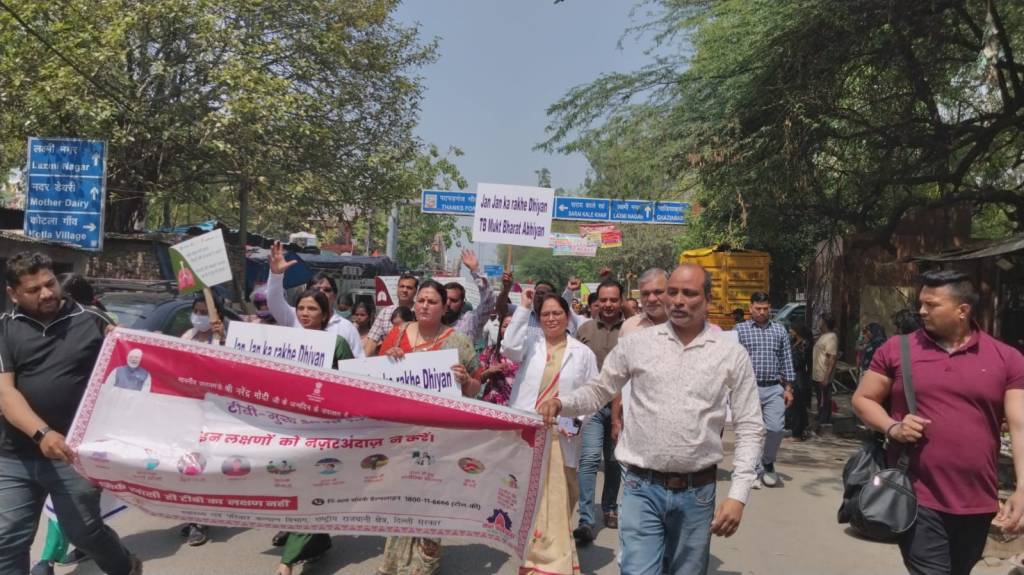
On the occasion of World Tuberculosis Day (March 24), India reinforced its commitment to eliminating tuberculosis through a series of high-impact community initiatives in the national capital. A large-scale awareness rally, combined with policy advocacy and grassroots participation, positioned Delhi as a growing model in the global fight against TB.
The initiative aligns closely with the vision of Narendra Modi, whose “ mission has emphasized accelerated detection, complete treatment, and strong community engagement as pillars of elimination.
Medical Leadership at the Forefront
A key highlight of the event was the strong presence and expert insights of leading public health professionals:
Dr. Bindu Mehra Behl (District TB Officer) — emphasized measurable progress and advanced diagnostic strategies
Dr. Madhu Chandna (Chief Medical Officer) — underscored administrative and public health coordination
Dr. Rekha — highlighted maternal and community-level awareness
Their collective message was clear: TB is preventable, treatable, and ultimately eliminable with sustained efforts.
Key Public Health Gains in Delhi
According to Dr. Bindu Mehra Behl, Delhi has recorded significant progress in TB control:
25% reduction in TB-related mortality
21% decline in overall TB cases
She highlighted that India’s End TB Program is now more target-driven, data-focused, and technologically advanced, incorporating rapid diagnostics such as CBNAAT and TrueNat.
Focus on Drug-Resistant TB (MDR-TB)MLA,
Experts raised concern over Multidrug-Resistant TB (MDR-TB), often caused by incomplete treatment adherence.
Key recommendations included:
Ensuring full-course treatment compliance
Expanding early detection through sputum testing and X-ray camps
Prioritizing vulnerable groups (elderly, diabetics, smokers, malnourished populations)
Community Engagement: The ‘Nikshay Mitra’ Initiative
A major highlight of the campaign was the promotion of the Nikshay Portal initiative, encouraging citizens to become “Nikshay Mitras” (TB patient supporters).
Key Features:
Financial nutritional support: ₹800/month per patient
Minimum support duration: 6 months (₹4800)
Open to individuals, NGOs, and corporate partners
Monitored by Indian Red Cross Society
This model reflects a public-private-community partnership approach, increasingly recognized in global health systems.
Mass Awareness Campaign in Action
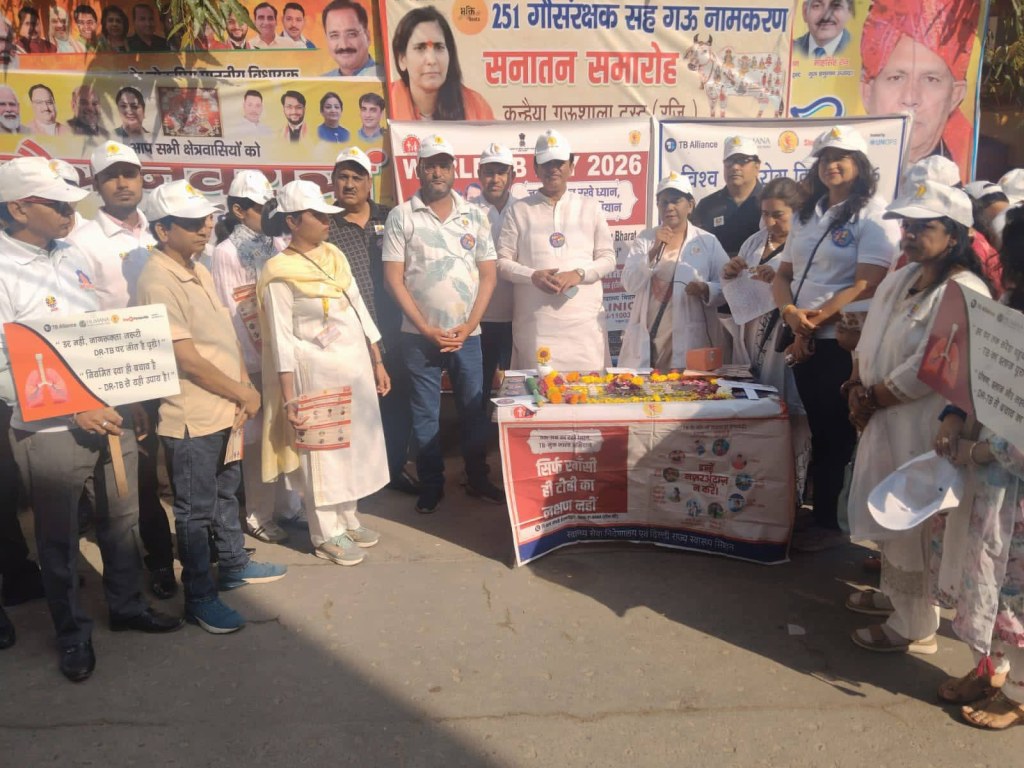
The awareness rally in Shahdara–Vivek Vihar, led by Humana People to People India under its “Respect Project,” saw participation from over 180 community members.
Innovative outreach methods included:
Street plays
Community group meetings
Digital/video awareness sessions
Local leadership, including MLA Sanjay Goyal, reinforced the importance of public participation in disease elimination.
Global Message: “Yes, We Can End TB”
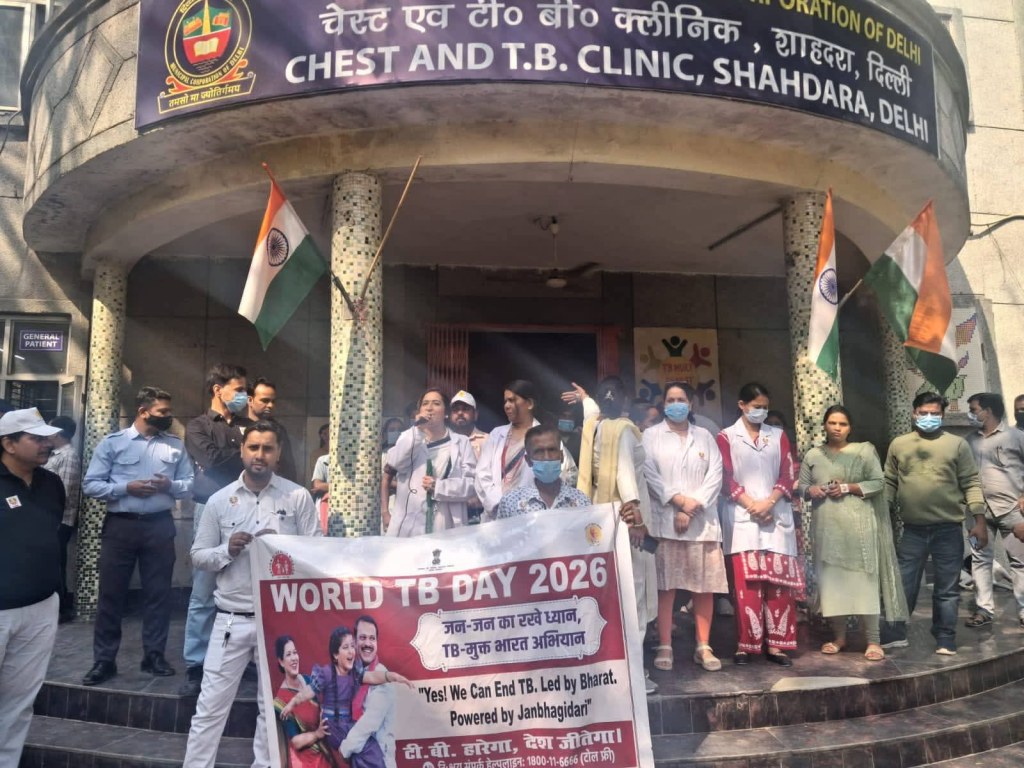
Speakers reiterated the global World TB Day theme — “Yes, We Can End TB” — stressing that elimination is achievable through:
Early diagnosis
Complete and supervised treatment
Nutritional and social support
Mass awareness and stigma reduction
Conclusion: A Replicable Global Model
Delhi’s integrated approach—combining government policy, medical leadership, and community participation—is emerging as a replicable model for TB elimination worldwide.
With sustained momentum under Narendra Modi’s vision, India is positioning itself not only to achieve a TB-Free status, but also to lead global public health transformation in infectious disease control.
 Modern Shrines Publications