

By Arun Sharma, Special Correspondent,New Delhi
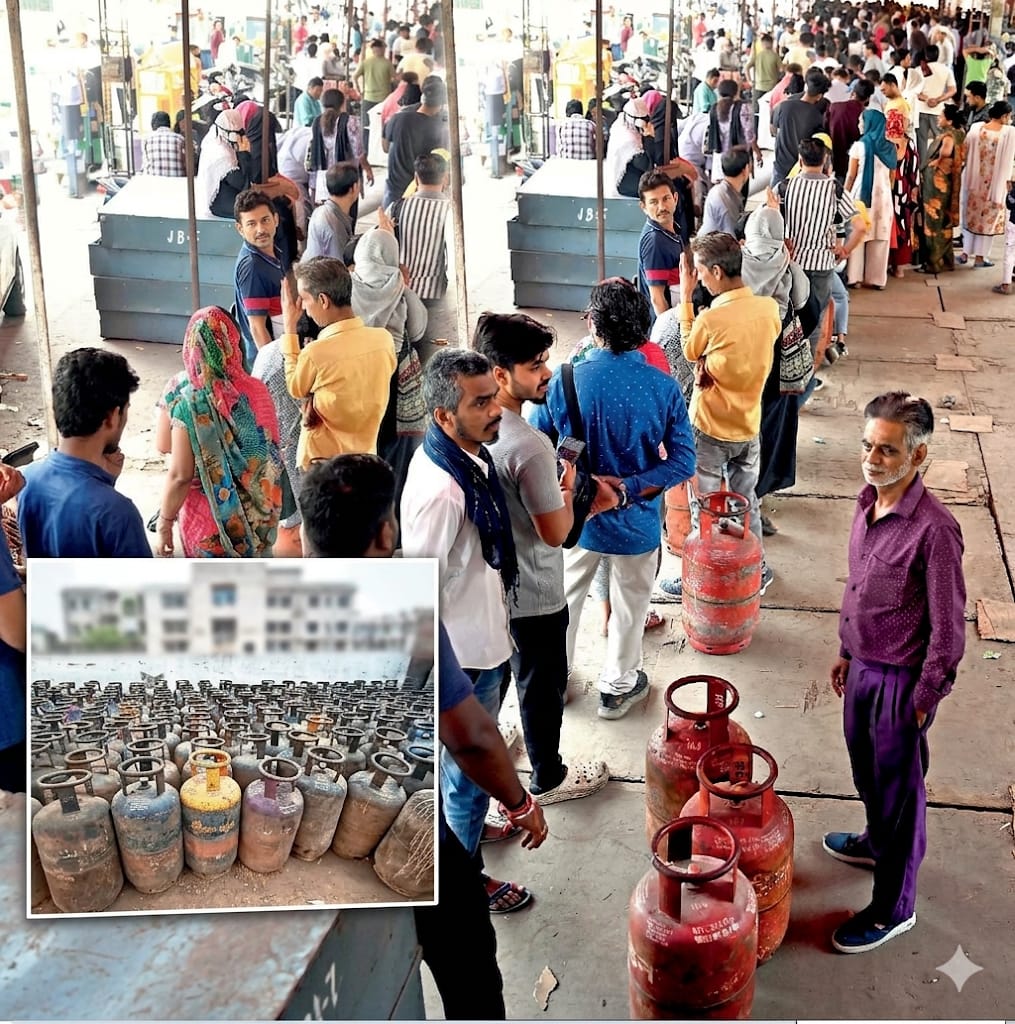
India’s domestic cooking gas supply situation continues to raise concerns, even as the government ramps up production in a bid to stabilize availability. Despite a sharp 36% increase in LPG output within just two weeks, officials admit that the overall scenario remains “challenging”, with the gap between demand and supply yet to be fully bridged.
According to the Petroleum Ministry, priority is being given to household consumers to cushion them from the impact of shortages. However, mounting global pressures are weighing heavily on supply chains, limiting the effectiveness of domestic measures
36% surge in domestic LPG production in two weeks
Demand-supply gap persists, keeping markets under pressure
60% of India’s LPG demand met through imports
85–90% imports sourced from West Asia, now facing disruptions
No “dry-out” situation yet, government assures
Officials are increasingly encouraging a shift toward Piped Natural Gas (PNG) as an alternative. City gas distribution companies have rolled out incentives to accelerate adoption. In the Delhi-NCR region, Indraprastha Gas Limited (IGL) is offering subsidies of up to ₹500 to domestic consumers, with similar schemes being extended in other urban centers.
Experts point to escalating tensions in West Asia, particularly around critical transit routes like the Strait of Hormuz, as a major factor disrupting LPG supplies. These geopolitical risks have tightened global availability, keeping domestic markets under sustained stress.
Supply-side constraints persist despite output boost
Import dependency remains a key vulnerability
Geopolitical tensions driving volatility in LPG availability
Shift toward PNG gaining policy momentum
Data shows that India relies on imports for nearly 60% of its LPG needs, making it highly sensitive to global disruptions. With a significant share sourced from politically volatile regions, uncertainty continues to loom over future supply stability.
The government has reassured that there is no immediate risk of a complete supply breakdown, while strict monitoring is underway to curb hoarding and black marketing. Additionally, online booking systems and delivery networks are being strengthened to ensure timely distribution and greater transparency.
While increased production and policy interventions offer some relief, the trajectory of the LPG crisis will largely depend on evolving global conditions. For now, the situation remains delicate, with both policymakers and consumers closely watching developments in international energy markets.
 Modern Shrines Publications