

By Arun Sharma, Special Correspondent,New Delhi
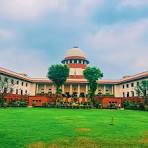
The growing burden of pending cases in the Supreme Court of India is emerging as a serious administrative and constitutional concern. In particular, the rising number of Public Interest Litigations (PILs) highlights the slow pace and procedural complexity of India’s judicial system.
According to the latest data shared by the Law Ministry, over 3,500 PILs are currently pending before the Supreme Court, while the total number of cases has crossed 80,000. These figures not only reflect the mounting judicial workload but also underscore the growing barriers faced by citizens in accessing timely justice.
3,500+ PILs pending; total cases exceed 80,000
Oldest PIL pending for 42 years (filed in 1984)
Majority cases linked to environment, land laws, and agricultural tenancy
Several petitioners passed away before final adjudication
The Reality of ‘Justice Delayed’
Perhaps the most distressing aspect of this backlog is that many original petitioners have died before their cases could be resolved. A PIL pending for over four decades has become a stark reminder that “justice delayed is justice denied” is no longer just a phrase, but a lived reality.
Rising Inflow, Limited Disposal
In 2025 alone, 570 new PILs were filed, further increasing the Court’s burden. While 1,872 PILs have been disposed of over the past five years, the rate of disposal remains insufficient compared to the steady influx of new cases.
Complex Cases Slow Down Process
Landmark and policy-driven cases such as M.C. Mehta vs Union of India have remained pending for decades, indicating that environmental and governance-related matters often involve prolonged and intricate adjudication processes.
Government’s Stand
Responding in Parliament, Arjun Ram Meghwal stated that no fixed timeline can be prescribed for the disposal of PILs, as each case varies in complexity and legal scope.
Administrative Challenge
Experts believe that the situation is not just a judicial concern but a broader administrative challenge. Prolonged delays not only deny justice but also impact governance and policy implementation.
The Road Ahead
Judicial reforms, faster procedural mechanisms, and prioritization of long-pending cases are increasingly being seen as urgent necessities. Without concrete and timely intervention, the backlog is likely to deepen further in the coming years.
The message is clear: the rising pile of pending PILs in the Supreme Court is not merely a statistical concern—it is a reflection of millions waiting for justice, often for decades.
 Modern Shrines Publications