

Special Correspondent: Arun Sharma
New Delhi
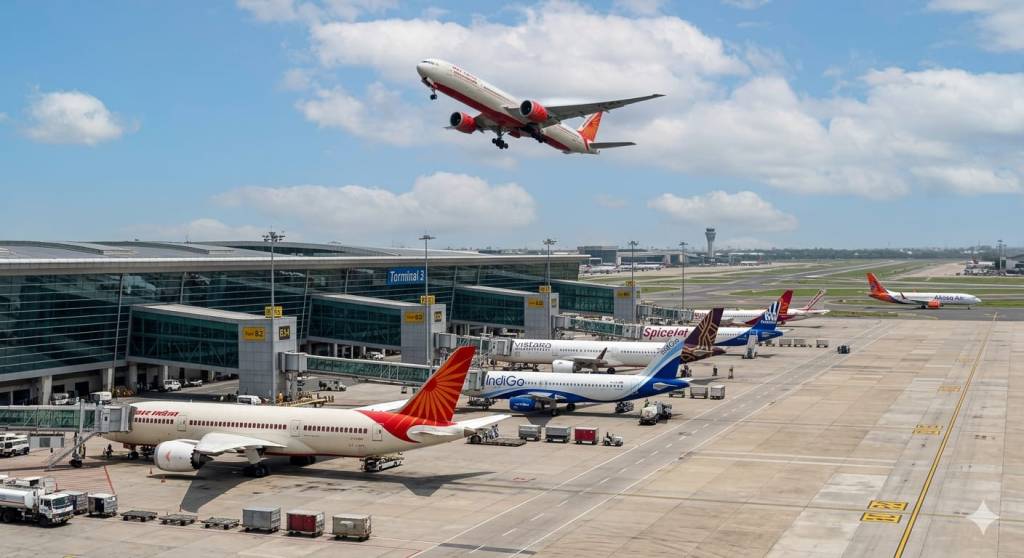
Escalating tensions in West Asia and the conflict-like situation between Iran and Israel are beginning to reshape international aviation routes, creating operational challenges for airlines and raising concerns about rising airfares worldwide. In response to these extraordinary circumstances, India’s aviation regulator, the Directorate General of Civil Aviation (DGCA) has granted temporary permission for pilots operating long-haul flights to fly beyond the usual duty-hour limits.
The decision primarily affects pilots of wide-body aircraft operated by Air India, which run several long-distance routes connecting India with Europe, the United Kingdom, and North America.
Airspace Restrictions Forcing Longer Global Flight Routes
Due to airspace restrictions over parts of West Asia, particularly around Iran, many international flights are being forced to take longer detours. These rerouted paths are significantly increasing flight durations.
Key operational impacts include:
Flight time extended by up to 1.5 hours on several routes
Pilot duty hours stretching to nearly 11.5 hours on long-haul flights
Higher fuel consumption due to extended routes
Increased operational costs for airlines
Aviation experts warn that such changes not only strain airline operations but also increase the risk of pilot fatigue, which airlines and regulators must manage carefully.
Temporary Relaxation in Pilot Duty Limits
Under normal regulations governing Flight Duty Time Limitations (FDTL), pilots are restricted to a specific number of working hours to ensure safety and prevent fatigue. However, the DGCA has granted temporary flexibility in these rules for certain long-haul operations.
According to aviation officials, the measure is strictly temporary and situation-based, introduced to maintain continuity of international flights amid rapidly changing geopolitical conditions.
Fuel Costs Surge as Routes Lengthen
The extended routes are also driving up jet fuel consumption, adding another layer of pressure on airlines already coping with volatile global energy markets.
Industry analysts say airlines operating long-haul services—including Air India, IndiGo, and Akasa Air—may soon be forced to revise pricing strategies to offset rising fuel costs.
Airlines are reportedly considering increasing fuel surcharges on both domestic and international tickets, which could push airfares higher in the coming weeks.
Airfare Hike Likely as Demand Surges
Travel industry experts believe that longer routes, higher fuel consumption, and geopolitical uncertainty could lead to noticeable increases in ticket prices.
Many travelers are already rushing to secure bookings for upcoming trips, triggering what experts describe as “panic booking” in certain travel segments. If the crisis persists, international travel could become significantly more expensive, particularly on long-haul routes between India, Europe, and North America.
Global Aviation Facing Multi-Layered Crisis
The aviation sector is now confronting multiple challenges simultaneously:
Airspace closures and geopolitical risks
Rising fuel costs
Operational strain on airlines and crew
Potential increase in passenger fares
Uncertainty over future flight routes
Experts warn that if the geopolitical tensions continue, global aviation networks may face prolonged disruptions, affecting travel schedules, airline profitability, and passenger costs.
Air India Commends Pilots for Professionalism
Amid the challenges, Captain Manish Uppal, Senior Vice President (Flight Operations) at Air India, has praised the airline’s pilots for maintaining operational safety despite the demanding circumstances.
In a message to the flight crew, he acknowledged their professional commitment and resilience, noting that they continue to ensure safe operations even under increasingly complex global conditions.
A Growing Impact on Travel and Energy
As the geopolitical situation in West Asia continues to evolve, its ripple effects are being felt far beyond the conflict zone—impacting global fuel markets, aviation routes, ticket prices, and passenger travel plans.
For now, airlines and regulators are working to balance safety, operational efficiency, and passenger demand, but if tensions persist, the aviation sector could face an extended period of disruption and rising travel costs worldwide. ✈️
 Modern Shrines Publications