

Special Correspondent: Arun Sharma
New Delhi: A significant study by the All India Institute of Medical Sciences (AIIMS) has raised concerns about the state of eye health and vision (Netra Jyoti) among residents of the national capital Delhi.
According to a pilot study conducted by the Dr Rajendra Prasad Centre for Ophthalmic Sciences, nearly three out of every ten people in Delhi require spectacles due to refractive errors, which affect the ability to see clearly.
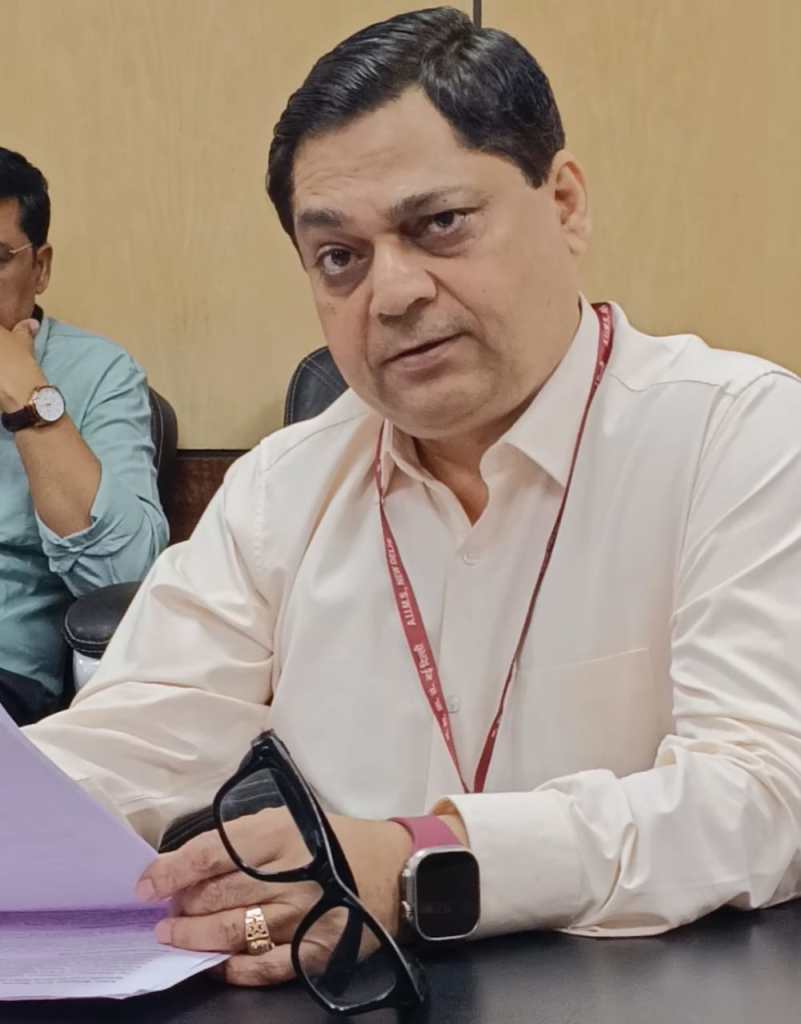
Sharing the findings, Prof. Praveen Vashisth, Professor and Head, Department of Community Ophthalmology, highlighted that vision health is one of the most vital aspects of human well-being, yet a large number of people in Delhi are living with uncorrected vision problems.
Elderly Most Affected, But Children Also at Risk
The AIIMS study revealed striking trends across age groups:
Nearly 70% of people above the age of 50 require spectacles
Around 20% of children also suffer from refractive errors
Experts warn that increasing screen time from smartphones, computers, and digital devices is emerging as a major factor affecting children’s eye health and vision.
Shortage of Optometrists a Key Concern
While Delhi has a strong base of eye specialists, the study points to a critical shortage of optometrists, who play a crucial role in detecting vision problems and prescribing corrective lenses.
According to Prof. Praveen Vashisth:
Delhi has around 1,085 ophthalmologists
Nearly 489 optometrists
About 249 institutions providing eye-care services (mostly in the private sector)
He emphasized that optometrists are essential for routine eye examinations and early detection of refractive errors, making them a key component of effective eye-care delivery.
Delhi Yet to Meet WHO Norms
As per guidelines of the World Health Organization (WHO), there should be at least one optometrist for every 50,000 people. However, Delhi has not yet achieved this benchmark, highlighting the need for strengthening the city’s vision-care workforce.
Limited Eye-Care Services at Primary Health Centres
The study also noted gaps in primary-level eye-care services.
Delhi currently has around 270 Ayushman Arogya Mandir centres, but:
Only about 50 centres currently offer eye-care services
Experts believe that expanding eye-check-up facilities at primary healthcare centres and increasing the number of trained optometrists will help detect vision problems early, particularly among children and the elderly.
AIIMS Emphasises the Value of Vision
The study by AIIMS underscores a crucial message: clear vision is not merely about seeing — it is fundamental to a healthy and productive life.
Health experts recommend:
Regular eye examinations
Limiting screen time for children
Periodic vision checks for elderly people
Strengthening awareness and access to eye care, experts say, will ensure that the people of Delhi continue to see the world with clear and healthy vision.
 Modern Shrines Publications