

Special Correspondent: Arun Sharma,New Delhi
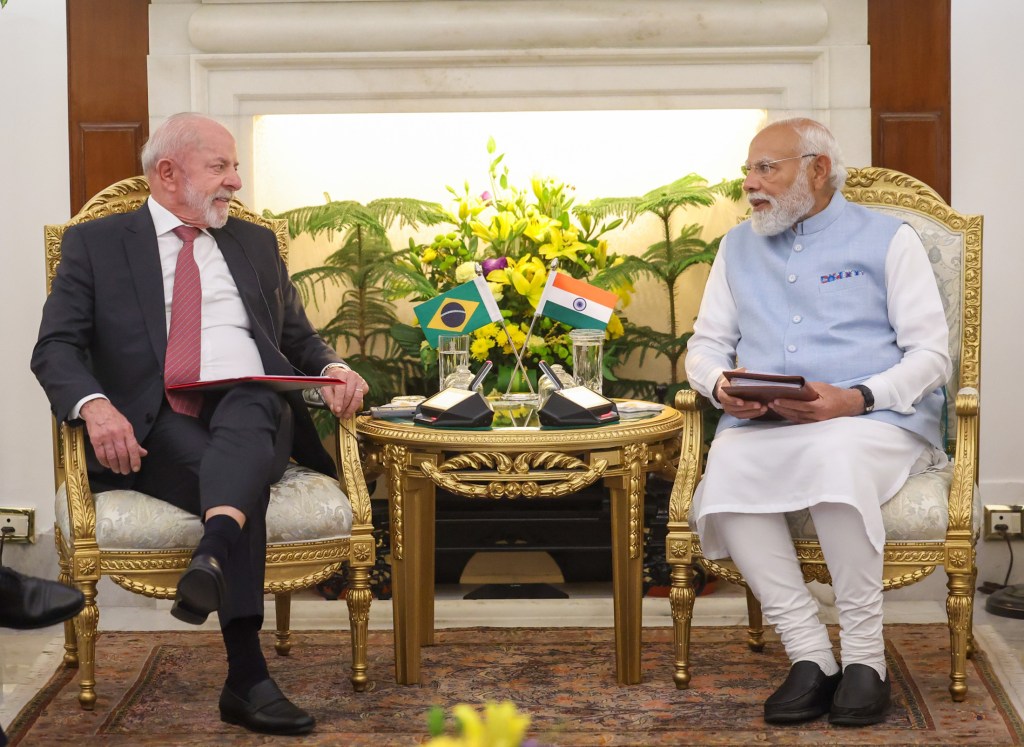
In a decisive move aimed at reducing dependence on China for critical minerals, India has signed a landmark agreement with Brazil on cooperation in rare earths and strategic minerals. The two nations have also set an ambitious target of scaling bilateral trade to $30 billion by 2030, signaling the emergence of a new economic axis between Asia and Latin America.
The agreement was reached during bilateral talks between Prime Minister Narendra Modi and Brazilian President Luiz Inácio Lula da Silva, where both leaders discussed expanding cooperation in energy, defence, technology and resilient supply chains.
A Strategic Pivot in Critical Minerals
Rare earth elements form the backbone of modern industry — powering everything from smartphones and electric vehicles to missile systems and renewable energy technologies. Until now, China has maintained overwhelming dominance in this sector.
Key Highlights of the Agreement:
Collaboration in rare earths and critical minerals
Target to expand bilateral trade to $30 billion by 2030
Focus on supply chain diversification
Boost to sectors such as semiconductors, EVs and defence manufacturing
Experts believe Brazil’s vast and relatively underdeveloped mineral reserves, combined with Indian investment and technical expertise, could create a mutually beneficial partnership while reducing strategic vulnerabilities.
Energy Transition, Defence and Technology in Focus
Beyond minerals, both nations agreed to deepen cooperation in:
Energy transition and green fuels
Ethanol blending and sustainable aviation fuel
Defence co-design and co-production initiatives
Advanced technology and digital infrastructure
The defence collaboration is expected to align with India’s self-reliance drive, potentially giving the “Make in India” initiative a broader international dimension.
Prime Minister Modi described India and Brazil as strong voices of the Global South, asserting that coordinated action by the two democracies enhances balance and influence in multilateral forums. President Lula termed the partnership “future-oriented,” highlighting India’s rising stature in digital innovation and renewable energy.
Common Ground on Global Governance
The leaders also reaffirmed shared positions on reforming the United Nations Security Council and promoting a multipolar global order. Brazil reiterated its support for India’s bid for permanent membership in the UN Security Council — a diplomatic endorsement viewed as significant in strategic circles.
Geopolitical Implications
Analysts argue that the pact extends beyond commerce. Against the backdrop of US–China trade tensions and the restructuring of global supply chains, India appears to be proactively building strategic partnerships to ensure economic resilience and geopolitical leverage.
The rare earths agreement sends a clear message: India is positioning itself not as a passive observer but as an active architect in shaping the evolving global power balance.
If successfully implemented, the India–Brazil partnership could emerge as a powerful economic bridge between Asia and Latin America in the coming decade.
 Modern Shrines Publications