

Special Correspondent: Arun Sharma, Ghaziabad
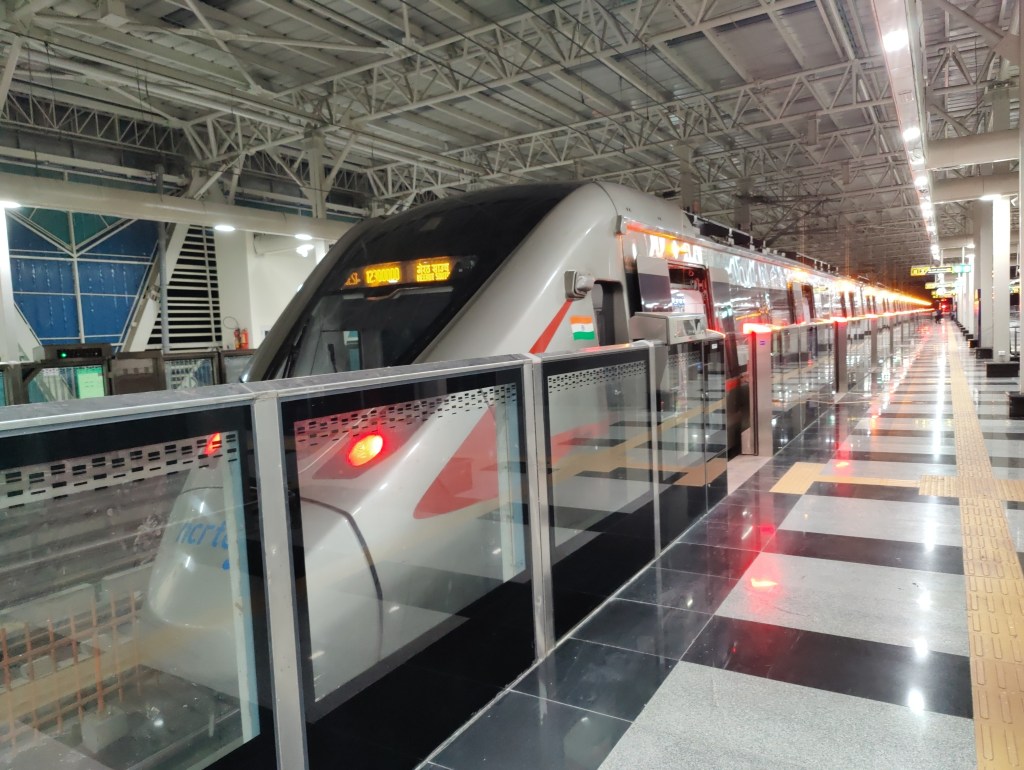
Even before its full formal inauguration, India’s flagship Delhi–Meerut RRTS Corridor has already begun reshaping life across the National Capital Region (NCR). What was once a long and exhausting commute between Meerut and Delhi has now evolved into a fast, affordable and reliable daily routine.
Since phased operations began in October 2023, the 82-km Delhi–Ghaziabad–Meerut corridor has transformed mobility patterns, cut travel time drastically and unlocked new residential and employment possibilities.
Travel Time Slashed, Opportunities Expanded
The journey from Meerut to Delhi — which previously took 90 to 120 minutes depending on traffic — can now be completed in approximately 55 minutes.
Key Milestones:
17-km Sahibabad–Duhai Depot section opened on October 20, 2023
Subsequent extensions to Modinagar North and Meerut South
Recent launch of services from Sahibabad to New Ashok Nagar
Total of 22 stations across the corridor
With the final stretch becoming operational, the entire route is set to offer seamless high-speed connectivity.
Affordable and Comfortable Alternative
Passengers report that the Rapid Rail Transit System (RRTS) is not only faster but significantly more economical.
Earlier cab fares ranged between ₹700 and ₹1,200
RRTS fares: approx. ₹120 (Standard Coach)
Around ₹180 (Premium Coach)
Professionals commuting to hubs like Noida Film City say their daily travel time has reduced from over 90 minutes to nearly 45 minutes, eliminating traffic stress and unpredictability.
Meerut Emerges as a Residential Hub
The improved connectivity has influenced housing decisions. Many families are opting to settle in Meerut rather than purchasing high-priced properties in Delhi or Noida.
“Live in Meerut, work in Delhi” is no longer an aspiration but a viable lifestyle model. Residents now commute comfortably each day, balancing affordability with career growth.
Boost for Business and Trade
Traders and entrepreneurs have also benefited. Access to major commercial zones such as Chandni Chowk and Anand Vihar has become smoother and more time-efficient, expanding business networks and reducing logistical hurdles.
Relief for Students
Students commuting to colleges and coaching institutes across NCR no longer feel compelled to relocate to hostels. Many now travel daily from Meerut and nearby towns, enabling them to stay with their families while pursuing education.
A Step Toward Regional Integration
Urban planners describe the RRTS as more than just a transport project — it represents a structural shift in NCR’s socio-economic integration.
Expected Long-Term Impact:
Expansion of real estate markets in peripheral cities
Greater employment mobility
Reduced traffic congestion
Lower vehicular pollution
By decentralizing growth and easing pressure on Delhi’s core, the RRTS is setting the stage for balanced regional development.
A New Chapter for NCR
As the corridor approaches full operational capacity, it is evident that the RRTS has already altered commuting culture, housing preferences and economic dynamics across NCR.
The project stands as a landmark in India’s urban mobility transformation — accelerating not just trains, but aspirations.
 Modern Shrines Publications