

Digital media has energized the Hindi language.
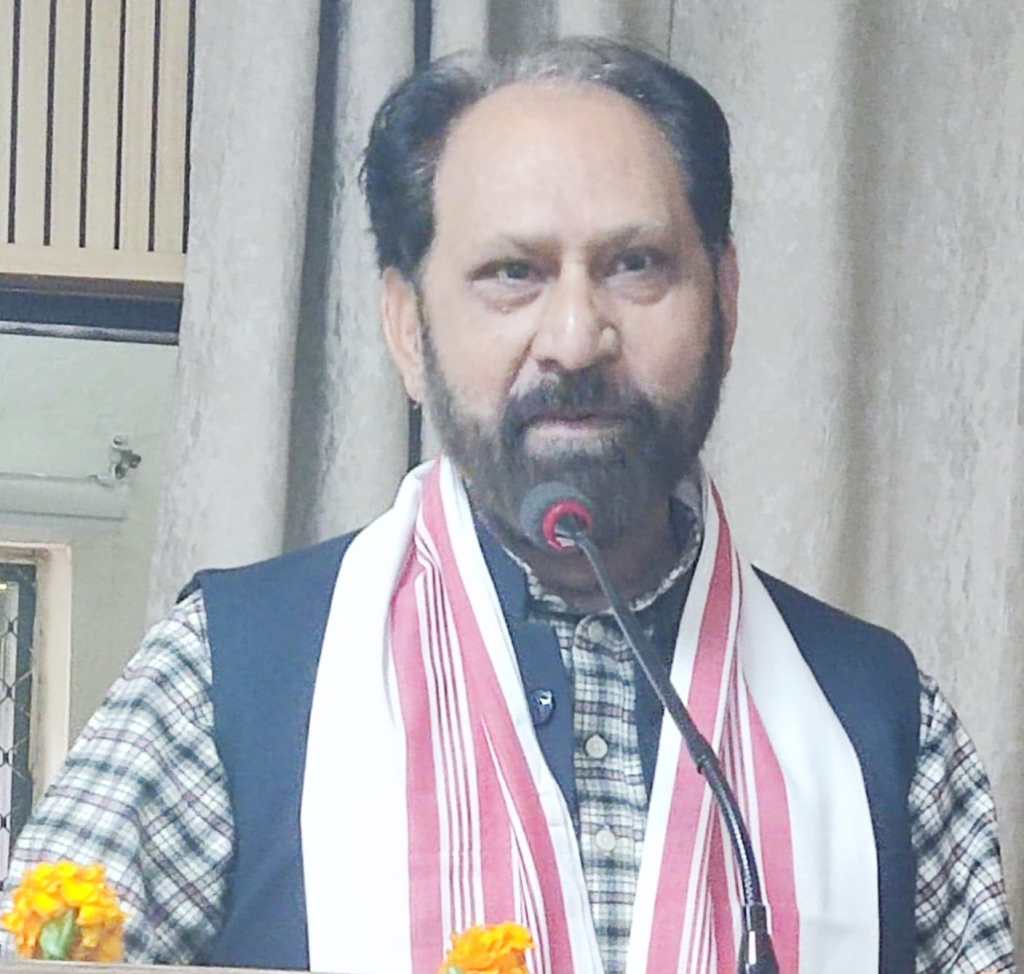
New information communication technology mediums have enriched the development journey of the Hindi language, in this the contribution of digital literature and digital media has played an important role. This digital revolution has played an important role in the development of the Hindi language. Prof. Hansraj Suman expressed these views while addressing the students of Aurobindo College on the occasion of International Mother Language Day on Friday on the topic of contribution of digital media in the development journey of Hindi. Prof. While delivering his lecture on “Hindi Language Communication and Communication,” Hansraj Suman said that the scope of Hindi is no longer limited to books and magazines, but is reaching every person through print and electronic media, including the internet, blogs, podcasts, e-books, social media, web series, and OTT platforms. This is the strength of Hindi, which has established its national and international identity.
Prof. Hansraj Suman informed the students that there are 22 languages recognized by the Constitution, including Assamese, Bengali, Bodo, Dogri, Gujarati, Hindi, Kannada, Kashmiri, Konkani, Maithili, Malayalam, Manipuri, Marathi, Nepali, Oriya, Punjabi, Sanskrit, Santhali, Sindhi, Tamil, Telugu, and Urdu. These languages are also used as mother tongues in various places. He also pointed out that India has immense linguistic diversity, with the 2011 Census linguistic survey reporting over 19,500 mother tongues and dialects. These include 121 major languages and over 270 other major mother tongues, which are used by the majority. Regarding other dialects and mother tongues, it can be said that “water changes every mile, language changes every four miles,” meaning that mother tongues shape local dialects. These dialects, expanding regionally, create a language. Therefore, mother tongues play a significant role in the survival and development of any language. The largest mother tongue is Khariboli, spoken by 41% of the population in the Hindi-speaking region. India also has six classical languages: Oriya, Telugu, Tamil, Kannada, Malayalam, and Sanskrit. Except for Sanskrit, the remaining five languages are also used as mother tongues.
In his address, Professor Hansraj Suman explained that while Hindi literature used to be available in books, newspapers, and magazines, it is now readily available on every digital platform. Numerous authors are contributing to the reach of digital literature and earning revenue through blogs, social media, and websites. He explained that digital libraries like Hindi Samay, Hans, and Google Books have helped make Hindi literature accessible to readers. Similarly, numerous platforms offer the opportunity to listen to Hindi literature, including Storytel, Kuku FM, and Audible. He explained that India has a literacy rate of 71.2%, and many people are multilingual. Despite displacement due to work and location, these people have not abandoned their mother tongue. Among these, Bengali, Telugu, Tamil, and Malayalam speakers are in high numbers. With the advent of computers, the use of regional languages in education has declined significantly, shrinking the reach of these languages. This has led to a significant growth of the English language. Even dialects have been infiltrated by English words. Under the pressure of modern development, many words from the mother tongue are being replaced by new words.
Prof. Suman further explained that with the advent of new technologies like AI, the status of languages will become extremely precarious. The scope of languages will shrink. Use of the mother tongue will also be limited to families. The educated class will begin to involve children in computer education from childhood. Now, with the advent of AI, neither the mother tongue nor dialects will be used. Language use will also be limited to a mere necessity. The use of AI will eliminate employment opportunities. Decreased interaction and communication will hinder language development. Only words used for AI will remain in use.
In his address, Prof. Suman informed the students that many Hindi writers, critics, poets, and emerging young poets are sharing their works through social media posts, Instagram reels, and YouTube videos, which is inspiring the current generation. He also stated that digital news portals have played a significant role in advancing Hindi journalism. Digital news portals like Dainik Bhaskar, NDTV Hindi, and Aaj Tak have given Hindi journalism a new identity. This demonstrates the strength of Hindi news and literature reaching people through Hindi web portals. Explaining the Hindi language and media, Prof. Hansraj Suman stated that OTT platforms and web series are promoting Hindi films. The growing popularity of web series, short films, and documentaries has strengthened Hindi content. He noted that OTT services like Netflix, Amazon Prime, Zee5, and MX Player have promoted Hindi films. Additionally, digital media has given the Hindi language a vitality that has helped not only with writing but also with reading. This is why Hindi has gained global recognition internationally, making it even more prosperous in the digital age. The future belongs to digital Hindi. Many students at the event expressed their curiosity and asked questions about the contribution and use of digital media. Prof. Suman answered these questions, satisfying them.
Prof. Hansraj Suman
Hindi Department Head and Media Coordinator
Aurobindo College (Delhi University)
 Modern Shrines Publications