

Special Correspondent: Arun Sharma
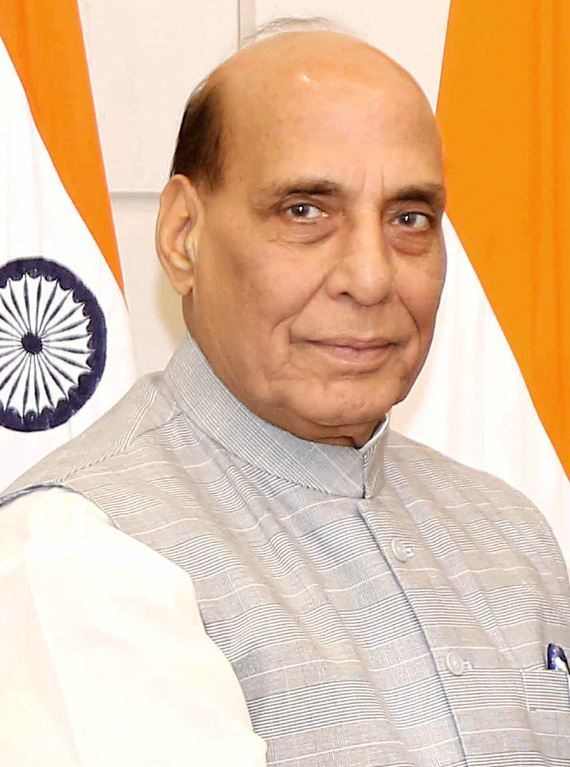
At a time of intensifying geopolitical flux and rising maritime threats, India’s Defence Minister Rajnath Singh delivered a strong message of collective security, urging the world’s navies to unite against terrorism, strategic rivalry, and climate-driven disruptions.
Addressing the inaugural ceremony of MILAN 2026 in Visakhapatnam — India’s largest-ever multilateral naval exercise — Singh underscored that modern security challenges transcend borders and demand coordinated global action.
“When our ships sail together, when our sailors train together, and when our commanders deliberate together, we rise above geographical and political boundaries to build shared understanding,” he said.
74 Nations Participate: India’s Expanding Strategic Footprint
From just four participating foreign navies in 1995 to 74 nations in 2026, MILAN’s evolution reflects India’s growing maritime credibility and diplomatic outreach.
Key Participation Highlights
Representation from 74 countries
Naval chiefs and delegations from nine ASEAN nations
Strengthened Indo-Pacific engagement
Expanded multilateral naval cooperation
The presence of ASEAN leadership further reinforced India’s proactive role in shaping the Indo-Pacific security architecture.
Rising Maritime Threat Landscape
Singh outlined the complex web of challenges confronting global sea lanes:
Intensifying competition over strategic maritime chokepoints
Growing interest in undersea resources, including rare minerals
Cross-border terrorist networks exploiting maritime vulnerabilities
Escalating climate-induced disasters requiring coordinated HADR (Humanitarian Assistance and Disaster Relief) missions
He emphasized that no single navy, regardless of capability, can effectively address these multidimensional threats alone.
From ‘Aatmanirbhar Bharat’ to a ‘Builder Navy’
Highlighting India’s expanding indigenous defence capacity, Singh referred to Prime Minister Narendra Modi’s “Aatmanirbhar Bharat” initiative, stating that India is transitioning from a defence importer to a “builder navy.”
Indigenous Milestones
Commissioning of aircraft carrier INS Vikrant
Deployment of Visakhapatnam-class destroyers
Expansion of domestic shipbuilding capabilities
These developments, he noted, symbolize India’s emergence as a credible maritime manufacturing power.
From SAGAR to MAHASAGAR: A Broader Vision
Singh referenced India’s maritime doctrine “SAGAR” (Security and Growth for All in the Region) and introduced the expanded vision of “MAHASAGAR,” aimed at fostering global cooperation and collective maritime security.
He reaffirmed India’s support for the United Nations Convention on the Law of the Sea (UNCLOS) as the cornerstone of a stable and balanced maritime order.
India as a ‘Vishwamitra’ in the Indo-Pacific
Concluding his address, Rajnath Singh positioned India as a reliable “Vishwamitra” — a trusted global partner — committed to stability in the Indo-Pacific and beyond.
Strategic Message
In a rapidly evolving world order, the seas are no longer merely trade corridors but central theatres of strategic influence. Through MILAN 2026 and expanded naval diplomacy, India signaled its readiness to play a decisive role in shaping the maritime balance of power.
The call from Visakhapatnam was unambiguous: in the face of terrorism, insecurity, and climate volatility, maritime unity is not optional — it is imperative.
 Modern Shrines Publications