

Special Correspondent: Arun Sharma,New Delhi
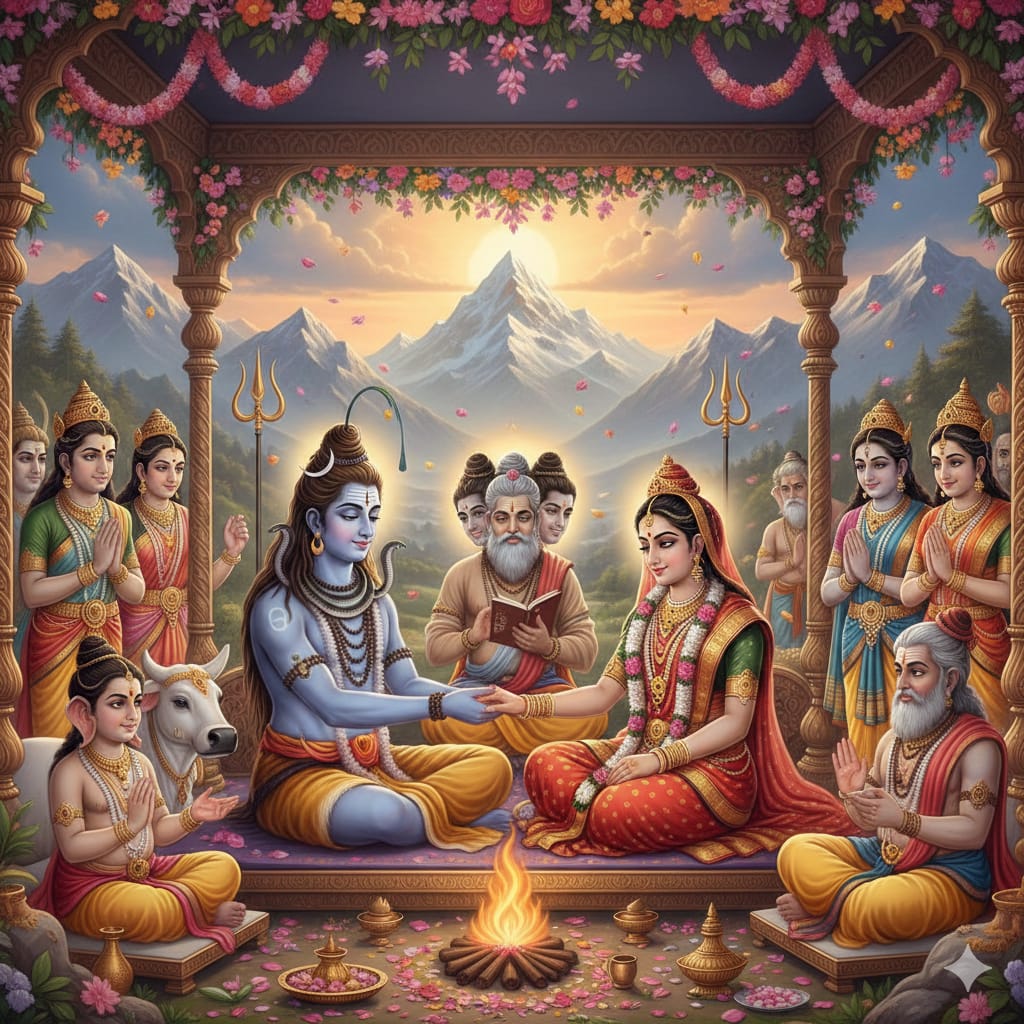
On the eve of Maha Shivratri, millions across India and the world prepare to observe what is regarded in Sanatan Dharma as one of the most spiritually charged nights of the year. Far beyond a ritual observance, Maha Shivratri marks the cosmic union of Lord Shiva and Goddess Parvati — a divine convergence symbolising balance, consciousness and creative energy in the universe.
In theological and philosophical traditions, the festival represents the harmonious coming together of Purusha (pure consciousness) and Prakriti (divine energy), a union that sustains the cosmic order.
Scriptural Foundations: The Divine Marriage in Sacred Texts
The sacred narrative of Shiva and Parvati’s marriage is elaborately described in revered Hindu scriptures such as the Shiva Purana, Skanda Purana, Linga Purana and the classical Sanskrit epic Kumarasambhava by Kalidasa.
According to these texts, after Goddess Sati immolated herself following her father Daksha’s insult to Shiva, the deity withdrew into deep meditation, detaching himself from worldly affairs. The cosmic balance was disturbed. Sati was reborn as Parvati, daughter of King Himavan, and undertook intense penance to win Shiva as her consort once again.
Moved by her unwavering devotion and austerity, Shiva accepted Parvati’s hand in marriage on the fourteenth night of the waning moon in the month of Phalguna — the night now celebrated as Maha Shivratri.
This divine wedding is not merely mythological lore but a profound spiritual metaphor — the integration of ascetic stillness with dynamic creative force.
When and Why Maha Shivratri Is Observed
Maha Shivratri falls on the Krishna Paksha Chaturdashi (14th lunar day of the dark fortnight) in the Hindu month of Phalguna, typically occurring between February and March. The timing coincides with the transition from winter to spring, symbolising renewal and awakening in nature.
Yogic traditions consider this night especially conducive to meditation, believing that planetary alignments facilitate an upward movement of spiritual energy. Devotees remain awake through the night in prayer and contemplation, seeking inner purification and divine grace.
Ritual Observances: Four Phases of Worship
The observance of Maha Shivratri is marked by fasting, night-long vigil and ritual worship conducted in four distinct phases (praharas).
First Prahara: Abhishek with water and sacred Ganga jal
Second Prahara: Offering of milk and curd
Third Prahara: Anointment with ghee and honey
Fourth Prahara: Final offering of pure water and bilva leaves
Chanting of the Panchakshari mantra — “Om Namah Shivaya” — reverberates across temples. The Mahamrityunjaya Mantra is recited for health and longevity, while Vedic hymns and passages from the Rudra section of the Yajurveda accompany the ceremonial Rudrabhishek.
Followers of Shaiva, Shakta, Vaishnava and Smarta traditions participate alike, reflecting the inclusive and harmonising spirit of Sanatan Dharma.
Celebrations at Sacred Shrines
Major Shiva temples across the country witness elaborate ceremonies and massive gatherings of devotees. Among the prominent shrines are:
Kashi Vishwanath Temple
Mahakaleshwar Temple
Kedarnath Temple
Somnath Temple
Temple bells resonate through the night as chants of “Har Har Mahadev” fill the air, creating an atmosphere charged with devotion.
Contemporary Relevance: A Message for Modern Times
In an era defined by speed and material pursuit, Maha Shivratri offers a counterpoint — a call to restraint, introspection and balance. The festival underscores:
Self-discipline and inner strength
Emotional and spiritual equilibrium
Harmony within family and relationships
Renewal through meditation and self-awareness
Spiritual scholars observe that fasting and meditative practices on this night not only purify the mind but also enhance mental clarity and physiological balance.
A Global Spiritual Identity
Maha Shivratri is celebrated not only in India but also in Nepal, Mauritius, Fiji, Sri Lanka and among Hindu communities worldwide. The festival stands as a testament to the timeless and borderless character of Sanatan Dharma.
Lord Shiva, often misunderstood as merely the deity of destruction, is in essence the force of transformation and regeneration. Goddess Parvati embodies nurturing strength and creative vitality. Together, they represent the dynamic equilibrium that sustains existence.
From Faith to Inner Awakening
As lamps glow in temples and homes, and devotees immerse themselves in prayer through the sacred night, Maha Shivratri transcends ritual to become a deeply personal spiritual journey.
It is, in essence, the night of awakening — a moment when the devotee seeks to dissolve the ego and align with higher consciousness.
Maha Shivratri is not merely observed; it is experienced — as a union of devotion and divinity, of silence and sound, of the individual soul with the cosmic whole.
Har Har Mahadev.
 Modern Shrines Publications