

By Supriya Bhatnagar, Senior Correspondent
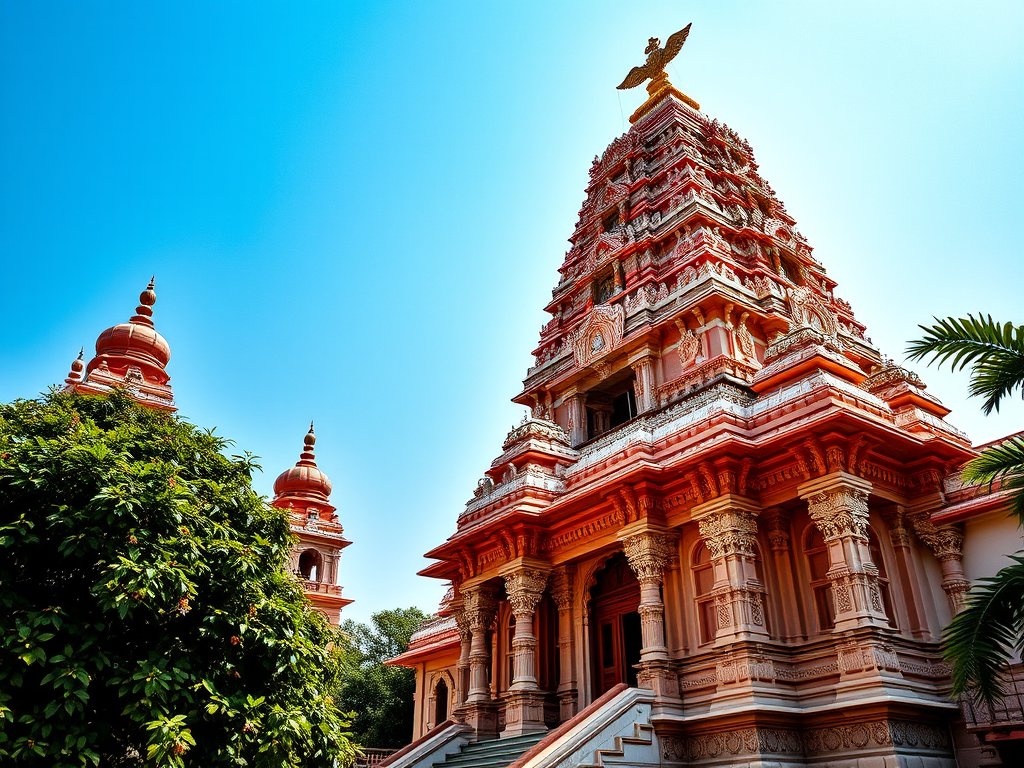
Rising gracefully amid the urban bustle of East of Kailash, the ISKCON Temple in Delhi—popularly known as the Hare Krishna Temple—stands as a luminous symbol of devotion, spirituality, and cultural harmony. More than a place of worship, the temple has evolved into a dynamic spiritual hub that attracts devotees, seekers, scholars, and tourists from across India and around the world.
Established in 1998 by the International Society for Krishna Consciousness (ISKCON), the temple is dedicated to Lord Krishna and Radha. Its architecture blends traditional Vedic aesthetics with modern design elements, creating a serene yet grand environment that immediately sets it apart from the surrounding cityscape. The white stone façade, intricately carved pillars, and soaring shikhara reflect timeless temple architecture, while the well-planned interiors cater to contemporary needs.
At the heart of the temple lies the sanctum housing exquisitely adorned idols of Sri Sri Radha Parthasarathi, along with deities of Lord Krishna, Balarama, and Gaura-Nitai. Daily aartis, kirtans, and discourses fill the halls with devotional energy, offering visitors a deeply immersive spiritual experience. The rhythmic chanting of the Hare Krishna maha-mantra creates an atmosphere of calm and introspection, drawing people into moments of quiet reflection.
One of the temple’s most distinctive features is its emphasis on spiritual education. Through the Bhagavad Gita Experience—a multimedia exhibit using light shows, robotics, and audio-visual storytelling—the temple presents ancient Vedic wisdom in an accessible, modern format. This innovative approach has made the temple especially popular among young visitors and international guests seeking to understand India’s philosophical heritage.
Beyond worship and learning, the ISKCON Temple is also known for its community outreach. The temple runs food distribution programs, educational initiatives, and spiritual counseling sessions, reinforcing its role as a socially engaged religious institution. The Govinda’s restaurant within the premises, serving pure vegetarian prasadam, further reflects ISKCON’s philosophy of conscious living and compassion.
Major festivals such as Janmashtami, Radhashtami, and Gaura Purnima are celebrated with grandeur, drawing thousands of devotees. During these occasions, the temple becomes a vibrant confluence of music, devotion, and cultural expression.
In a fast-paced metropolis like Delhi, the ISKCON Temple offers a rare sanctuary—where ancient wisdom meets modern life, and spirituality finds expression in both devotion and service. It stands not merely as a monument of faith, but as a living shrine for the contemporary world.
 Modern Shrines Publications