

World Cancer Day | February 4
New Delhi | February 3, 2026
Special Correspondent: Arun Sharma
India is heading towards a major public health crisis, with new cancer cases projected to surge from the current 1.5 million to over 2.45 million annually by 2045, according to estimates highlighted by the Indian Cancer Society (ICS), Delhi. Experts have warned that unless early screening, prevention and timely diagnosis are made national priorities, the growing cancer burden could overwhelm the healthcare system.
The warning comes at a time when the Union Budget 2026–27 has introduced significant measures to make cancer treatment more accessible and affordable, reflecting the Government of India’s strong vision of “saving lives along with providing treatment.”
Union Budget 2026–27: A Decisive Push Against Cancer
Public health experts have welcomed the budgetary provisions, noting that:
Cancer medicines will become more affordable due to cuts in customs duty,
Domestic pharmaceutical manufacturing will get a boost, strengthening Atmanirbhar Bharat, and
The financial burden on patients and families will be reduced.
However, experts cautioned that treatment alone is not enough. Equal emphasis on prevention and early detection is essential to win the fight against cancer.
Serious Deliberations at Press Club of India
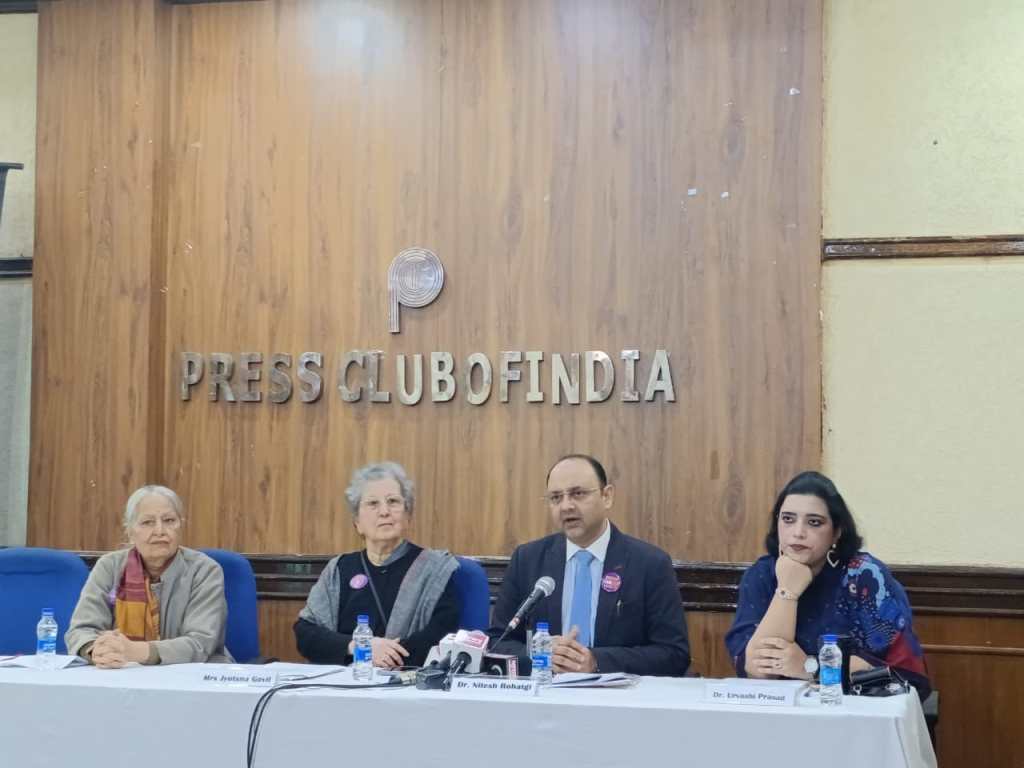
These concerns were raised during a media interaction organised by ICS Delhi at the Press Club of India, where public health experts, policymakers and oncologists discussed emerging cancer trends, gaps in screening and treatment, and the urgent need for a comprehensive national strategy.
An ICS Delhi spokesperson said,
“While Budget 2026 has eased treatment-related costs, our focus remains on reaching patients early so that intervention is possible at the initial stages.”
She added that ICS Delhi has been working since 1983 to bridge the gap between policy intent and grassroots implementation.
Experts Speak Out: Prevention Is the Real Solution
Prof. Jyotsna Govil, Chairperson, ICS Delhi, stressed the importance of reducing risk factors, promoting timely screening and disseminating scientific information to the masses.
“The battle against cancer is not won in hospitals alone—it is won in society.”Dr. Titir Rohatgi, Senior Director (Oncology), Fortis Memorial Hospital, highlighted age-appropriate screening, early diagnosis and modern diagnostic technologies as key to improving outcomes and reducing mortality.
Dr. Usha Rao, Former Director, NITI Aayog and cancer survivor, pointed to gaps in cancer data, regional disparities in treatment and high costs of care.
“Better Centre–State coordination and sustained public investment are crucial for meaningful change.”
Ms. Rukma Prasad, Secretary, ICS Delhi and cancer survivor, shared the emotional, physical and financial struggles faced by patients. She highlighted ICS initiatives such as:
‘Pranam’ rehabilitation centres,
Door-to-door screening programmes,
‘Ride Against Cancer’ app, and
Patient support initiatives in collaboration with HDFC Bank,
which are providing lifelines to thousands.
Dr. Monica Gune, Public Health Consultant and former WHO official, emphasised integrating cancer prevention and screening into primary healthcare under Universal Health Coverage, especially to reach underserved populations.
Government Vision Earns Expert Backing
Health experts agreed that the Union Budget 2026–27 has laid a strong foundation in India’s fight against cancer. The need of the hour is to transform:
Prevention,
Early screening,
Public awareness, and
Public–private partnerships
into a nationwide movement.
About Indian Cancer Society (ICS), Delhi
ICS Delhi works across cancer prevention, early detection, patient support, rehabilitation and advocacy, with a special focus on underserved communities. Through evidence-based programmes, the organisation continues its mission to reduce the cancer burden and improve the quality of life for patients and their families.
Cancer is no longer just a disease—it is a national challenge.
With bold budgetary steps by the Government, clear warnings from experts, and active participation of society, millions of lives can still be saved.
 Modern Shrines Publications