

Policy Stability, Institutional Strength and Strategic Trade Pacts Power the Economy
New Delhi | Special Correspondent: Arun Sharma
Amid an increasingly volatile global political and economic landscape, India has emerged as a rare island of stability, positioning itself to remain the fastest-growing major economy in FY 2026, according to the latest State of the Economy assessment by the Reserve Bank of India (RBI).
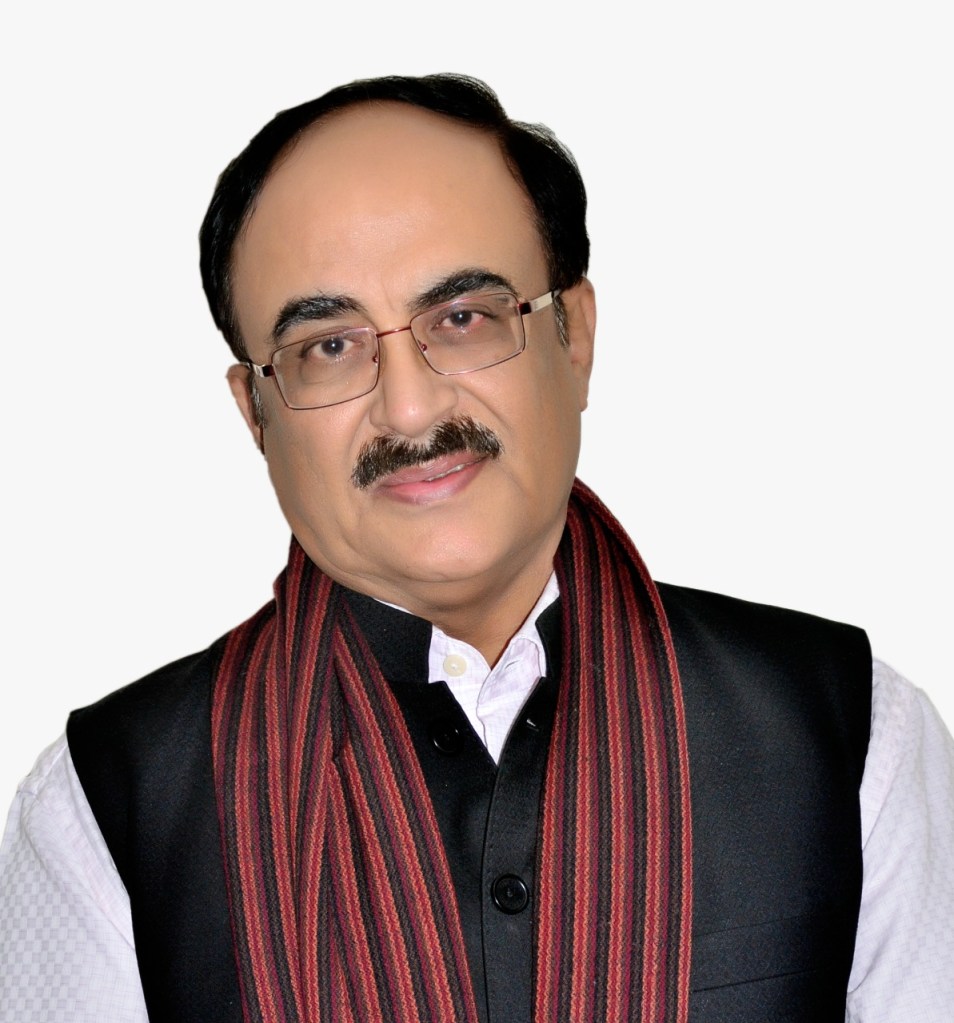
At a time when the world is grappling with wars in the Middle East, uncertainty surrounding the Russia-Ukraine conflict, intensifying geopolitical competition in regions like the Arctic, and rising protectionism and tariff wars, India’s sustained growth trajectory stands out as a marker of policy maturity and institutional resilience, observes noted policy analyst Munish Kumar Gaur.
Domestic Demand Shields India from Global Shocks
Gaur argues that global capitalism is undergoing a structural transition, where geopolitics and economics are deeply intertwined. Supply chains are being politicised, energy security is increasingly militarised, and trade has become a strategic tool. In such an environment, economies overly dependent on exports or volatile capital flows face heightened risks.
India’s key strength lies in its domestic demand-driven growth model, which provides partial insulation from global disruptions and financial volatility.
Three Pillars Driving India’s Growth
According to Gaur, India’s growth momentum rests on three critical pillars:
Robust Domestic Demand and Public Investment
Sustained government capital expenditure on infrastructure, transport, digital public infrastructure and social sectors has ensured steady economic activity and employment generation.
Financial System Stability
India’s banking sector today is marked by strong capital adequacy, improved asset quality and healthy profitability. RBI stress tests indicate that even under adverse scenarios, banks and NBFCs remain above regulatory safety thresholds.
Continuity of Structural Reforms
The rollout of labour codes, tax simplification, financial sector reforms and regulatory streamlining—though politically sensitive—are expected to enhance productivity and global competitiveness over the long term.
India-EU FTA: A Strategic Trade Game-Changer
A major highlight of India’s evolving trade strategy is the proposed India–European Union Free Trade Agreement (FTA), which Gaur describes as a cornerstone of India’s response to rising global protectionism.
With the EU already India’s third-largest trading partner, bilateral trade stands at around USD 120 billion. The proposed FTA goes beyond tariff reductions to include services, investment protection, intellectual property rights and digital trade. If concluded, it is expected to provide Indian sectors such as manufacturing, pharmaceuticals, textiles, auto-components and IT services with durable access to European markets.
For Europe, India represents a reliable alternative supply hub amid efforts to reduce overdependence on China-centric supply chains.
Long-Term Gains and Global Integration
Gaur notes that the India-EU FTA could deliver multiple long-term benefits:
Structural expansion of value-added exports
Stable inflows of foreign direct investment (FDI)
Technological upgradation and higher standards compliance
Deeper integration into global value chains
India’s services exports, already a strong shock absorber, are expected to gain further stability through closer engagement with high-income markets like the EU.
Political Stability Anchors Economic Confidence
India’s economic narrative, Gaur emphasizes, is inseparable from its political stability. A clear electoral mandate, policy continuity and the institutional autonomy of bodies such as the RBI have enhanced investor confidence, distinguishing India from many other emerging economies.
Challenges Remain, But the Direction Is Clear
Despite the optimism, challenges persist—ranging from energy import dependence and volatile global capital flows to regional security risks and climate-related economic pressures. Addressing them will require coordinated policymaking that integrates economic, foreign, security and industrial strategies.
Yet, India’s expected position as the world’s fastest-growing major economy in FY 2026 reinforces a broader truth: stable institutions, consistent reforms and strategic patience form the bedrock of sustainable growth.
In an era of global uncertainty, India is no longer merely an emerging economy—it is steadily shaping itself into a balanced and responsible global economic power, offering valuable policy lessons for the developing world.
— Based on analysis by Munish Kumar Gaur, Advocate and Former Bureaucrat
 Modern Shrines Publications