

New Delhi | Special Correspondent: Arun Sharma
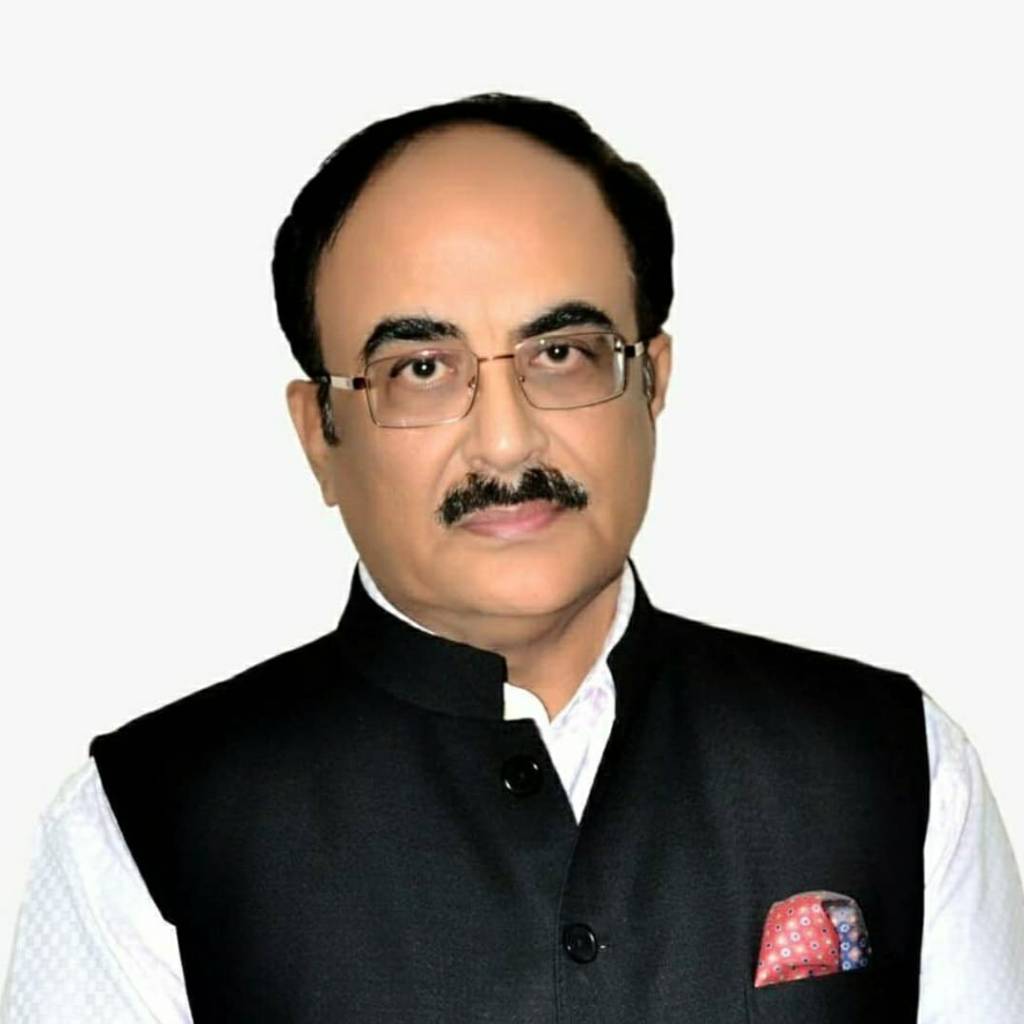
The Constitution of India, says former civil servant and advocate Munish Kumar Gaur, is not merely a legal document but the living soul of the nation, and its purest expression lies in a free, fair and untainted electoral process. Viewed through this prism, the ongoing Special Intensive Revision (SIR) of electoral rolls in West Bengal is no longer an ordinary administrative exercise—it has become a decisive national moment for democracy, sovereignty and constitutional integrity.
Drawing from his dual experience in administration and constitutional law, Gaur asserts that unchecked and politically facilitated illegal infiltration, when used to alter demographics and electoral outcomes, transforms into an anti-national act by the State itself.
Border State, Political Laboratory
Of India’s 2,216-km border with Bangladesh, nearly half runs through West Bengal. Over decades, this border has evolved from a geographical boundary into what Gaur terms a “political laboratory”, marked by abnormal population growth in several border districts—an unmistakable indicator of illegal migration. Estimates suggest that 4–5 million illegal migrants have deeply penetrated the state’s social, economic and political fabric.
“This is not an accidental humanitarian crisis,” Gaur argues. “It is the result of deliberate political appeasement, where illegal infiltration has been converted into a vote bank.”
Electoral Rolls Under Siege
According to Gaur, the electoral roll is not a mere list of voters; it is the foundation of the State’s legitimacy. Facts emerging during SIR, he says, should shake the conscience of the nation.
Instances of multiple identity documents for a single individual, forged birth and residence certificates, and unexplained 8–12 per cent surges in voter numbers raise serious questions. Explaining such increases as “natural growth,” while the local administration remains silent or politically pressured, points to what Gaur calls a direct assault on Article 326 of the Constitution.
“When an illegal migrant votes, the lawful vote of an Indian citizen is stolen,” he states, calling it a blatant constitutional violation.
Blurring of State, Party and Police
Speaking with the anguish of a former civil servant, Gaur notes that in recent years the lines separating the state government, police administration and ruling party in West Bengal have become dangerously blurred.
The fact that the Election Commission has sought deployment of paramilitary forces to conduct SIR, he says, is a clear vote of no confidence in the state administration and a stark indicator that governance is being driven by political convenience rather than rule of law.
Human Rights Cannot Override the Constitution
As an advocate, Gaur strongly rejects the argument that SIR violates human rights.
“Human rights cannot be used to justify constitutional subversion,” he says. “Granting voting rights to illegal migrants is neither compassion nor justice—it is a crime against the nation.”
Claims that SIR targets a particular community, he adds, are political deception. The Election Commission’s constitutional duty is simple: include the eligible and exclude the ineligible.
Organised Voter Card Fraud and Fake Citizenship Networks
Gaur warns that West Bengal is witnessing organised voter card scams and fake citizenship rackets, operating with alarming regularity. He describes this as “documentary terrorism against democracy.”
Media and administrative records, he notes, reveal cases where Bangladeshi and Rohingya infiltrators were issued EPIC cards on fake addresses, BLO verification was reduced to a formality, and certification was facilitated by locally influential elements.
Education System as a Gateway to Fake Citizenship
Even more disturbing, Gaur says, is the misuse of the education system. According to reports, children of illegal migrants are admitted to private schools with forged parental identities and manipulated dates of birth. State board certificates later become the basis for Aadhaar, ration cards and voter IDs—creating a silent, systematic pipeline to fake citizenship.
Administrative records have revealed shocking anomalies:
A single individual shown as the father of over 300 children
Father-son age gaps of just 5–7 years
Grandparents residing in Bangladesh or Myanmar, while “children” vote in West Bengal
“These may sound unbelievable,” Gaur says, “but they expose the collapse of the documentary system.”
Family Register: The Key to SIR
Gaur identifies the Gram Panchayat Family Register (and the Municipal Household Register in urban areas) as the most effective tool for SIR. Unlike Aadhaar or school certificates, the Family Register records actual lineage and long-term residence, making it possible to expose suddenly emerging “paper families.”
Cross-verifying electoral rolls with these registers, he argues, would immediately reveal whose ancestors lie across the border.
A Call for Firm Constitutional Action
Half-measures, Gaur warns, will no longer suffice. He calls for:
Mandatory verification through Panchayat-certified Family Registers
Parallel audits of schools and education boards
Penal action against negligence at BLO and Panchayat levels
Treating SIR as an issue of national security, not politics
A Test of the Nation
“In West Bengal, this is not merely an election,” Munish Kumar Gaur concludes. “It is a test of India itself.”
The land that gave the nation Vande Mataram, Netaji Subhas Chandra Bose, and Syama Prasad Mukherjee, he says, cannot be allowed to become a laboratory of appeasement.
“If today this process is crushed under political pressure, tomorrow democracy will exist only in name,” Gaur warns. “This is not a time for neutrality—it is a time to stand firmly on the side of the Constitution of India.”
 Modern Shrines Publications