

The history of the freedom movement should be taught in school and university curricula — Prof. Suman
New Delhi| Senior Correspondent| Supriya Bhatnagar
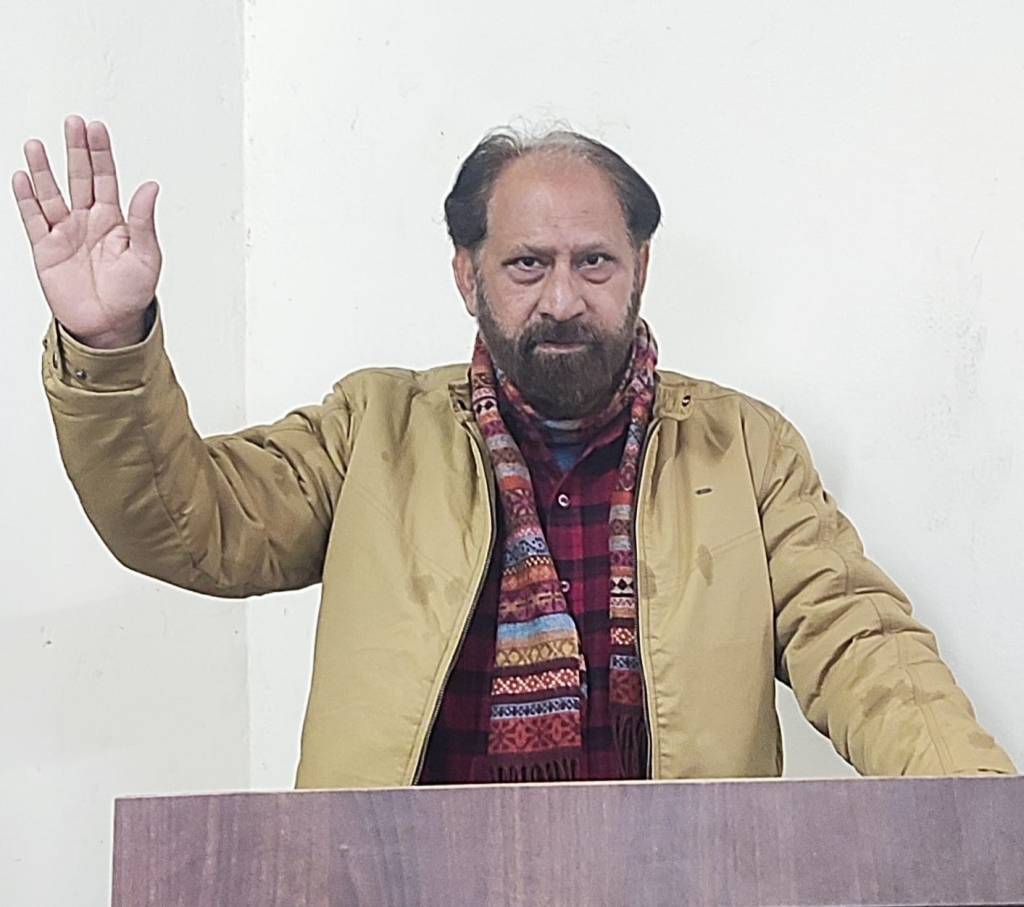
Under the auspices of the Forum of Academics for Social Justice (a teachers’ organization), the 129th birth anniversary of the great revolutionary leader Netaji Subhas Chandra Bose — the symbol of indomitable courage and patriotism, and the leader of the Azad Hind Fauj — was celebrated with great pomp and show as Parakram Diwas on Friday at the Faculty of Arts in the North Campus of Delhi University. On this occasion, a one-day seminar and lecture were also organized. The theme of the seminar was — “The Incomparable Contribution of the Fearless Visionary of Independent India.”
The seminar was presided over by renowned media analyst Professor K.P. Singh. On this occasion, the chief speaker was Forum Chairman Professor Hansraj Suman, and the program was conducted by Ms . Pallavi Priyadarshini. The program was attended by Dr. Pritam Singh Sharma, Dr. Surendra Singh, Shri Ghanshyam Bharti, Shri Ram Keval, Kum. Kanchan Verma, Shri Vishal Kumar, Dr. K. Yogesh, Shri Harsh Kushwaha, Dr. R.K. Saroj, and many other research scholars besides students.
In the seminar, the chief speaker Professor Hansraj Suman remembered Netaji Subhas Chandra Bose and offered heartfelt tributes. He said that Netaji was a true patriot, nationalist, and an unparalleled great hero of the Indian freedom movement who dedicated his entire life to the country. His birth anniversary is not merely an occasion to remember him, but a day to adopt his ideas and principles for the young generation. Prof. Suman explained that Subhas Chandra Bose’s role in the Indian national movement was different from other leaders because he did not believe only in petitions or constitutional reforms. His clear view was that the British rule would not grant independence to India willingly. This thinking led him toward the path of armed struggle. When he formed the Azad Hind Fauj, it was not merely a military organization but a movement that awakened India’s dormant consciousness. “Give me blood, I will give you freedom,” “Delhi Chalo,” and “Jai Hind” were not just emotional slogans but the revelation of a reality in which freedom had to be paid for with sacrifice. Even today, very few people know how seriously Subhas Chandra Bose took the role of women in the freedom struggle. The formation of the Rani Jhansi Regiment is proof that he believed in equality not just in words but in action. Giving leadership to women on the battlefield in that era was a revolutionary idea. Bose understood that the nation’s liberation would remain incomplete until every section of society participated in it.
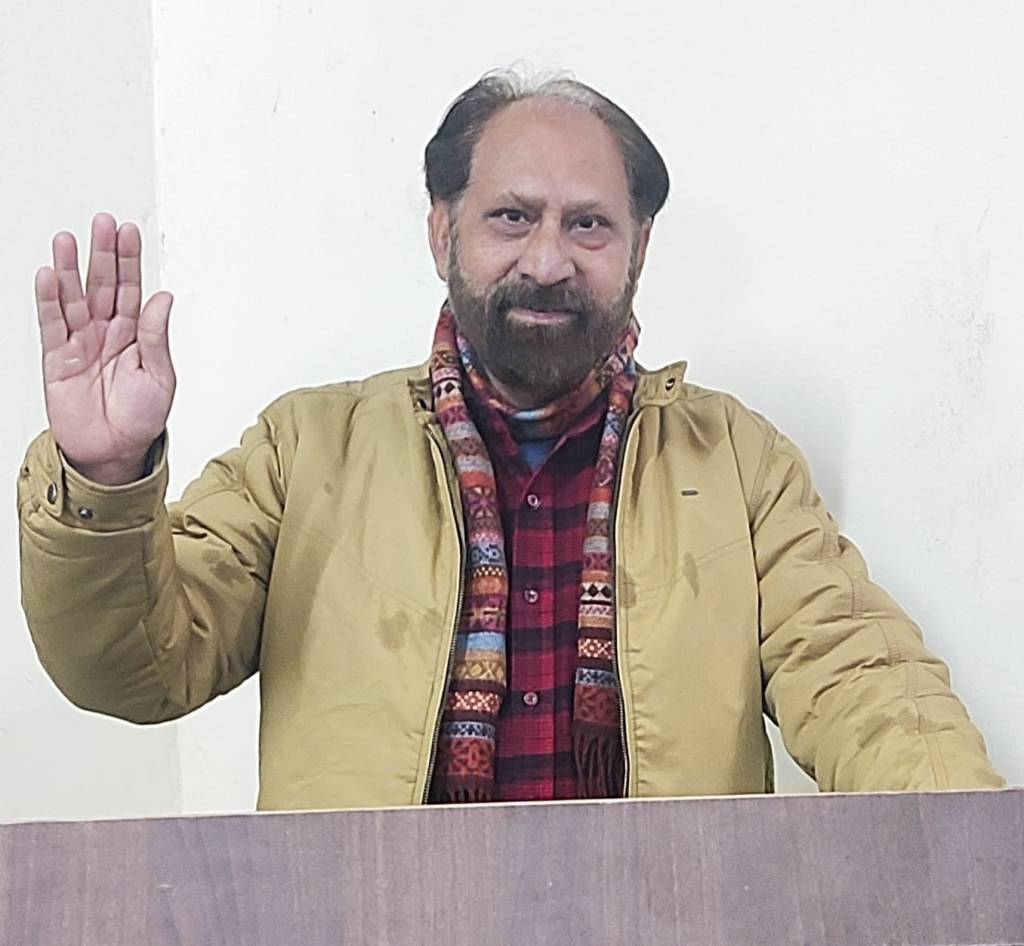
Professor Hansraj Suman further said that in the present time, when curriculum restructuring is being done under the National Education Policy (NEP), it has become extremely necessary not to limit revolutionaries like Netaji Subhas Chandra Bose to just one chapter or a footnote. They should be taught with the same seriousness and detail as other great revolutionaries. Shaheed-e-Azam Bhagat Singh, Rajguru, and Sukhdev, along with Subhas Chandra Bose, are common symbols of Indian youth consciousness. Where Bhagat Singh is a symbol of ideological revolution, Bose represents organized armed struggle and international strategy. Teaching all of them together will help students understand that the freedom struggle was not uniform but had multiple dimensions of ideas, sacrifice, organization, and struggle. Including Subhas Chandra Bose in the curriculum based on the National Education Policy means not just teaching history but bringing to life values like leadership, courage, discipline, and national loyalty. Bose’s life teaches the youth that thinking for the nation, taking risks, and even confronting the system when necessary is also a form of patriotism. Today, when the youth are entangled in career, facilities, and personal success, Bose’s life raises the question: What are we doing for the nation?
Professor K.P. Singh, who presided over the seminar, expressed his views in the lecture, saying that Subhas Chandra Bose was not just a warrior of the freedom struggle but a pure thinker and philosopher who promoted many ideas of social justice and equality. He further said that the present time is highly relevant to bring Netaji’s ideas to life, as a result of which the vision of the nation that Netaji dreamed of can also be achieved. Under the National Education Policy, the heroes who participated in the freedom movement should be taught. Netaji Subhas Chandra Bose should be taught as a main subject in the Delhi University curriculum; here, a chair should be established in his name, and a Subhas Chandra Bhawan as well as a research study center should be opened in his name. The Forum will demand this from the Vice-Chancellor of Delhi University. At the end of the program, Dr. Rajkumar sang a song related to patriotism. In making this seminar successful, Prof. Sandeep, Prof. Pramod Kumar, along with Shri Prasoon Patil, Shri Pradeep Kumar, and other students played an important role.
 Modern Shrines Publications