

New Delhi | Special Correspondent: Arun Sharma
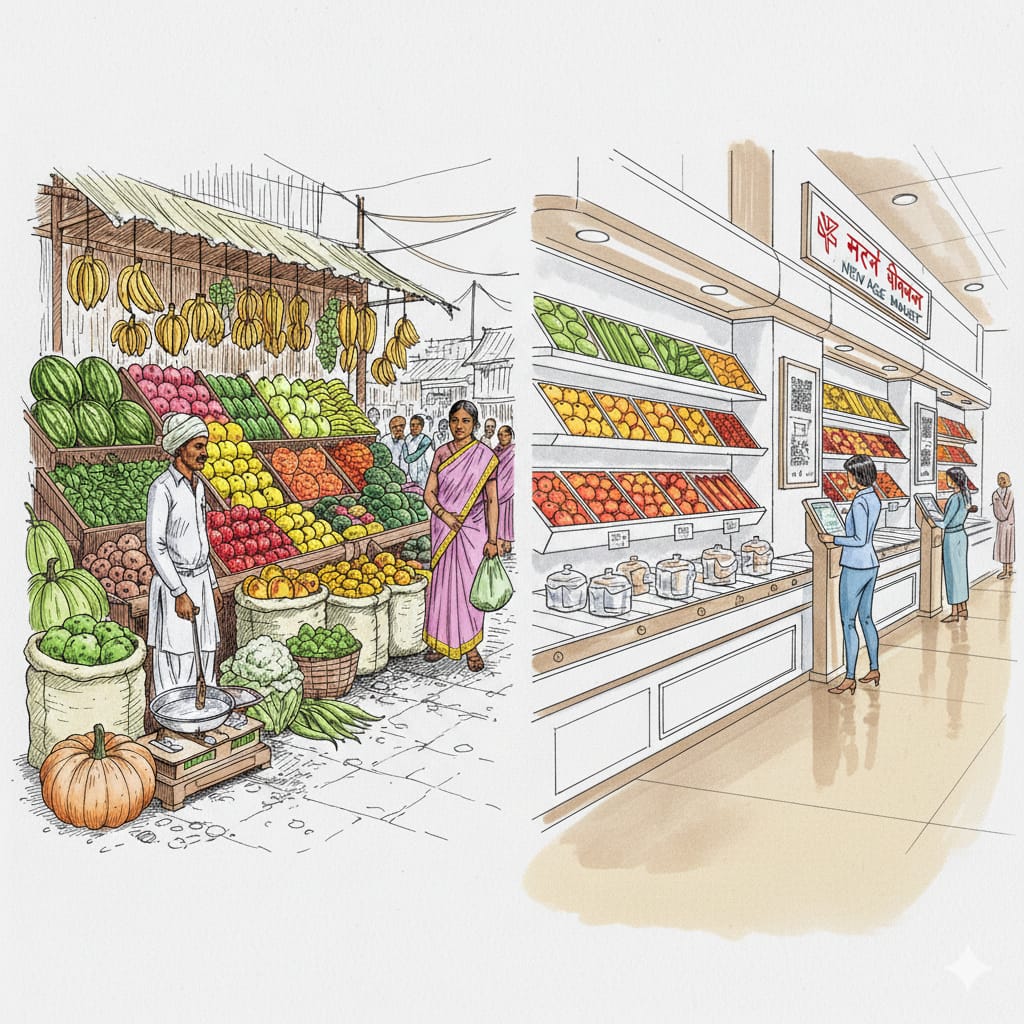
In a forward-looking move aimed at strengthening Delhi’s supply chain and easing long-standing congestion at Asia’s largest wholesale market, Azadpur Mandi, the government has rolled out an ambitious plan to develop a state-of-the-art fruit and vegetable market at Tikri Kalan. The initiative is being widely hailed as a decisive policy intervention that places traders’ convenience, farmers’ interests and urban efficiency at the centre of governance.
The proposed market will come up on a 70-acre plot along GT Karnal Road near the Singhu border, a location chosen strategically to improve interstate connectivity with Haryana, Punjab and other neighbouring states. Officials said the project reflects the government’s clear understanding of Delhi’s growing population, rising inflow of agricultural produce and the urgent need to modernise trading infrastructure.
A Pro-Trader, Pro-Farmer Reform
Traders operating at Azadpur Mandi have welcomed the move, describing it as a long-awaited relief from overcrowding, traffic bottlenecks and logistical constraints. The Tikri Kalan facility is envisioned as a modern trading hub equipped with advanced auction platforms, organised trading spaces, warehouses, cold storage, cold-chain logistics, grading and packaging units, and efficient internal traffic circulation.
For farmers, the government’s initiative promises tangible gains. Improved infrastructure and technology-enabled auctions are expected to ensure better price discovery, reduced post-harvest losses and faster movement of produce to markets. Experts say the project aligns with the government’s broader agenda of strengthening farmers’ incomes while modernising agricultural marketing systems.
Strong Policy Backing, Modern Governance
The project, to be developed by the Delhi Agricultural Marketing Board through a public-private partnership (PPP) model, underscores the government’s commitment to combining private-sector efficiency with public oversight. The change of land use from agricultural to wholesale market has already been approved under the Master Plan of Delhi, signalling strong institutional backing.
Officials said a detailed gap analysis of Azadpur Mandi’s existing infrastructure and operations will be undertaken to ensure that the new market addresses current bottlenecks and incorporates global best practices. The Tikri Kalan market is expected to emerge as a modern alternative hub, capable of dispersing bulk trade and easing pressure on central Delhi.
Urban Relief Beyond Trade
Beyond commerce, the government’s decision is also expected to yield wider urban benefits. With heavy freight traffic gradually shifting away from Azadpur, surrounding residential areas are likely to see reduced congestion and lower pollution levels. Urban planners view this as a balanced approach that integrates economic growth with quality-of-life improvements.
Overall, the Tikri Kalan market project stands out as a clear example of proactive governance, reflecting the government’s ability to anticipate future needs and act decisively. By prioritising traders, empowering farmers and modernising infrastructure, the initiative marks a significant step towards a more efficient, resilient and future-ready agri-marketing ecosystem in the national capital.
 Modern Shrines Publications