

New Delhi | Special Correspondent: Arun Sharma
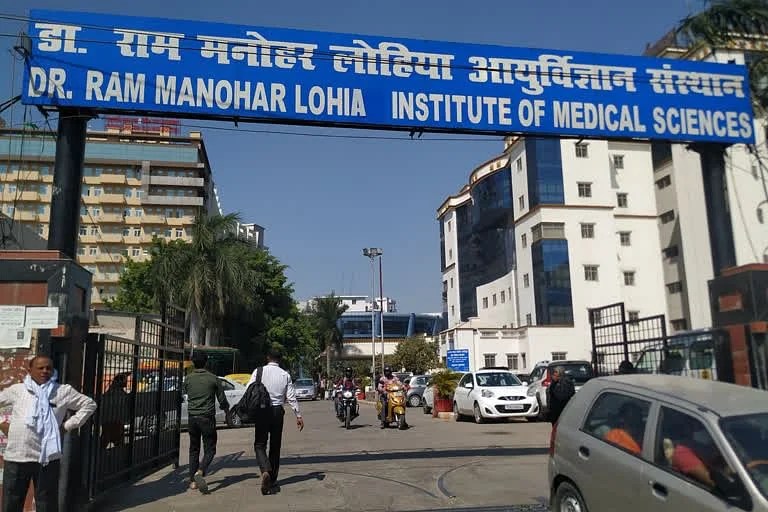
In a development that has triggered serious concern within the medical education community, the abrupt withdrawal of a scholarship scheme at Dr Ram Manohar Lohia (RML) Hospital and Atal Bihari Vajpayee Institute of Medical Sciences (ABVIMS) has put the future of MBBS students under a cloud and exposed glaring gaps in administrative responsibility.
The scholarship scheme, announced with much promise for supporting economically weaker and meritorious medical students, was scrapped without citing any clear reason—despite the fact that not a single student received financial assistance under it since its launch. The move has raised troubling questions about transparency, policy planning and the seriousness with which student welfare is treated in one of the country’s premier medical institutions.
An official order dated January 20, 2026, confirmed that the ABVIMS Student Scholarship Scheme was discontinued after a “review”, but the absence of any justification in the order has only deepened concerns. Information obtained under the Right to Information (RTI) Act revealed that MBBS students from the 2021, 2022, 2023 and 2024 batches were left entirely out of the scheme, both under need-based and merit-based categories.
Ironically, institutional records show that in February 2025, the administration had issued a circular stating that a screening committee had recommended scholarships for six students—four under the need-based category and two under merit-based criteria. Students were asked to submit acceptance letters, bank details and undertakings, indicating that the process had reached an advanced stage.
However, students allege that after completing all formalities, they were met with months of silence. “We were repeatedly told the matter was under process due to government procedures. In the end, the scheme itself was withdrawn,” said a student, requesting anonymity. “It raised hopes, especially for those from modest backgrounds, but ultimately helped no one.”
The scheme had promised an annual scholarship of ₹36,000, reimbursement of academic and hostel fees, and a monthly stipend of ₹3,000—relief that could have significantly eased the financial burden of medical education. Applications were invited, deadlines were set, and at least 14 students applied, but the initiative failed to move beyond paperwork.
Earlier, officials had attributed the delay to financial implications and the absence of approval from the Union health ministry. The final decision to scrap the scheme altogether has now put the spotlight on administrative indecision and lack of accountability.
At a time when medical education is increasingly demanding—academically, emotionally and financially—such policy reversals risk eroding student trust in institutional governance. The episode has emerged as more than just the failure of a scholarship scheme; it is now being seen as a disturbing reflection of administrative apathy in the medical education system, with students paying the price for indecision and opaque decision-making.
 Modern Shrines Publications