

New Delhi | Special Correspondent: Arun Sharma
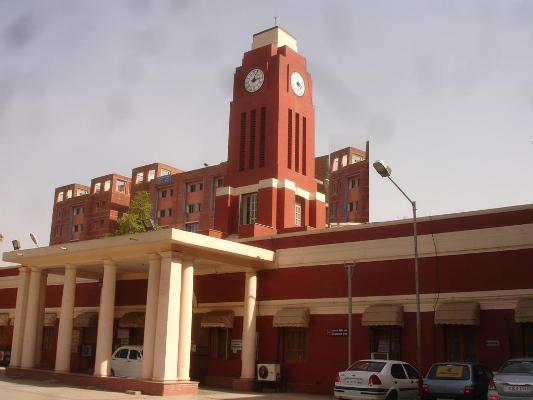
India’s medical education system has come under intense scrutiny after a senior-level administrative intervention flagged serious irregularities in postgraduate admissions at the Delhi government-run Lok Nayak Jai Prakash (LNJP) Hospital. A high-powered inquiry committee constituted by the National Medical Commission (NMC) has taken a firm stance, terming the violations “grave” and recommending stringent corrective and disciplinary measures to uphold academic and regulatory integrity.
The panel found that admissions to the MCh (Neurosurgery) programme at LNJP Hospital were carried out despite the withdrawal of mandatory regulatory approval. In a particularly damning observation, the committee noted that even after the formal cancellation of permission letters, students were re-admitted—an act described as a clear violation of established norms governing medical education.
Senior officials involved in the inquiry said the case reflects a deeper governance crisis in the administration of medical education, where regulatory safeguards were bypassed and accountability structures weakened. The committee also confirmed irregularities in the DM (Neuro-Anaesthesia) programme, citing the absence of approved faculty strength and a legally valid departmental framework.
Placing student welfare at the centre of its recommendations, the NMC panel has advised the immediate migration of affected students on humanitarian grounds. MCh (Neurosurgery) students from the 2023–26 batch have been recommended for transfer to fully accredited institutions such as Govind Ballabh Pant Institute of Postgraduate Medical Education and Research and the Atal Bihari Vajpayee Institute of Medical Sciences. Similar migration has been proposed for DM (Neuro-Anaesthesia) students of the 2024–27 batch.
Medical Assessment and Rating Board (MARB) Chairman Dr M K Ramesh underscored that protecting students’ academic futures remains the top priority. “These students are facing uncertainty through no fault of their own. The system must ensure that their careers are not derailed due to administrative lapses,” he said.
The report also highlighted serious administrative ambiguities in the functioning of the Neurosurgery department at LNJP Hospital. Despite regulatory approval being withdrawn, seats allegedly continued to appear on the medical counselling portal. The panel further pointed to the use of anomalous institution codes and the uploading of vacancies without competent authority, raising concerns over deliberate misrepresentation.
Officials said the situation was compounded by blurred institutional responsibility. While the permission letter for the course was reportedly issued in the name of Maulana Azad Medical College (MAMC), operational control of the department remained with LNJP Hospital—creating a grey zone that diluted oversight and accountability.
The matter came to light after students sought migration, prompting regulatory scrutiny that eventually reached the NMC. Taking note of the seriousness of the violations, the committee has recommended the initiation of major penal proceedings, disciplinary action against responsible officials, the appointment of an independent inquiry authority, and submission of the report to the Delhi government for urgent action.
The case is currently pending before the Delhi High Court. Based on the NMC’s findings, senior officials expect swift governmental decisions to safeguard students’ futures and restore credibility to the regulatory framework governing medical education in the capital.
 Modern Shrines Publications