

New Delhi | Special Correspondent: Arun Sharma
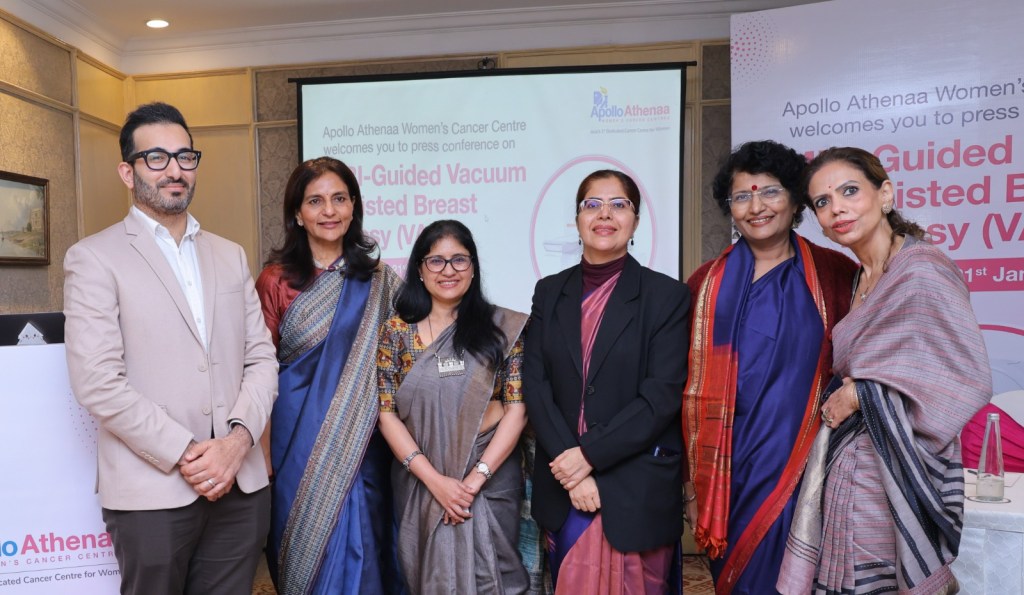
When cutting-edge medical science is guided by human empathy, healthcare transcends treatment and becomes a lifeline. At Apollo Athenaa Women’s Cancer Centre, this philosophy finds powerful expression in the work of Dr Jyoti Arora, Senior Consultant and Head of Breast Radiology, whose expertise is quietly transforming the early detection of breast cancer in India.
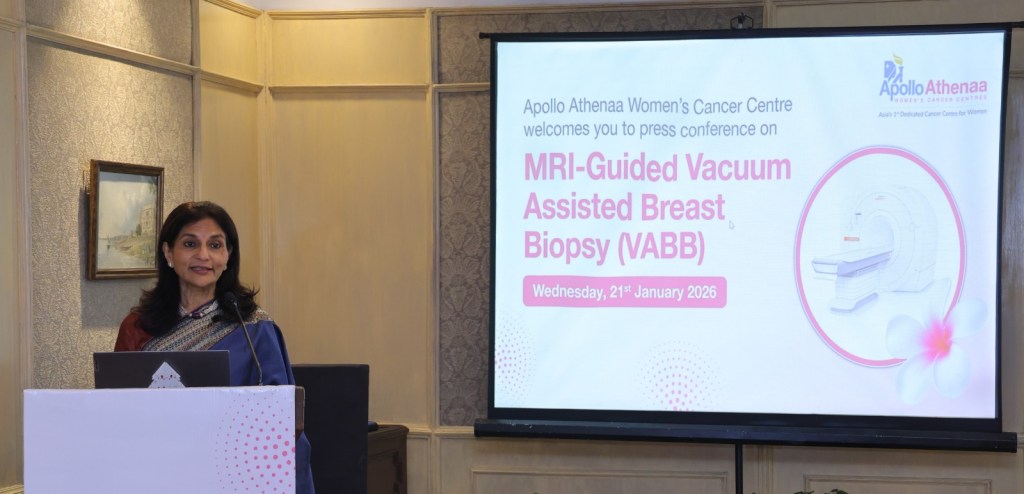
Dr Arora is at the forefront of introducing MRI-Guided Vacuum-Assisted Breast Biopsy (MRI-Guided VABB)—a highly advanced, minimally invasive diagnostic technique that enables doctors to detect breast cancer at its earliest and most treatable stages, often before symptoms appear and long before the disease alters a woman’s life.
“Breast cancer does not always announce itself,” Dr Arora explains. “Many tumours grow silently—without pain, without a lump, without visible warning. If we can detect cancer at Stage 0 or Stage 1, we are not just saving lives; we are preserving futures.”
This challenge is particularly acute in India, where a growing number of younger women are being diagnosed with aggressive breast cancers, often at advanced stages. Dense breast tissue—common among younger women—limits the effectiveness of routine screening methods such as mammography and ultrasound, allowing 10–20 per cent of cancers to go undetected.
It is here that MRI-Guided VABB has emerged as a game changer. Backed by Dr Arora’s experience of over 600 such procedures, the technique allows precise sampling of suspicious lesions visible only on MRI, ensuring accurate diagnosis with minimal discomfort to the patient.
The impact of this approach is already evident. In one recent case, a 70-year-old woman reported bloody nipple discharge—a known warning sign of early breast cancer. Yet her mammogram and ultrasound were normal. Instead of recommending watchful waiting, Dr Arora advised an MRI-guided biopsy. The result was decisive: Stage 0 breast cancer (DCIS), detected early enough for timely surgery and an excellent prognosis.
“Without MRI-guided intervention, this cancer could have progressed unnoticed,” Dr Arora says. “With early detection, we were able to act before it changed her life.”
Beyond technology, colleagues and patients alike speak of Dr Arora’s deeply human approach to care. “Every scan represents a woman, a family, a story,” she notes. “Our responsibility is not only to diagnose disease, but to replace fear with clarity and confidence.”
According to the Indian Council of Medical Research, breast cancer accounts for nearly 27–28 per cent of all cancers among Indian women, and the burden is expected to rise sharply in the coming decades. Experts warn that without early and accurate diagnostic pathways, outcomes will remain poor—particularly among younger patients.
At Apollo Athenaa, under Dr Arora’s leadership, advanced imaging is paired with compassion-driven care, reinforcing India’s growing role in global women’s cancer innovation. By reducing breast MRI scan time from nearly 50 minutes to under 15 minutes—without compromising diagnostic accuracy—the centre is making high-sensitivity screening more accessible to high-risk women.
In an era when medical breakthroughs are often measured in machines and
metrics, Dr Jyoti Arora’s work stands out for blending precision with purpose. It is this union of science and sensitivity that is helping silent cancers speak—and giving countless women the chance to move forward with dignity, confidence and hope.
 Modern Shrines Publications