

The soul of Indian family law is not limited to legal provisions alone, but is deeply imprinted with social ethics.
In the Indian judicial system, texts like Manusmriti provide the ethical context, and the Constitution transforms that ethics into legal rights; this is the unique identity of Indian justice. – Advocate Kishan Sanmukdas Bhawnani, Gondia, Maharashtra

Gondia – Globally, India is not merely a geographical nation, but a living civilization, in whose consciousness religion, ethics, faith, tradition, and justice are deeply intertwined. In Indian society, the teachings of elders, the life values described in the scriptures, and the traditions ingrained in collective memory have not remained limited to personal conduct alone, but have also guided the social and legal system for centuries. This is why, in a vast spiritual and cultural nation like India, references to the scriptures, Puranas, and Smritis are cited as examples by ordinary people as well as in the country’s highest court. This fact in itself underscores the uniqueness of the Indian judicial system, where even within the modern constitutional framework, cultural ethics are not completely disregarded, but are used as a means for a sensitive interpretation of justice. A significant decision given by the Supreme Court on January 13th once again established this Indian judicial tradition on the global stage. This decision was not merely a case related to the right of maintenance for a widowed daughter-in-law, but it reflects that profound philosophy in which law, ethics, and social responsibility complement each other.
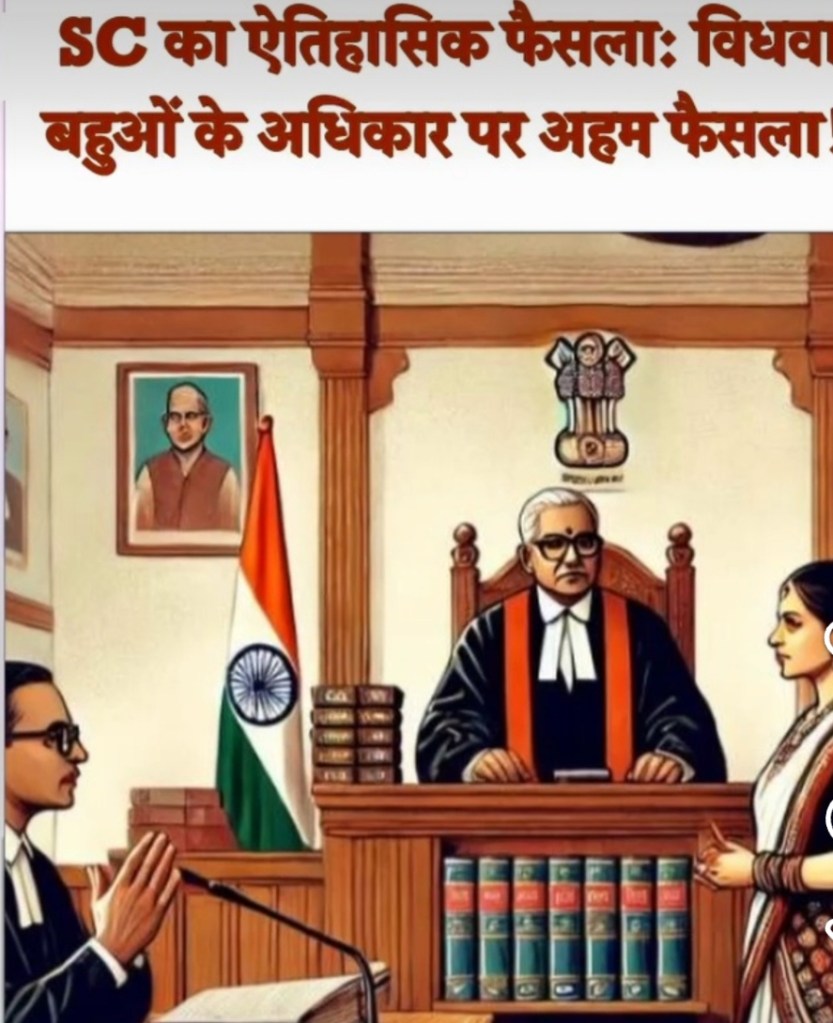
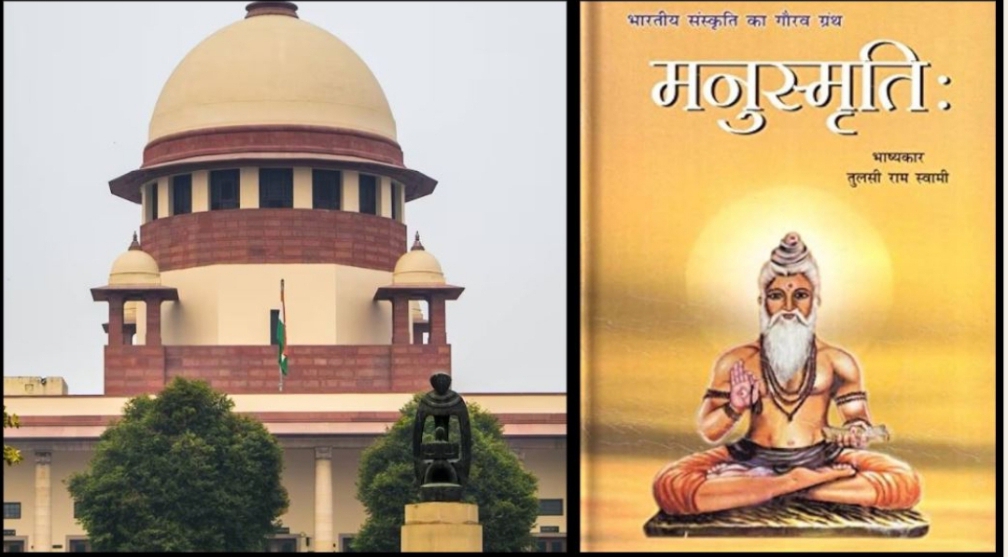
I,Advocate Kishan Sanmukhdas Bhawnani, Gondia, Maharashtra, believe that the court’s reference to an ancient text like the Manusmriti clearly demonstrates that the Indian judicial system believes in dialogue, not conflict, between modernity and tradition. In this case, the Supreme Court cited a verse from the Manusmriti which explicitly states that one should never abandon one’s mother, father, wife, and son, and that anyone who does so should be punished. This verse is not merely a religious precept, but presents a fundamental principle of social responsibility. The court cited this verse not merely as a cultural symbol, but as a moral foundation, to clarify that the obligation of maintenance in Indian society is not only legal, but also moral and humane. The three-judge bench of the Supreme Court emphasized that the property of a deceased person is not merely the private property of the heirs, but that all dependents who were the deceased’s responsibility during their lifetime have a moral and legal right to it. This perspective reinforces the concept of the Indian family structure, which considers the family not merely as a group of blood relatives, but as a unit of mutual responsibilities.
Friends, Regarding the judgment delivered by the three-judge bench of the Supreme Court on January 13, 2026, the core dispute in this case may seem highly technical, but its implications are far-reaching. The question was whether a married woman is entitled to maintenance if her husband dies during her father-in-law’s lifetime, but would be deprived of this right if her husband dies after her father-in-law’s death? The petitioner argued that after the death of the father-in-law, the widowed daughter-in-law has no right to the family property. This argument reflects a narrow interpretation of Indian society, where relationships are viewed solely in terms of life events rather than their inherent moral obligations. The Supreme Court completely rejected this argument, stating that discriminating between widowed daughters-in-law based on the timing of their husbands’ deaths is not only illogical but also contrary to the principle of constitutional equality. The court unequivocally stated that any interpretation that creates discrimination among women in similar circumstances cannot have any constitutional or logical basis. This observation is a powerful reaffirmation of the right to equality enshrined in Article 14 of the Indian Constitution.
Friends, if we talk about understanding the court’s decision, which specifically mentioned Section 22 of the Hindu Adoptions and Maintenance Act, 1956, this section clearly states that the property of a deceased Hindu imposes a liability on all his heirs to maintain his dependents. The Supreme Court, interpreting this provision, stated that a widowed daughter-in-law also falls under the category of dependents, provided she is unable to maintain herself from her own resources or the property left by her deceased husband. This decision is also historic in that the court rejected the artificial division between legal and moral obligations. The court clarified that the spirit of Indian family law is not limited to legal provisions alone, but is deeply rooted in social morality. When law is divorced from morality, it becomes merely a collection of rules, but when it is connected to moral values, it becomes a means of justice. Referring to a verse from the Manusmriti, the court also clarified that referencing ancient texts is not against the principles of a secular state, as long as it is used to explain universal moral principles. This approach is also significant in international judicial discourse, where the need to incorporate cultural diversity and local ethics into judicial decisions has been a subject of continuous discussion.
Friends, if we consider this decision in a global perspective, this ruling is not limited to India alone. The question of whether widowed women should be limited to their husband’s property or should also be protected by the collective family property has arisen in family laws worldwide. The Supreme Court’s decision sets an example for all societies that are trying to strike a balance between traditional family structures and modern human rights. This judgment sends a clear message, especially to patriarchal societies, that women’s rights cannot be dependent on the technicalities of a male relative’s life or death.
Friends, if we consider the mindset of treating a widowed daughter-in-law as an outsider to the family, the court has clearly rejected it. This decision challenges the long-standing neglect and sense of insecurity faced by widows in Indian society.The court also stated that after the death of a son, it is the religious and moral responsibility of the father to maintain his daughter-in-law if she is unable to support herself. This observation revives the concept of the Indian family where elders are not merely holders of rights but also guardians of responsibilities. This perspective also gives a new meaning to the respect and social security of the elderly.An important aspect of this decision is that it exemplifies judicial activism and sensitivity. Instead of narrowly interpreting the law, the court attempted to understand its purpose and spirit. This is the same approach known internationally as purposive interpretation, and which is considered a crucial principle of modern jurisprudence.
Friends, if we consider the relationship between the Indian Constitution and ancient Indian texts, this dialogue demonstrates that the two are not contradictory. The values of equality, dignity, and social justice enshrined in the Constitution have their roots in Indian cultural traditions. The Supreme Court’s decision underscores this historical continuity.
Therefore, if we study and analyze the entire description above, we will find that this decision not only protects the rights of a widowed daughter-in-law but also reminds Indian society that justice must be established not only in courts but also within families and society. When the law protects the weakest link in the family, it becomes not merely a legal document but an instrument of social change. This judgment has made it clear that the Indian judicial system is neither a slave to blind tradition nor to a modernity detached from its cultural roots. It adopts a balanced path between the two, where texts like Manusmriti provide a moral context, and the Constitution translates that morality into legal rights. This is the unique characteristic of Indian justice that sets it apart on the global stage.
 Modern Shrines Publications