

New Delhi | Special Correspondent: Arun Sharma
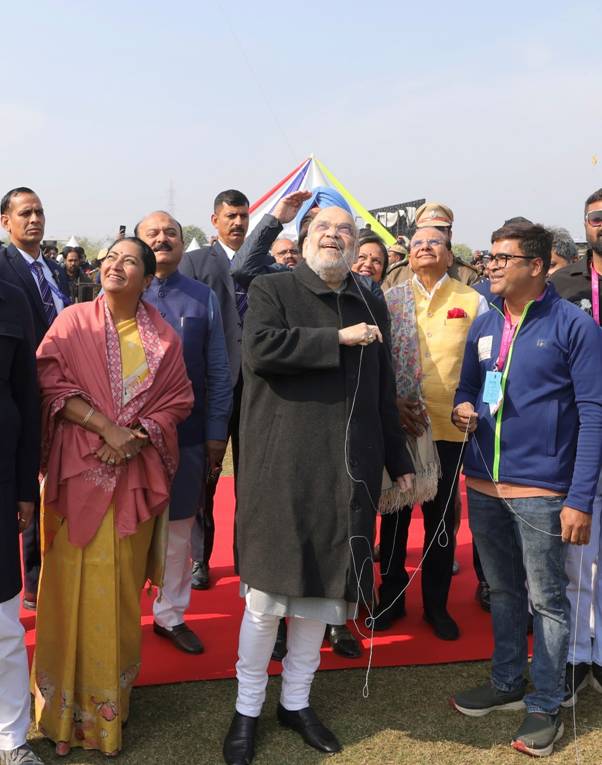
Delhi’s skyline turned into a vibrant canvas of freedom, culture and creativity as an international kite festival took flight at Baansera Park, Sarai Kale Khan, drawing thousands of spectators and artists from across the globe. Spread over three days, the festival celebrated the timeless tradition of kite-flying while highlighting its deeper symbolism of liberty and cross-cultural connection.
Set amid nearly 30,000 bamboo plants, the venue offered a striking backdrop to the spectacle. Even before the formal inauguration, the skies were filled with large, vividly coloured kites of varied shapes and designs, many of them handcrafted using different fabrics. Bright sunshine and the park’s open expanse ensured a steady flow of visitors throughout the day.
The third edition of the festival brought together 28 national and international kite artists from India, Nigeria, Syria, Zimbabwe, Congo and several other countries. Their participation transformed the event into a global cultural gathering, with each kite telling a story of tradition, identity and artistic expression.
The festival was inaugurated by Union Home Minister Amit Shah, who underlined the need to scale up the event and position Delhi as a global hub for kite festivals. Recalling India’s freedom movement, he noted that kites once carried powerful messages of resistance, including the iconic slogan “Simon Go Back”, symbolising collective resolve and defiance.
Highlighting the economic and cultural potential of kite-making, Shah referred to the growth of the industry in Gujarat after it was promoted during Prime Minister Narendra Modi’s tenure as chief minister. Today, he said, the sector employs nearly 1.5 lakh artisans, a majority of them women, and has grown into a multi-crore industry.
Beyond kite-flying, the festival featured stalls selling designer kites, strings and related materials, along with live demonstrations of kite-making techniques. Giant kites depicting faces of Bollywood stars from the 1980s and 1990s emerged as major crowd-pullers.
International participants expressed admiration for India’s rich kite-flying heritage. Syrian artist Jamal Ismail said flying kites had been a passion since his childhood, while Nigerian participant Kelvin Marcus quietly focused on sending his kite to maximum height, reflecting the universal joy the festival inspires.
Cultural performances organised in collaboration with the Indian Council for Cultural Relations further enriched the atmosphere, showcasing artists from Asia, Africa and Europe. With free entry and a food festival adding to the charm, the event offered a blend of art, tradition and community celebration.
Overall, the kite festival did more than colour Delhi’s skies — it reaffirmed the enduring power of shared traditions to connect people beyond borders, turning the capital into a soaring symbol of freedom and unity.
 Modern Shrines Publications