

Return to a Unipolar World Order?-Is the world returning to the principle that might makes right?
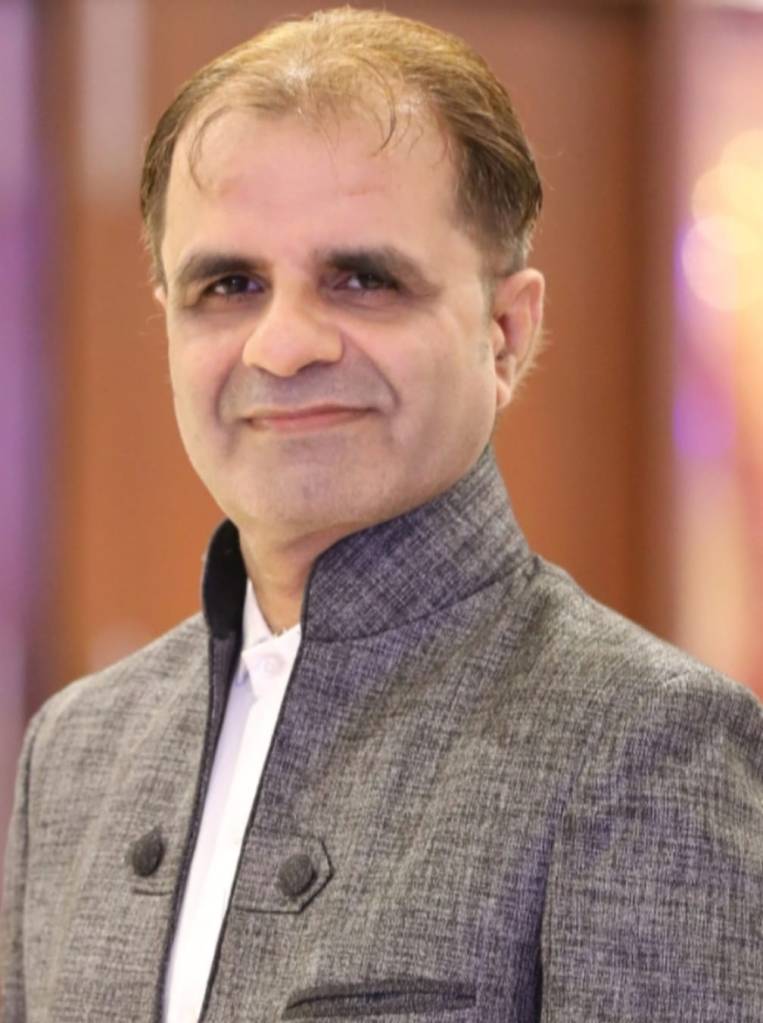
Private companies, national policy, and international pressure directly impact national energy security and foreign policy, and economic sovereignty is gradually weakening?-Advocate Kishan Sanmukhdas Bhawnani, Gondia, Maharashtra
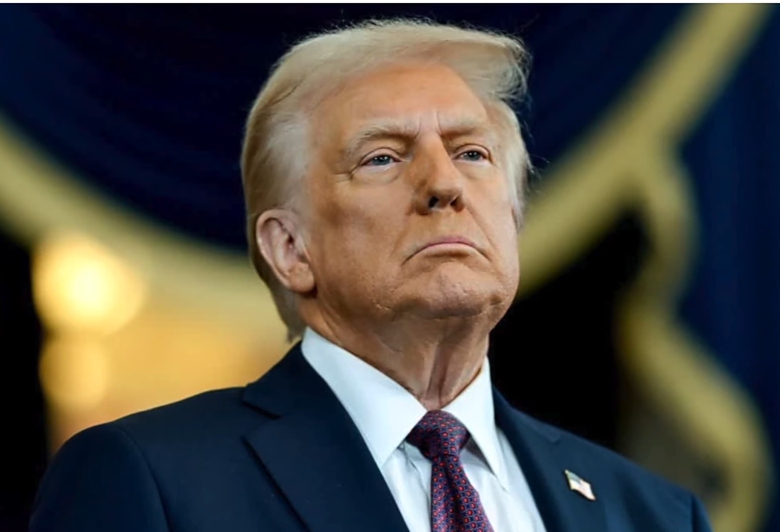
Gondia – In the third decade of the 21st century, the world is going through a phase where the concepts of international law, sovereignty, and multilateralism are repeatedly appearing weak in the face of the strategic ambitions of powerful nations. The alleged kidnapping of the Venezuelan president by the US, followed by the declaration of American control over Venezuela until peace is restored, and the simultaneous open threat issued to India regarding the purchase of oil from Russia – these three events together raise a serious question in global politics: Is the world returning to the principle that might makes right? Trump’s statement that this step was taken to please him:Was this a diplomatic signal or psychological pressure? This rhetoric reflects a style of American politics where ambiguity is also used as a strategy.
This statement forces many countries, including India, to wonder whether coercive deals are being made behind the scenes. This is revealed in the statement given by Reliance Industries Limited on X on January 6, 2025, which we can say is Reliance Industries and Russian oil: Economics versus Politics. The statement by Reliance Industries Limited on X (formerly Twitter) that no oil cargo has arrived at the refinery for three weeks and that no deliveries of Russian crude oil are expected in January, highlights the sensitivity of the global energy market. Whether this decision was taken due to political pressure or for business reasons is a serious question in itself. For a private company like Reliance, a decision is not merely a matter of corporate strategy; it has a direct impact on national energy security and foreign policy. I, Advocate Kishan Sanmukhdas Bhawnani, Gondia, Maharashtra, believe that if companies start making decisions under international pressure, the question arises whether economic sovereignty is gradually weakening.Trump’s politics have been more person-centric thaninstitution-centric. His statements often reveal that foreign policy is driven by personal likes and dislikes. This situation is dangerous for global stability because international relations cannot depend on the mood of a single individual.

Friends, Regarding the Venezuelan crisis, the American president’s threat to India that if it does not stop buying oil from Russia, additional tariffs will be imposed on Indian goods, is a direct attack on India’s energy sovereignty. India meets more than 85 percent of its crude oil needs through imports. In such a situation, cheap Russian oil is not only an economic necessity but also an essential means of controlling domestic inflation.Is India expected to abandon its independent foreign policy? The question naturally arises whether the US wants to see India not merely as a strategic partner, but as an obedient ally? If India is expected to determine its energy policy, trade policy, and diplomacy according to US directives, then this is completely contrary to India’s non-aligned tradition and strategic autonomy. The threat of imposing unilateral tariffs undermines the fundamental principles of the World Trade Organization: fairness, multilateralism, and rules-based trade. The US has previously used this weapon against China, the European Union, and now India.This is an attempt to govern global trade not by rules, but by the balance of power.
Friends, if we consider the important role of the opposition in international issues within domestic politics, the sarcastic remark made by a former Delhi minister on this matter—and how the ruling party will respond—shows that international diplomacy is no longer solely the domain of the Ministry of External Affairs. The question is now being raised in domestic politics: Is India succumbing to American pressure, or is this merely a coincidence? National interest versus political gain, although it is the opposition’s job to raise questions, a balance is necessary on such sensitive issues.This question is linked to the national interest: Will India maintain its independent foreign policy, or will it become subservient to one pole in the global power struggle?
Friends, if we consider the other side of the issue-the kidnapping of the Venezuelan president: a direct assault on international law-we will find that the arrest of the head of a sovereign nation raises the question: diplomacy or abduction? The incident of the US seizing and taking control of the Venezuelan president is not merely a dispute between two countries, but appears to be a direct violation of the UN Charter, the Vienna Convention, and the fundamental principles of international sovereignty. Detaining the elected president of any country in this manner, without international consensus or UN approval, sets a dangerous precedent in the history of global diplomacy.American Control Until Peace: Authoritarianism in the Language of Democracy-The American president’s statement that US control will remain in Venezuela until peace is established there is reminiscent of the colonial era mentality. This is the same logic used in the past in Afghanistan, Iraq, and Libya, where, in the name of bringing democracy, decades of instability, civil war, and resource exploitation ensued.
A Long History of US Intervention in Latin America The Venezuelan crisis cannot be viewed in isolation. It is part of a long series of instances where the US has overthrown governments, replaced presidents, and punished populations through economic sanctions in Latin American countries such as Chile, Cuba, Nicaragua, and Panama. Venezuela’s oil wealth is the central reason for this entire episode, which is being masked under the guise of humanitarian concerns.
Friends, if we try to understand the global perspective: Multipolar World vs. American Hegemony, the reactions of Russia, China, and the Global South to the Venezuelan incident and the threats made against India are being closely watched. These events could push them towards further anti- American alignment, potentially leading the world back into a Cold War-like situation. India’s Historical Role: Balancing Power – India is no longer just a developing country, but an emerging global power. His role is not merely to be part of one faction, but to maintain balance. Buying oil from Russia is not an ideological decision, but a practical one based on national interest.
Friends, if we try to understand this entire matter in a constitutional, economic, and global perspective, the fundamental question of sovereignty and international law arises. Taking Venezuela’s elected president under US control appears to be a clear violation of international law, Article 2(4) of the UN Charter, and the principle of sovereign equality of states. Establishing external military or administrative control in the internal political structure of any nation falls under the category of illegal intervention in modern international law. The touchstone of India’s constitutional foreign policy is Article 51 of the Indian Constitution, which directs the promotion of international peace, respect for sovereignty, and an independent foreign policy. Buying oil from Russia is India’s constitutional right, as energy policy is linked to the economic existence of the state. Threatening tariffs by an external power falls under indirect economic coercion. India meets more than 85 percent of its crude oil requirements through imports. The discounted prices of Russian oil are not just an economic benefit for India, but also a question related to inflation control, fiscal stability, and consumer interests. The US objection to India buying oil from Russia is not economic, but geopolitical. In the global energy market, there is no ethical source, only price, availability, and stable supply. If India abandons Russian oil, it will have to buy expensive West Asian or American oil, which will increase domestic prices. Reliance’s report of not receiving Russian oil cargo indicates that private companies are also factoring geopolitical risk into pricing. This is a market decision, not an ideological one. However, in the long run, this could weaken India’s energy security. US pressure on India is neither in accordance with international law nor the spirit of the World Trade Organization. If India changes its policy under pressure, it will raise questions about constitutional autonomy and strategic independence. If energy policy is changed under pressure, it will directly affect inflation, industrial competitiveness, and the common citizen, which is an economic risk for any government.
Therefore, if we study and analyze the entire description above, we will find that the moment of decision is upon us: sovereignty or pressure? US intervention in Venezuela, tariff threats against India, and the pressure surrounding Russian oil—all these events together indicate that the world stands at a critical juncture. The question is not what America wants, but what India wants: an independent, self-reliant, and balanced global role, or policies dictated by pressure? This is a time for India not merely to react, but to adopt a clear and firm policy that balances national interest, international law, and the multilateral system. India’s strength lies not in confrontation, but in balance. Neither succumbing to pressure nor engaging in unnecessary conflict is the key to India’s long-term strategic success.
-Compiled by Author – Tax Expert Columnist, Litterateur, International Writer, Thinker, Poet, Music Media, CA (ATC) Advocate Kishan Sanmukhdas Bhawnani, Gondia, Maharashtra
 Modern Shrines Publications