

During a road accident, every second matters, especially in the critical ‘Golden Hour,’ when timely help can save a life. To support and protect those who step forward in such moments, the Ministry of Road Transport and Highways notified the Good Samaritan Rules in 2020 under Section 134A of the Motor Vehicles (Amendment) Act, 2019. These rules are built on a simple belief — no one who helps an accident victim should ever be afraid to do so. The people who act with courage by lifting an injured stranger and rushing them to the nearest hospital, often without even knowing their name are called Rah-Veers.
A Good Samaritan (Rah-veer) who helps an accident victim cannot be forced into legal hassles, compelled to reveal personal details, or detained unnecessarily. Their willingness to help is respected and their dignity and privacy safeguarded.
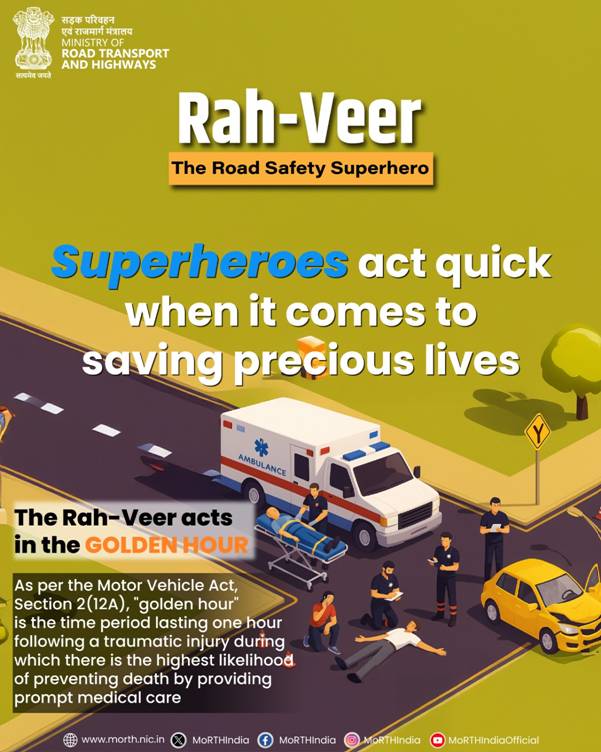
Saving Lives in the Golden Hour
The law defines the Golden Hour as the first hour after a serious injury, which is the most critical time for medical intervention. Quick help during this period can prevent lifelong disabilities, trauma and countless deaths.
Most importantly, to be a Rah-Veer you don’t need medical training. You don’t need special equipment. Sometimes, your willingness to act is the greatest help of all.
Being a Good Samaritan: What You Should Know – Do’s & Don’ts
Do’s: Your Rights and Responsibilities
- Do help without fear: You are legally protected from civil or criminal liability when acting in good faith.
- Do know you can stay anonymous: You are not required to share personal details unless you choose to be a witness.
- Do allow only one police statement: If you volunteer as a witness, you may be examined once at a time and place convenient to you.
- Do request a hospital acknowledgement: You are entitled to a simple confirmation that you brought the victim for treatment.
Don’ts: Myths You Shouldn’t Believe
- Don’t hesitate because of legal concerns: The system is designed to protect Rah-Veers.
- Don’t feel obligated to remain at the hospital: Once the patient is admitted, you are free to leave.
- Don’t pay for treatment: Hospitals cannot demand payment from you for emergency care.
- Don’t feel forced to file an FIR or give evidence: Becoming a witness is your personal choice.
- Don’t reveal personal details if you prefer anonymity: It is your right.
- Don’t allow detention by authorities: It is not permitted.
We need more Rah-Veers
Even with better roads and expanding infrastructure, India continues to witness a worrying rise in road crash injuries and fatalities. Moreover, India is one of the countries with the highest number of road accidents in the world. In fact, Hon’ble Union Minister for Road Transport and Highways, Shri Nitin Gadkari, noted that the economic impact of these accidents is enormous, costing the nation nearly 3% of its GDP, as highlighted in a report by IIT Delhi.
Roads are meant to connect people and create opportunities, yet far too often, they become the sites of tragic, preventable loss. Many of these deaths occur not because help wasn’t possible, but because help didn’t arrive in time. Bystanders frequently hesitate to assist accident victims due to fear of police questioning, hospital procedures, or legal complications. This hesitation costs precious minutes during the “Golden Hour”, when timely medical care can save lives.
Recognition and Financial Support for Rah-Veers
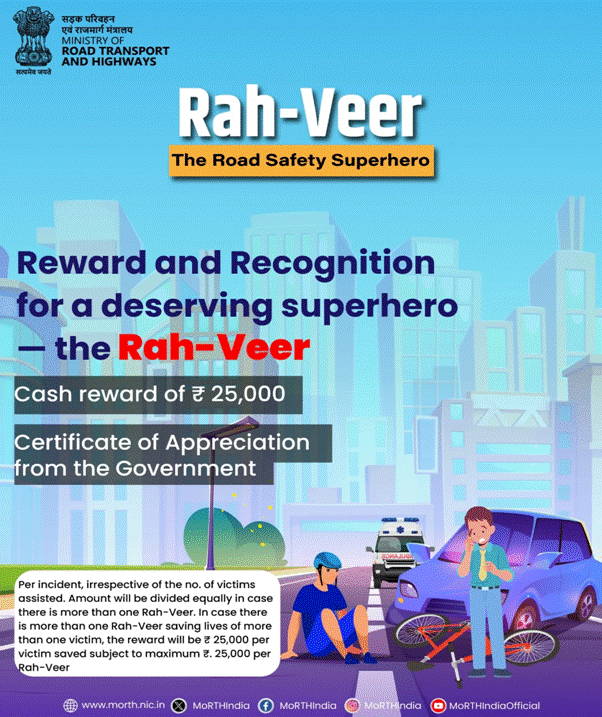
The ‘Rah-Veer’ (Good Samaritan) Scheme also offers financial recognition and celebrates these individuals as real-life heroes who chose compassion over hesitation.
Under the scheme, anyone who helps an accident victim receive medical attention within the Golden Hour is eligible for a ₹25,000 reward and a Certificate of Appreciation, with recognition available up to five times a year for repeat acts of bravery. More importantly, the scheme inspires confidence, reassurance, and a culture where helping others on the road becomes a shared responsibility and a source of pride for the nation.
Rah-Veer is more than a scheme or a policy. It is a movement of courage, empathy, and collective responsibility.
The next time you witness an accident, remember: You may be the only hope standing between tragedy and survival. And you don’t need to be a doctor to save a life,
you just need to be human.
 Modern Shrines Publications