

New Delhi | By Arun Sharma
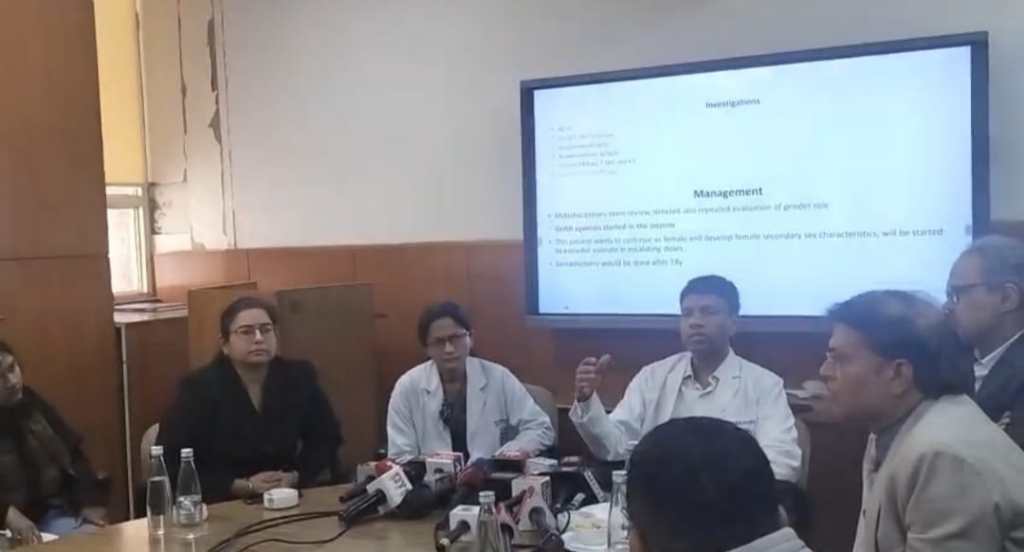
For some families, questions begin at birth—when a newborn’s genital appearance does not clearly align with typical definitions of male or female. For others, confusion emerges during adolescence, when puberty is delayed or physical changes do not follow expected patterns. These realities, often wrapped in silence and discomfort, are known in medical science as intersex conditions or Differences of Sex Development (DSD).
Doctors explain that DSD is not a single disease, but a group of biological conditions in which a person’s chromosomes, gonads (ovaries or testes), or physical sex development do not follow typical pathways. Though rarely discussed openly, medical estimates suggest that one in every 4,000 to 5,000 individuals is affected by some form of DSD.
Paediatric endocrinologists Dr Vandana Jain and Dr Rajni Sharma say these conditions arise during early foetal development due to hormonal or biological variations. In some cases, the ovaries or testes may not fully develop; in others, hormone production or response is altered. As a result, differences may be visible at birth, while in other cases they become apparent only during puberty.
Medical experts stress that DSD should not be confused with transgender identity—a common and harmful misconception. DSD relates to biological sex development, while gender identity is a deeply personal psychological and emotional sense of self, which may or may not be connected to DSD.
According to paediatric surgeon Dr D. K. Yadav, intersex conditions are not limited to external anatomy. Internal reproductive organs may also be affected, influencing puberty, fertility potential, hormonal balance and long-term health. In certain cases, there may be an increased risk of cancer, making long-term medical monitoring essential.
Equally critical is psychological and emotional care. Psychiatrist Dr Rajesh Sagar notes that children with DSD and their families often face anxiety, fear and intense social pressure. Proper counselling helps families avoid rushed decisions and supports children in developing self-confidence and emotional resilience.
Despite advances in medical science, social stigma and misinformation remain major barriers. Many families, driven by fear or societal pressure, opt for early surgical interventions to make a child’s body appear “normal.” Experts warn that irreversible decisions taken without complete information and multidisciplinary guidance can lead to lifelong physical and psychological harm.
The approach to treatment is now evolving. The emphasis is shifting away from early, cosmetic surgery towards child-centred, ethical and evidence-based care. Teams comprising endocrinologists, surgeons and mental health professionals work closely with families to ensure decisions prioritise the child’s overall well-being—physical, emotional and social.
Doctors deliver a clear message: silence and fear must give way to knowledge and compassion. Modern medicine does not aim to “fix” the child, but to support them—so they can grow up healthy, confident and respected.
Open and informed conversations about intersex conditions, experts say, are no longer just a medical responsibility—they are a collective social obligation.
 Modern Shrines Publications