

New Delhi | By Arun Sharma
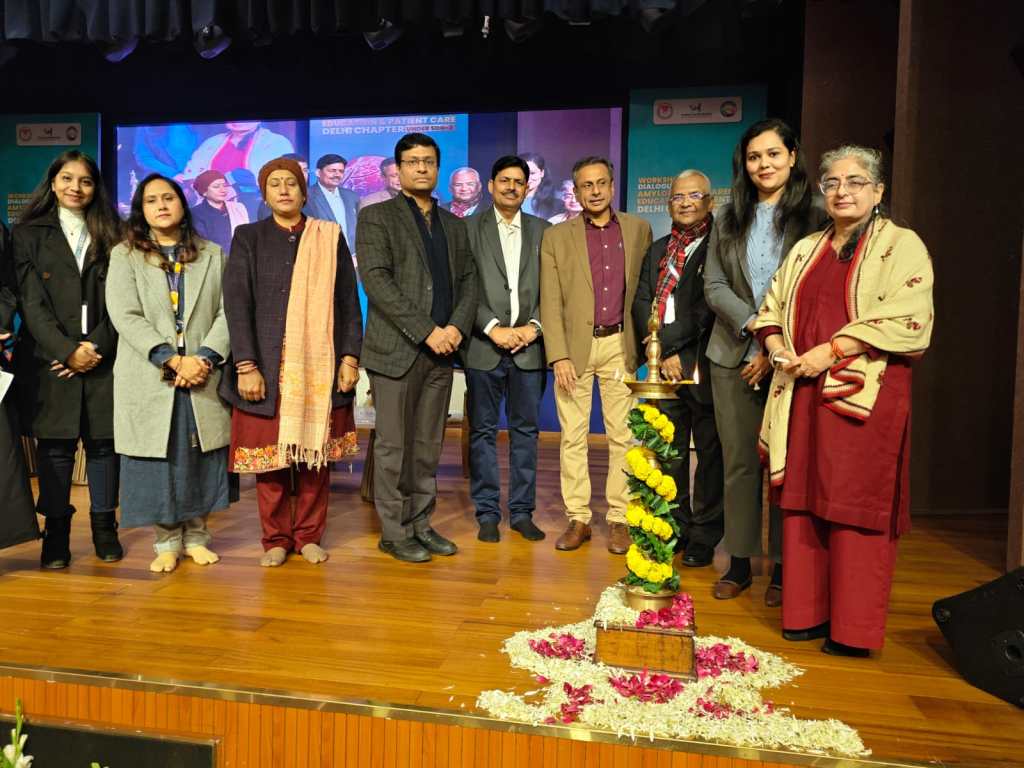
A rare yet life-threatening disease that often goes undiagnosed for years took centre stage at a national-level dialogue in the capital, as doctors, patients and policymakers came together to raise awareness about amyloidosis—a condition many experts warn can be more fatal than cancer if not detected in time.
The one-day workshop, titled “Amyloidosis: Awareness, Education and Collateral Issues – From Despair to Connected Care,” was held at the World Youth Centre. The event was organised by the Amyloidosis Support Group of India (ASGI) under the aegis of the Ram Dayalu Singh Sustainable Development Foundation (RDSSDF), in collaboration with the World Youth Centre.
Dr Tulika Seth: Early Diagnosis Needs Team-Based Care
Addressing the gathering as the chief guest, Dr Tulika Seth, Head of the Department of Haematology at AIIMS Delhi, highlighted the invisible burden faced by amyloidosis patients.
“Amyloidosis is rare, complex and extremely difficult to diagnose early,” she said, stressing that single-specialty treatment is not enough. “We urgently need a multi-disciplinary treatment model, bringing together haematologists, cardiologists, nephrologists and neurologists to save lives.”
Dr Seth strongly advocated integrating amyloidosis treatment into the Ayushman Bharat health package, saying it could dramatically improve access to care and financial protection for patients across the country. She also emphasised the need for structured research and continuous medical training to bridge the knowledge gap among healthcare professionals.
Prof. Dr Satish Chandra: ‘I Live This Disease Every Day’
Sharing a deeply personal perspective, Prof. (Dr) Satish Chandra, Founder President of RDSSDF and ASGI, said amyloidosis has claimed more lives silently than many realise.
“In several cases, amyloidosis proves deadlier than cancer,” he said, revealing that he himself is a patient battling the disease. “Living with this condition made me realise how isolated and helpless patients feel. That is why we decided to build a support system.”
He announced that India’s first Virtual Amyloidosis Clinic will be launched from the New Year, enabling patients from remote regions to consult specialists without the burden of travel. Awareness campaigns and documentary initiatives are also underway to bring the disease out of the shadows.
Building Hope Through Awareness and Support
World Youth Centre CEO Uday Shankar Singh said ASGI has emerged as a vital bridge between patients and doctors. “Our goal is not just medical guidance but emotional strength—ensuring no patient feels alone in this journey,” he said.
The programme saw participation from leading doctors of AIIMS Delhi and Sir Ganga Ram Hospital, along with social workers, patients and caregivers. More than 300 participants joined online from across India, reflecting the growing urgency of the issue.
Four technical sessions followed the inaugural programme, offering patients and families direct interaction with medical experts.
A Step Towards Policy and Compassion
The dialogue concluded with a strong message: rare diseases like amyloidosis require compassion, policy support and connected healthcare systems. What began as a discussion ended as a collective commitment—to replace silence with awareness, despair with hope, and isolation with care.
 Modern Shrines Publications